

Project information
Project aim
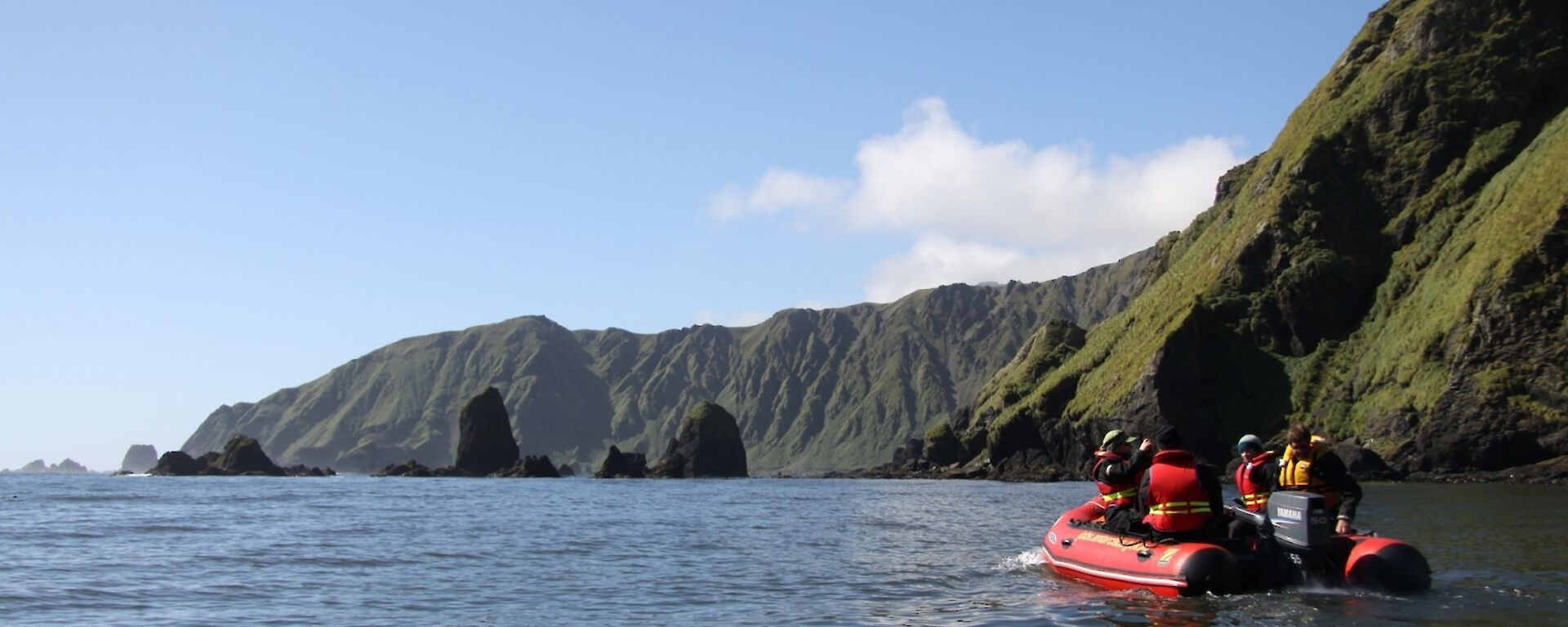
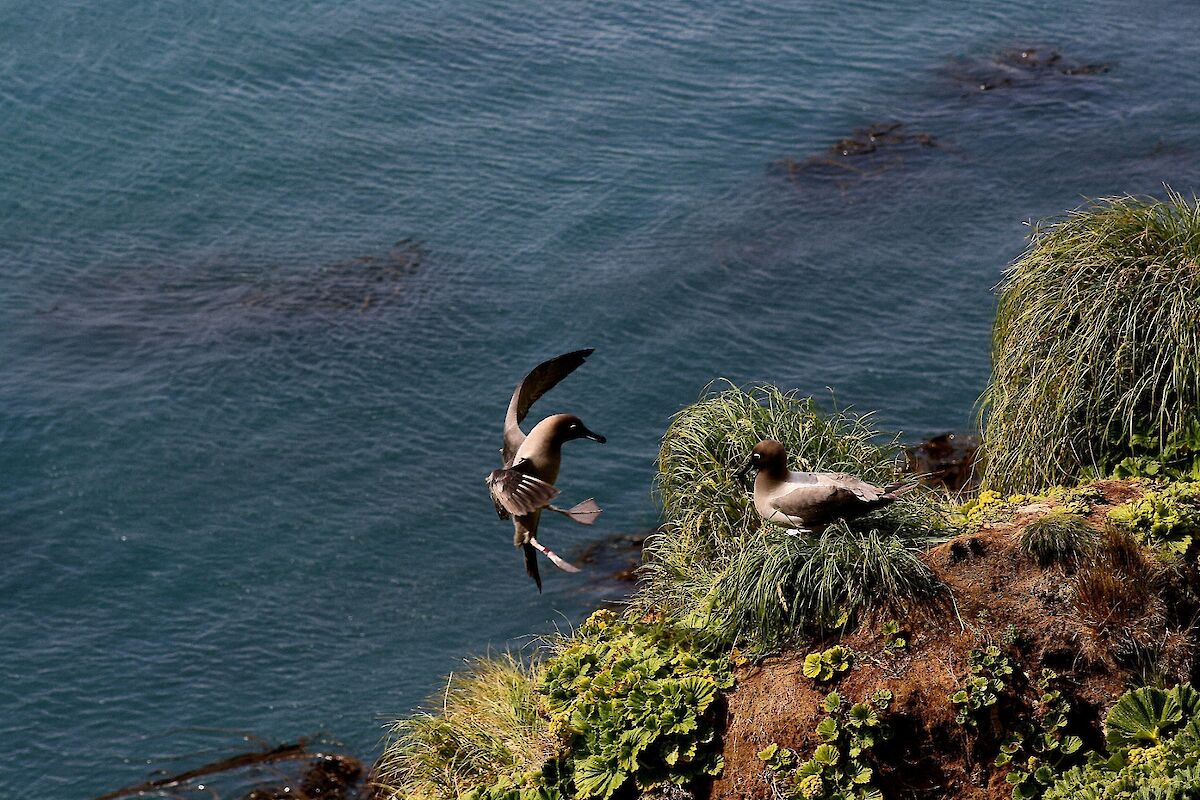
Albatross and petrel populations have declined globally due to interactions with fishing operations. The survival of four albatross and two giant petrel species breeding on Macquarie Island is threatened and ongoing monitoring is essential to assess their conservation status and mitigate negative influences. Long-term studies are required to obtain reliable information on population size and productivity and age- and sex- related survival parameters. The birds’ oceanic movements is also being investigated so that questions regarding temporal and spatial overlap with fisheries can be addressed.


Project milestones
Summary of the project achievements 2017/18
Across the seven years of this project, we've maintained the long-term (24 year) comprehensive population and demographic monitoring of four albatross and two giant petrel species on Macquarie Island. Continuous longitudinal monitoring data are crucial for effective and timely detection of threats, the identification of appropriate management actions and ongoing assessment of their efficacy. Annually, we estimate trends in the breeding population (number of breeding pairs) and breeding success for all six threatened seabird species as well as undertaking extensive banding and re-sights for the four albatross species and northern giant petrels to allow determination of survival, recruitment, other demographic rates and foraging ecology. Since the current program began in the mid 1990s, both black-browed and grey-headed albatross populations have remained stable overall (albeit at precariously low numbers), the light-mantled albatross appears to have undergone a slight increase across their study sites and the already tiny wandering albatross population has continued to decline. Both species of giant petrel were steadily increasing until both populations suffered a sudden and substantial reduction due to the non-target mortality events associated with aerial poisoning during the Macquarie Island Pest Eradication Program (MIPEP) in 2010 and 2011. The northern giant petrel population has recovered to pre-MIPEP numbers. The southern giant petrel, while continuing to recover, appears to be doing so at a slower rate. Analysis of mark-recapture data has identified linkages between the Macquarie Island albatross population trends and local weather patterns, large-scale climate cycles, rabbit erosion and fisheries. This program has helped fulfill Australia's monitoring, research and reporting obligations under the international Agreement on the Conservation of Albatrosses and Petrels (ACAP) and the Australian National Recovery Plan for Albatross and Giant Petrels.
Summary of the season 2016/17
This 2016/17 breeding season on Macquarie Island was the 23rd consecutive year of comprehensive population and demographic monitoring of four albatross and two giant petrel species. Continuous longitudinal monitoring data are crucial for effective and timely detection of threats, the identification of appropriate management actions and ongoing assessment of their efficacy. Annually, we estimate trends in the breeding population (number of breeding pairs) and breeding success for all six threatened seabird species as well as undertaking extensive banding and re-sights for the four albatross species and northern giant petrels to allow determination of survival, recruitment, other demographic rates and foraging ecology. Since the current program began in the mid 1990s, both black-browed and grey-headed albatross populations have remained stable overall (albeit at precariously low numbers), the light mantled albatross appears to have undergone a slight increase across their monitored study site and the already tiny wandering albatross population has continued to decline. Both species of giant petrel were steadily increasing until both populations suffered a sudden and substantial reduction due to the non-target mortality events associated with aerial poisoning during the Macquarie Island Pest Eradication Program (MIPEP) in 2010 and 2011. The northern giant petrel population has recovered to pre-MIPEP numbers. The southern giant petrel, while continuing to recover, appears to be doing so at a slower rate. Analysis of mark-recapture data has identified linkages between local weather patterns, large scale climate cycles, rabbit erosion and fisheries and Macquarie Islands albatross population trends. This program fulfils Australia's monitoring, research and reporting obligations under the international Agreement on the Conservation of Albatrosses and Petrels (ACAP) and the Australian National Recovery Plan for Albatrosses and Giant Petrels
Summary of the season 2015/16
The 2015/16 summer breeding season on Macquarie Island was the 22nd consecutive year of comprehensive population and demographic monitoring of four albatross and two giant petrel species. Continuous longitudinal monitoring data are crucial for effective and timely detection and quantification of threats and the identification and ongoing assessment of the efficacy of management actions. Annually, we estimate trends in the breeding population (number of breeding pairs) and breeding success for all six threatened seabird species as well as undertaking extensive banding and re-sighting for the four albatross species to allow determination of survival, recruitment and other demographic rates. Since the current monitoring program began in the mid 1990s, both black-browed and grey-headed albatross populations have remained stable overall (albeit at precariously low numbers), the light mantled albatross appears to have undergone a slight increase across their monitored study site and the already tiny wandering albatross population has continued to decline. Both species of giant petrel were steadily increasing until both populations suffered a sudden and substantial reduction due to the non-target mortality events associated with aerial poisoning during the Macquarie Island Pest Eradication Program (MIPEP) in 2010 and 2011. The northern giant petrel population has recovered to the numbers observed ten years ago. The southern giant petrel, while continuing to increase post MIPEP, is doing so at a slower rate and the population still shows a significant decline over the last ten years. Analysis of mark-recapture and population data to identify factors underlying the observed albatross population trends is underway. This program fulfils Australia's monitoring research and reporting obligations under the international Agreement on the Conservation of Albatrosses and Petrels (ACAP) and the Australian National Recovery Plan for Albatrosses and Giant Petrels 2011-2016.
Summary of the season 2014/15
The 2014/15 summer breeding season on Macquarie Island was the 21st consecutive year of comprehensive population and demographic monitoring of four albatross and two giant petrel species. Continuous longitudinal monitoring data are crucial for effective and timely detection and quantification of threats and the identification and ongoing assessment of the efficacy of management actions. Annually, we estimate trends in the breeding population (number of breeding pairs) and breeding success for all six threatened seabird species as well as undertaking extensive banding and re-sighting for the four albatross species to allow determination of survival, recruitment and other demographic rates. Over the last 10 year period (2005 to 2014) three of the six species show statistically significant declines in their breeding population (grey-headed albatross, northern and southern giant petrel). The declines reported for the two giant petrel species are linked to the non-target mortality events associated with aerial poisoning during the Macquarie Island Pest Eradication Program (MIPEP) in 2010 and 2011. Populations of the other three albatross species are stable (albeit at precariously low numbers for wandering and black-browed albatross) or slightly increasing (light mantled albatross). Analysis of mark-recapture and population data to identify factors underlying the observed albatross population trends is underway. This program fulfils Australia's monitoring research and reporting obligations under the international Agreement on the Conservation of Albatrosses and Petrels (ACAP) and the Australian National Recovery Plan for Albatrosses and Giant Petrels 2011-2016.
Summary of the season 2013/14
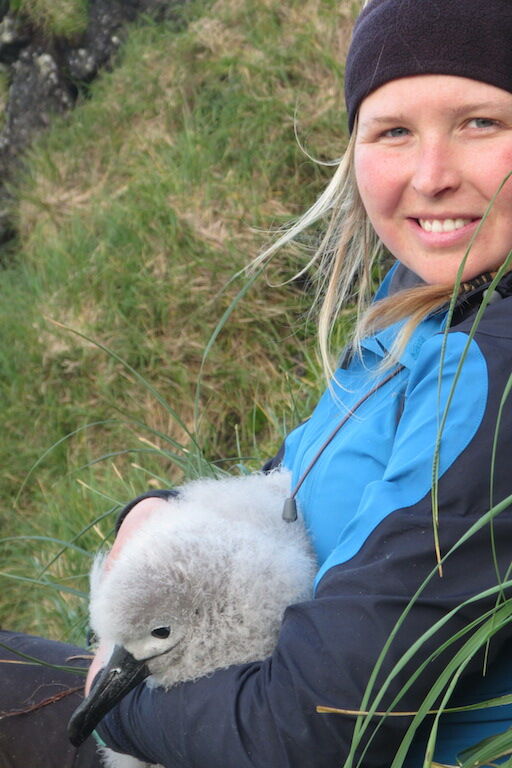
This breeding season marked the 20th consecutive year of comprehensive population and demographic monitoring of the four albatross and two giant petrel species breeding on Macquarie Island. Whole island breeding population censuses of all four albatross species and both giant petrel species were completed successfully in 2013-14. The annual number of breeding pairs and estimated population trend over the last ten years for each species are as follows: Wandering albatross = 7 (variable); Black-browed albatross 44 (stable); Grey-headed albatross 88 (stable); Light-mantled albatross 2150 (stable); southern giant petrels 1788 (variable); northern giant petrels 1487 (stable). Breeding success was also determined for all six species. All accessible albatross and northern giant petrel chicks within study areas were banded and extensive re-sighting of banded individuals was undertaken. All associated data was entered into the mark-recapture dataset to allow for calculations of rates of adult survival and recruitment for all albatross species.
This ongoing annual conservation program fulfils Australia's monitoring, research and reporting obligations under the international Agreement on the Conservation of Albatross and Petrels (ACAP) and the National Recovery Plan for Albatrosses and Giant Petrels, 2011-2016. All data for this season was contributed to ACAP so that current population information could be included in accurate global assessments of status and trends and breeding sites. For long-lived species such as these, continuous longitudinal monitoring studies are vital for effective and timely detection of novel threatening processes, ongoing assessment and quantification of existing threats, and the identification and evaluation of the efficacy of management actions. This program continues to provide fundamental information relating to the response by threatened seabird species to the recent successful eradication of rabbits and rodents from Macquarie Island.
Summary of the season 2012/13
This albatross and giant petrel monitoring program is one of few long-term, ongoing population and demographic studies into these globally threatened species. In 2012/13 breeding effort and success was recorded for Wandering, Black-browed, Grey-headed and Light-mantled albatrosses, as well as Southern and Northern giant petrels. It is well known that an understanding population status also requires information derived from studies of survival rates of both adults and juveniles. Band resights were also obtained in order to continue the assessment of demographic monitoring. In May 2013 these data were contributed to the Agreement on the Conservation of Albatrosses and Petrels (ACAP) global database which provides a framework in which to conduct global assessments of population status and trends. Contributing to these global assessments and ACAP meetings is critical for the effective management and conservation of these highly migratory species that traverse the Southern Ocean.
Related publications
-
Using scat DNA to inform sustainable fisheries management and Ecological Risk Assessments: a Shy Albatross case study. Inf08 ACAP 6th meeting of the Population and Conservation Status Working Group, virtual meeting 24 -25 August 2021, 2021
(Ref: 16739)
Authors:Category 2: International meeting papers
-
A review of methods used to analyse albatross diets -Assessing priorities across their range ICES Journal of Marine Science, 2016
(Ref: 16082)
Category 1: Peer-reviewed literature
-
Optimised scat collection protocols for dietary DNA metabarcoding in vertebrates. Methods in Ecology and Evolution, 2017
(Ref: 16080)
Category 1: Peer-reviewed literature
-
High occurrence of jellyfish predation by black-browed and Campbell albatross identified by DNA metabarcoding Molecular Ecology, 2017
(Ref: 16079)
Authors:Category 1: Peer-reviewed literature
-
The development and application of DNA metabarcoding to non-invasively assess albatross diets. PhD Thesis University of Tasmania, 2017
(Ref: 16043)
Authors:Category 3: Thesis, higher degree