
Project information
Project aim
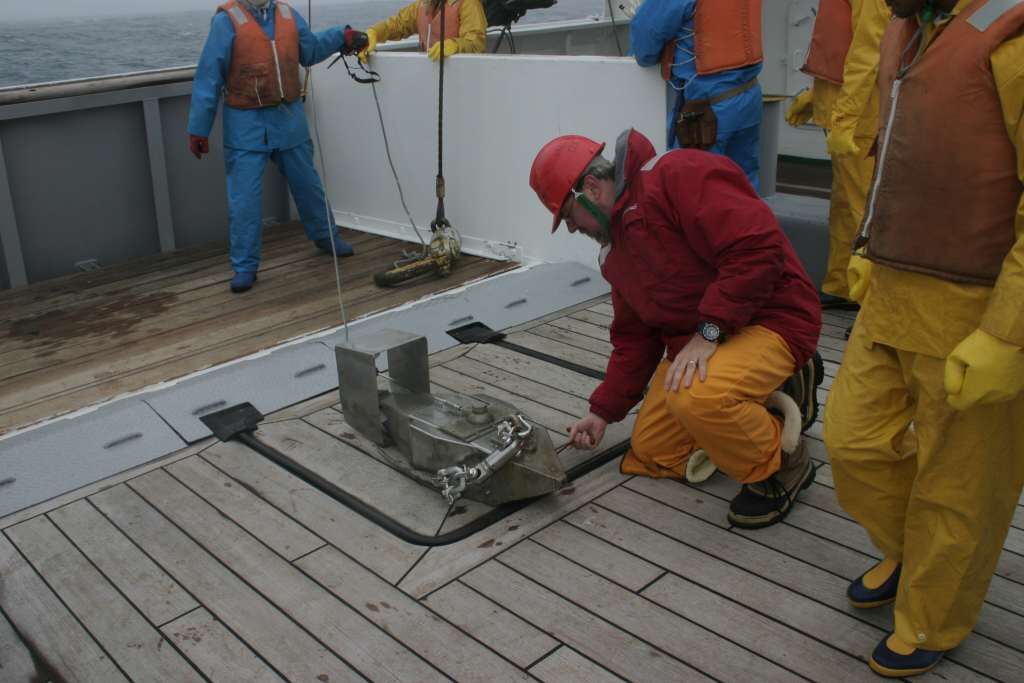
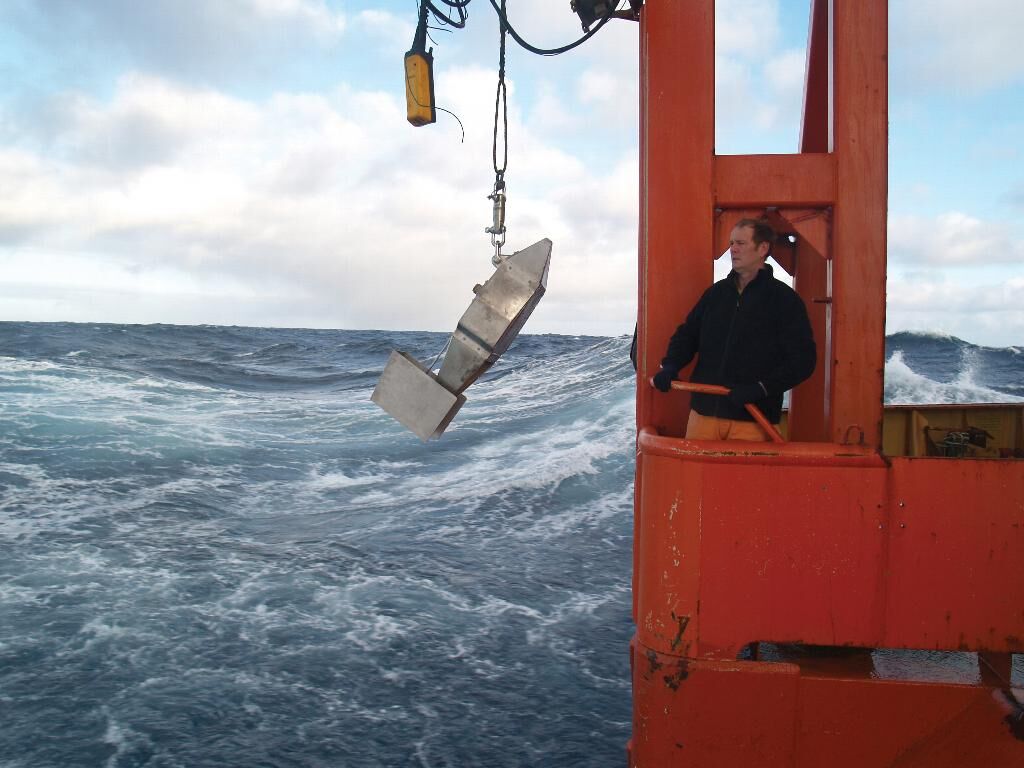
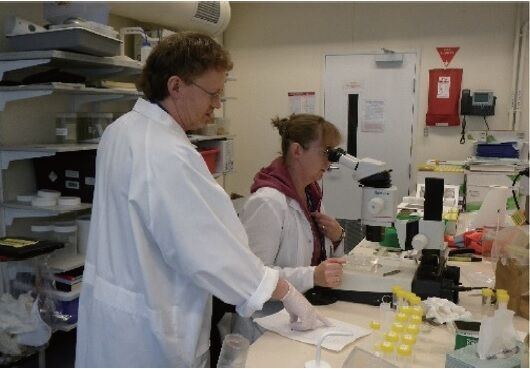
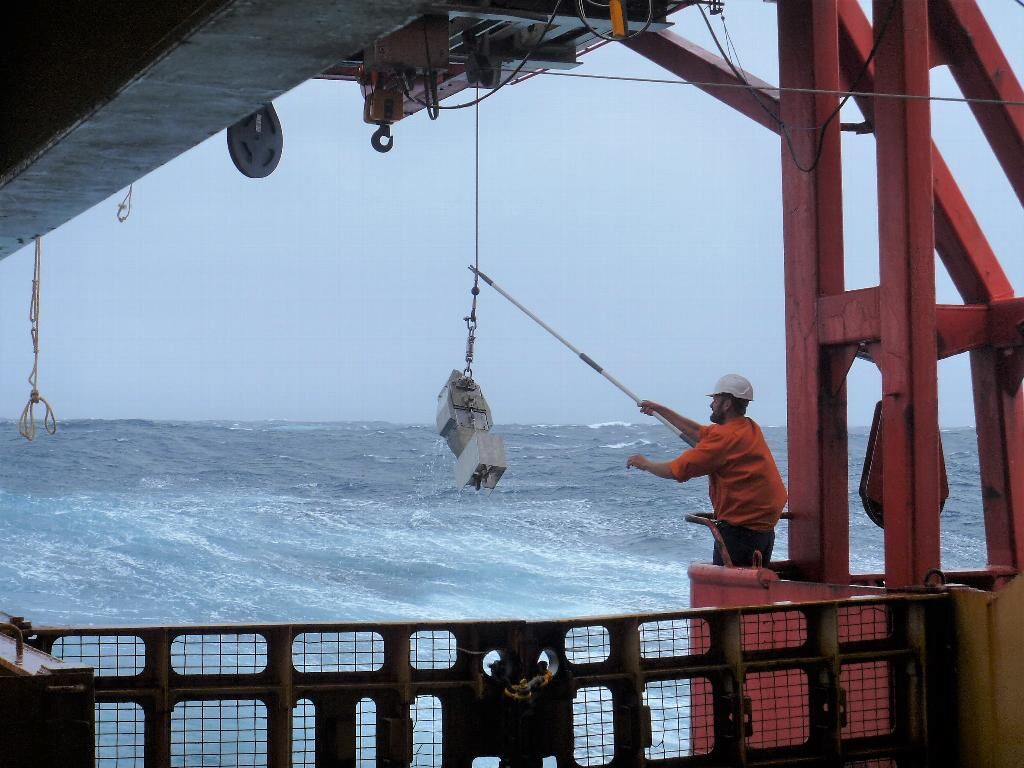
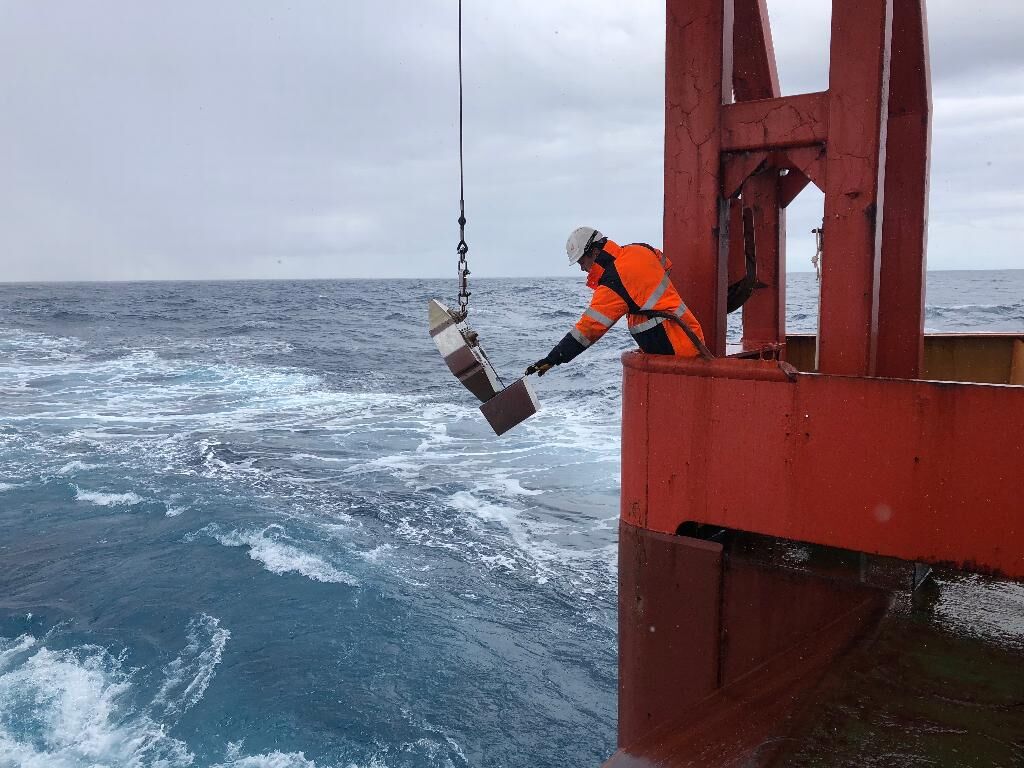
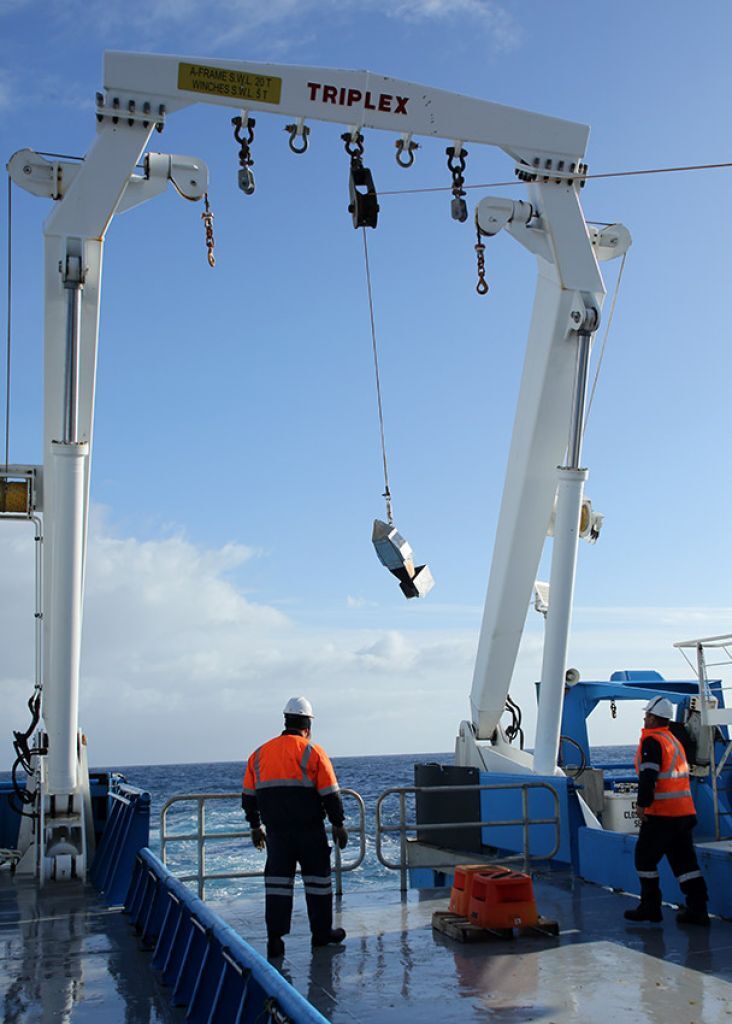
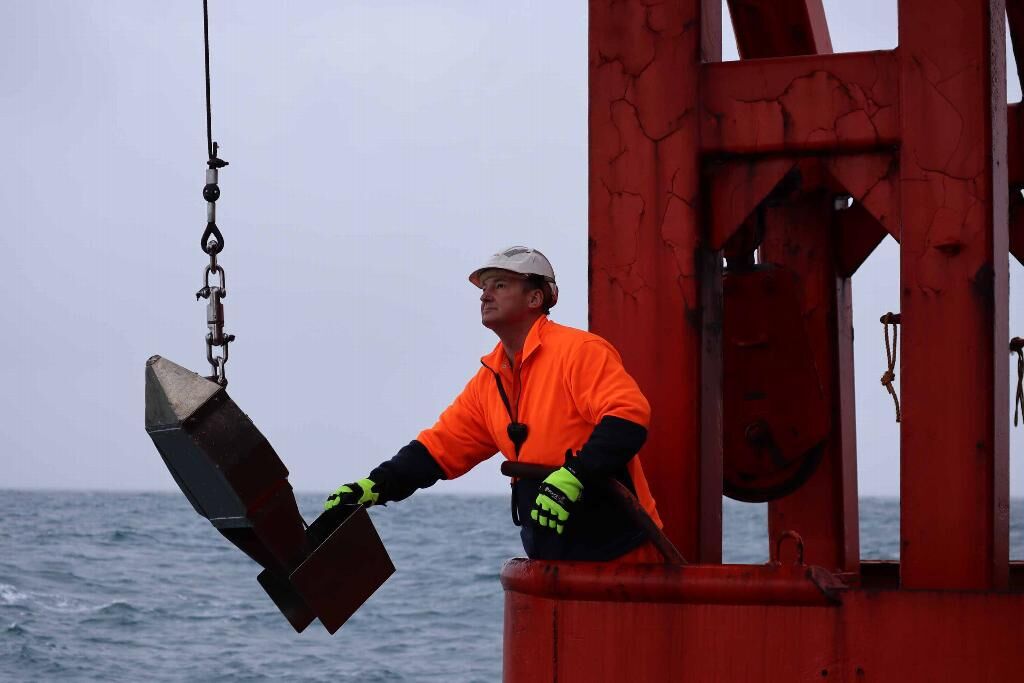
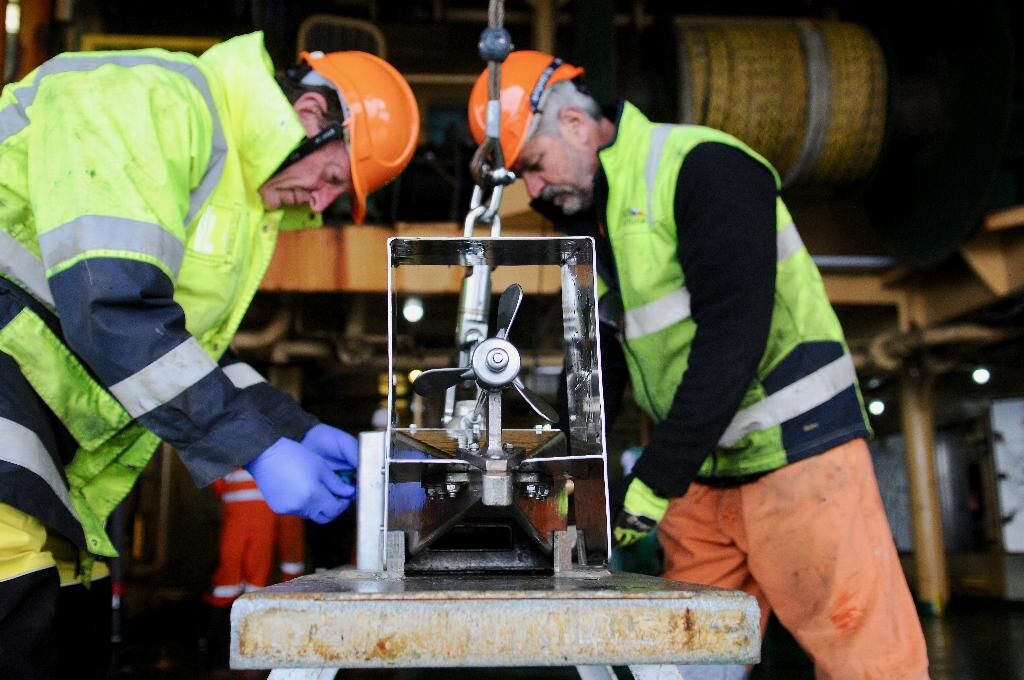
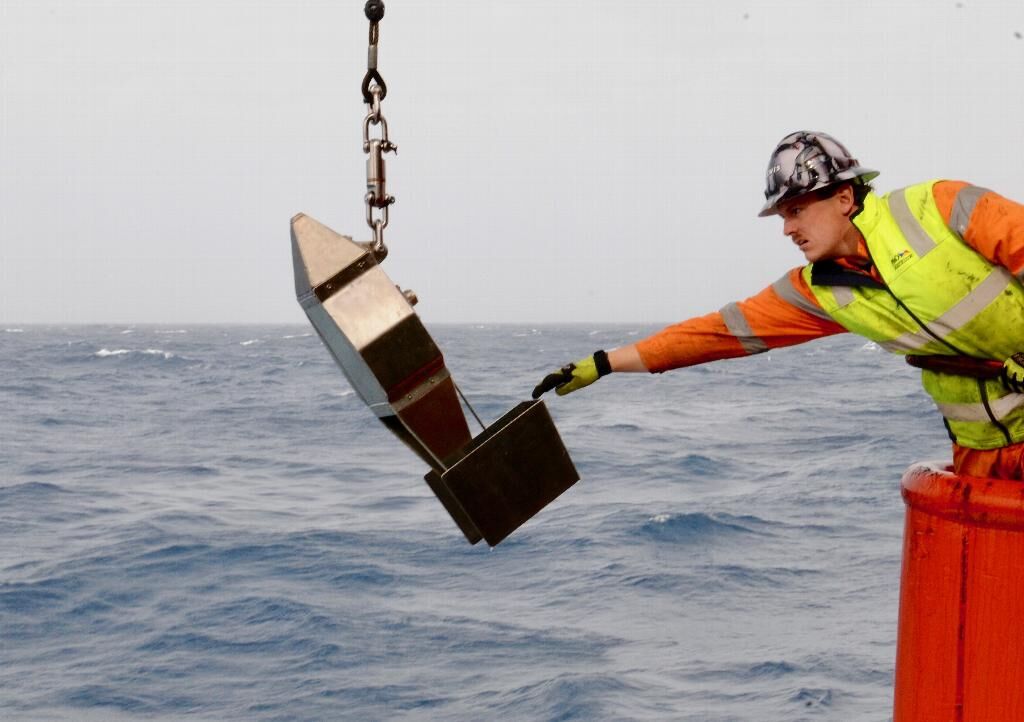
Antarctic plankton are expected to be sensitive and vulnerable to climate change. SO-CPR was established in 1991 by the AAD as a monitoring program on krill and zooplankton. It provides sustained fundamental observations on variation in plankton biodiversity, distribution and abundance to detect and assess potential effects of climate change at the base of the food web. These observations underpin other research for management of the region. SO-CPR is a recognised international monitoring facility, supported by several nations and supports other Antarctic and international monitoring programs.
Project milestones
Summary of the project achievements 2020/21
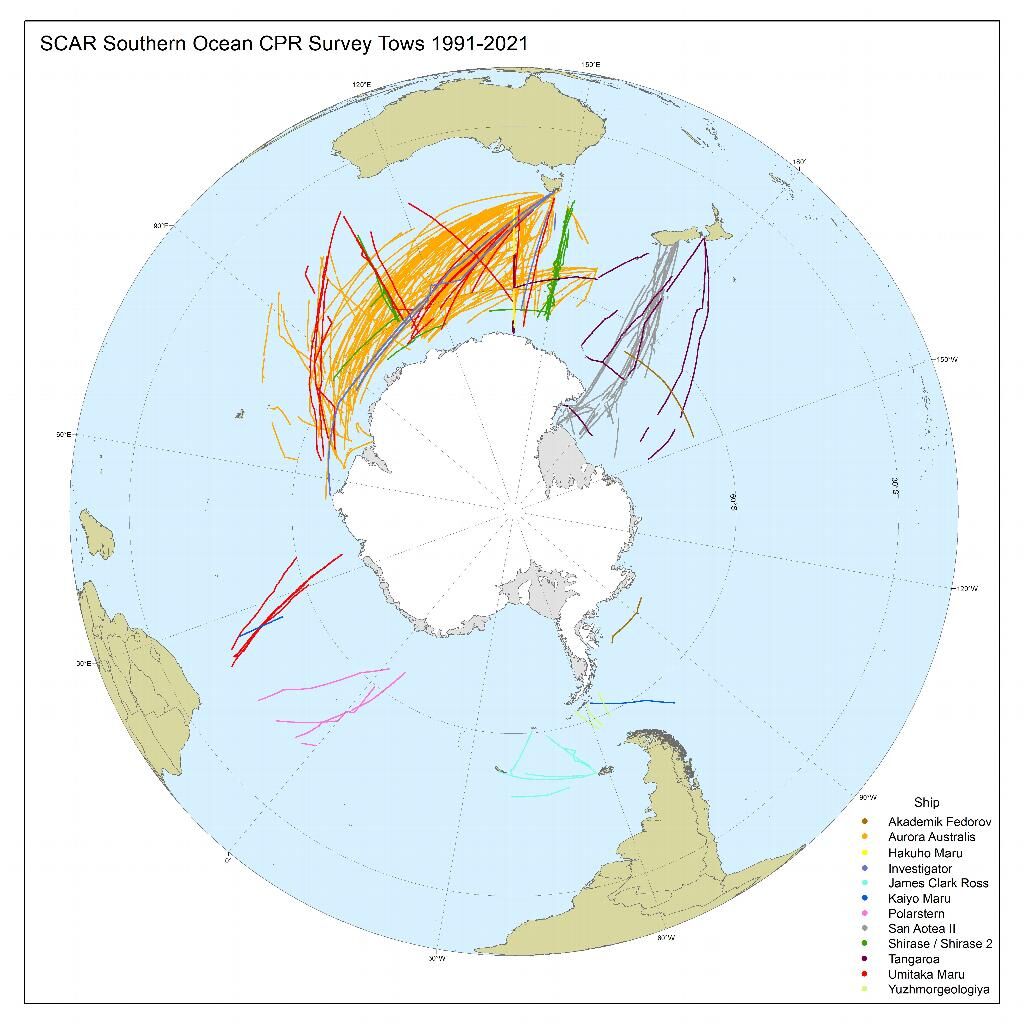
Antarctic plankton are expected to be sensitive and vulnerable to climate change. SO-CPR was established in 1991 by the AAD as an ongoing monitoring program on krill and zooplankton. To date this has provided essential and sustained fundamental observations in plankton biodiversity, distribution, abundance and variation required to detect, assess and understand the potential effects of climate change at the base of the food web. These observations also underpin other research to inform management of the region. SO-CPR is a recognised international monitoring facility, supported by several nations and supports other Antarctic and international monitoring programs. The SO-CPR Survey has now expanded considerably to become an international plankton monitoring programme under the Scientific Committee on Antarctic Research (SCAR). It involves ships from multiple nations (Australia, Japan, New, Zealand, Germany, South Africa, Brazil and France), providing a circum-Antarctic survey of plankton for much of the year in the waters mostly south of the Sub-Antarctic Front to the Antarctic continent. The SO-CPR Survey is the largest sustained plankton monitoring programme in Antarctic waters. It is a central biological component and an affiliated programme of the South Ocean Observing System (SOOS). It is a foundation survey of the Global Alliance of CPR Surveys (GACS), and subsequently affiliated with the Scientific Committee on Ocean Research (SCOR), the Global Ocean Observing System (GOOS) and the Partnership for Observing Global Oceans (POGO). GACS is the largest global plankton observing system and allows our Southern Ocean regional observations to be viewed in a global context. The SO-CPR Survey has produced the largest plankton database of observations in time and space for the Antarctic region for more than 290 species, taxonomic groups and developmental stages of krill, for nearly all of the Southern Ocean. The database currently comprises ~57,500 samples for 290+ taxa, coupled with environmental data, phytoplankton colour indices and micro-plastics counts. The SO-CPR database is propagated from the AADC to the GACS CPR database for global analyses, to SCAR: biodiversity.aq, and also to various other data portals. To date, over 7370 download events for this data set have been logged by the Global Biodiversity Information Facility (GBIF).
Summary of the season 2020/21
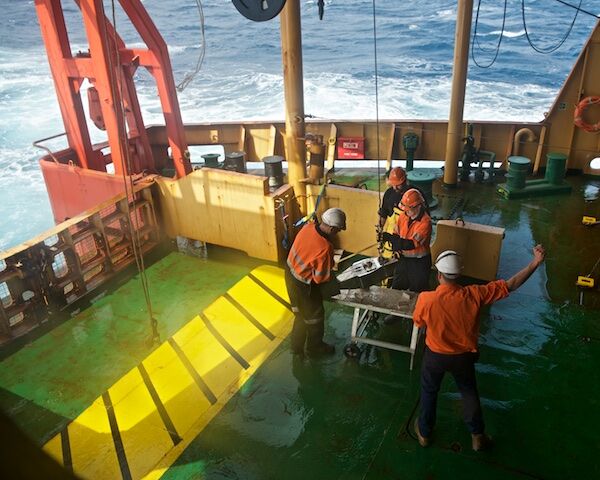
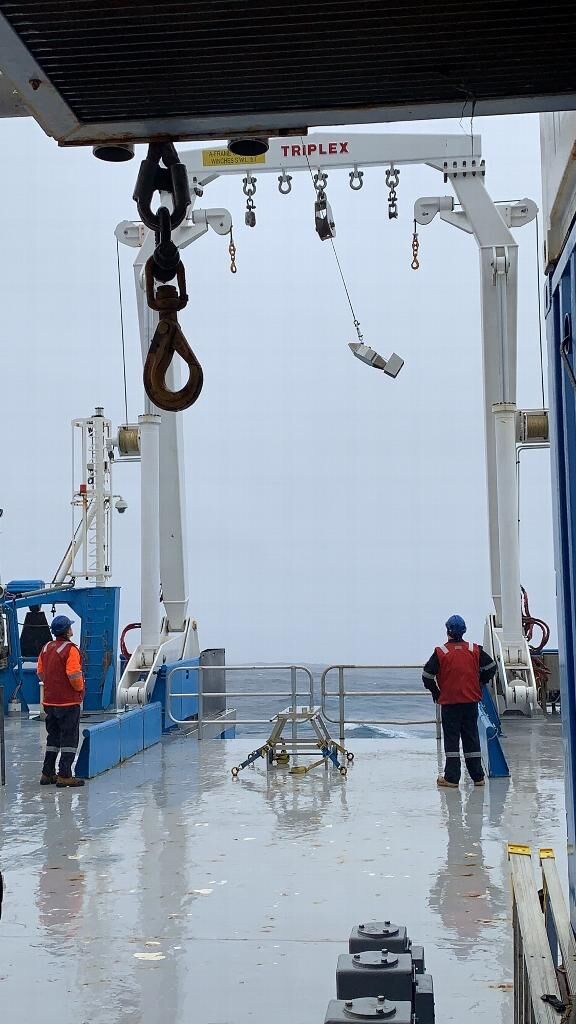
Project 4107 had a successful field season (included in Project 4512) during the 2020/21 summer. 14 CPR tows were completed during a single Investigator voyage (TEMPO), west and south of Australia, from January-March 2021, covering waters between Tasmania and west of Mawson. These tows covered a distance of 5590 nautical miles (Nm) and equates to about 1120 samples each of 5 Nm. The limitations of sampling on one voyage only meant that usual temporal coverage (normally October-March) of the distribution and abundance of plankton in the Southern Ocean was not possible this season. Included in this season's collection are samples north of 47 degrees S, which is outside our normal spatial sampling area. These samples will be for AusCPR (CSIRO) as part of a continued collaboration. Bi-annual submission of data to the AADC continues.
Collectively for SO-CPR, over 30 tows were completed from research and commercial vessels from Australia, Japan, New Zealand, France, South Africa and Brazil. Tows covered the region from the south Indian Ocean eastwards to the Ross Sea, and within the Drake Passage. This provides approximately 2,000 samples over ~10,000 nautical miles. This will bring the database to ~57,500 samples for 290+ taxa, coupled with environmental data when all samples are processed. The SO-CPR database is propagated from the AADC to the GACS CPR database for global analyses, to SCAR: biodiversity.aq, and also to various other data portals. To date, over 7155 download events for this data set have been logged by the Global Biodiversity Information Facility (GBIF), as at 26 April 2021.
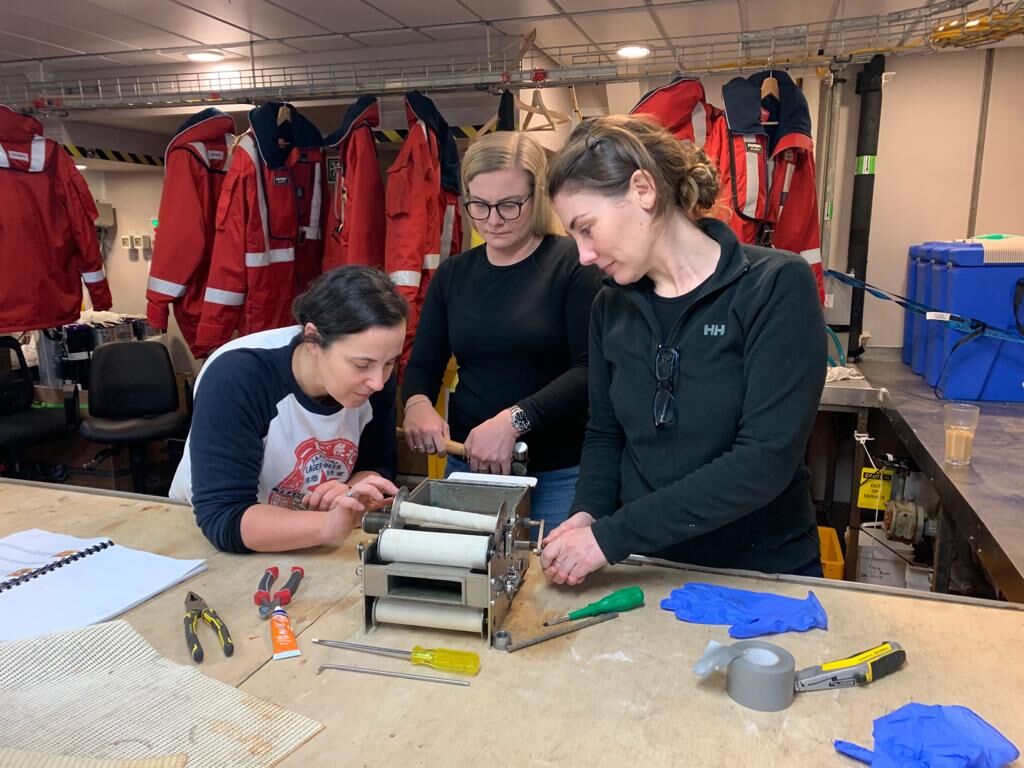
Phytoplankton samples were also collected alongside CPR tows during the voyage on RV Investigator, with 5 underway samples taken through the seawater line each day (Total = 124 samples). These samples will provide valuable information on the distribution and abundance of food sources for zooplankton and krill, and whether particular phytoplankton groups are targeted.
Summary of the season 2019/20
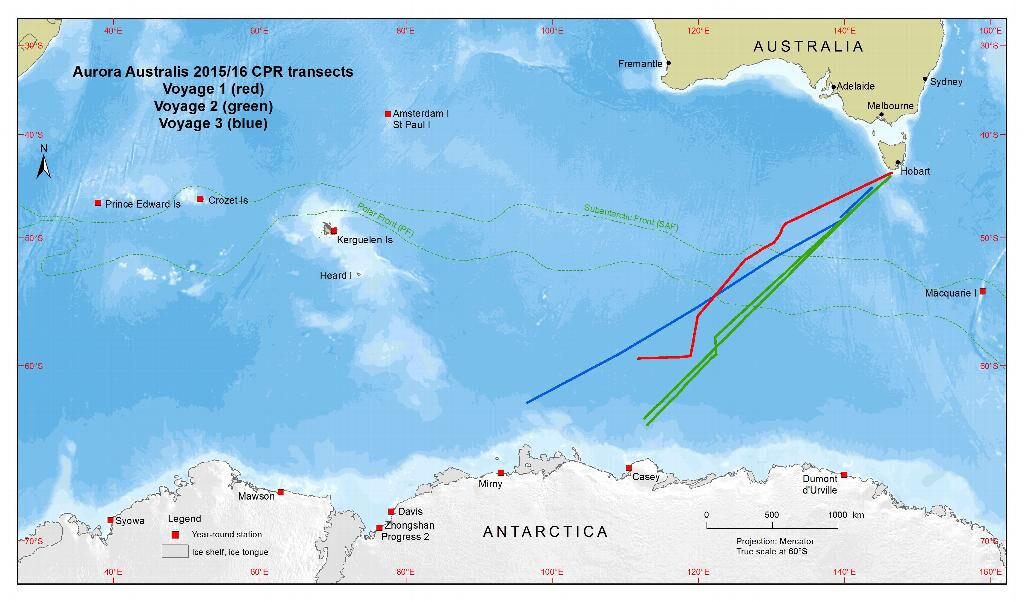
Project 4107 had a successful field season during the 2019/20 summer. Nineteen CPR tows (15 routine, 4 for genetic studies) were completed over 3 Aurora Australis (AA) voyages, west and south of Australia, between October 2019 and January 2020. These tows covered a distance of 7002 nautical miles (Nm) and equates to about 1400 samples each of 5 Nm. The tows were evenly spaced over the year to maintain temporal coverage of the distribution and abundance of plankton in the Southern Ocean and covered waters between Tasmania and Davis, Casey and Mawson on voyages 1, 2 and 3, respectively. Included in this season's collection are samples north of 47 degrees S, which is outside our normal spatial sampling area. These samples will be for AusCPR (CSIRO) as part of a continued collaboration. Close collaboration with project 4556 has resulted in a further 4 modified tows during Voyage 1 from Davis to Tasmania. These samples will be used in the trial of concept, comparing results of analysis of CPR silks by both classical taxonomic and genetic means, and also comparing these with environmental DNA (eDNA) collected simultaneously. Bi-annual submission of data to the AADC continues.
Collectively for SO-CPR, over 40 tows were completed from research and commercial vessels from Australia, Japan, New Zealand, France, South Africa and Brazil. Tows covered the region from the south Indian Ocean eastwards to the Ross Sea, and within the Drake Passage. This provides approximately 2,400 samples over ~12,000 nautical miles. This will bring the database to ~55,000 samples for 290+ taxa coupled with environmental data when all samples are processed. The SO-CPR database is propagated from the AADC to the GACS CPR database for global analyses, to SCAR: biodiversity.aq, and also to various other data portals. To date, over 5490 download events for this data set have been logged by the Global Biodiversity Information Facility (GBIF), as at 28 April 2020.
Summary of the season 2018/19
Project 4107 had a successful field season during the 2018/19 summer. Twenty three routine CPR tows were completed over 3 Aurora Australis (AA) voyages, and one Investigator voyage, west and south of Australia, between October 2018 and March 2019. These tows covered a distance of 8440 nautical miles (Nm) and equates to about 1690 samples each of 5 Nm. The tows were evenly spaced over the year to maintain temporal coverage of the distribution and abundance of plankton in the Southern Ocean and covered waters between Tasmania and Davis, Casey and Mawson on voyages 1, 2 and 3, respectively. The Investigator voyage collected samples south of Tasmania between Hobart and the Mertz area. Included in this season's collection are samples north of 47 degrees S, which is outside our normal spatial sampling area. These samples will be for AusCPR (CSIRO) as part of a continued collaboration. Bi-annual submission of data to the AADC continues.
Collectively for SO-CPR, over 40 tows were completed from research and commercial vessels from Australia, Japan, New Zealand, France, South Africa and Brazil. Tows covered the region from the south Indian Ocean eastwards to the Ross Sea, and within the Drake Passage. This provides approximately 2,500 samples over ~12,500 nautical miles. This will bring the database to ~53,000 samples for ~290 taxa coupled with environmental data when all samples are processed. The SO-CPR database is propagated from the AADC firstly to SCAR: biodiversity.aq, and from there on to the GACS CPR database for global analyses, and also to various other data portals. To date, over 4430 download events for this data set have been logged by the Global Biodiversity Information Facility (GBIF).
Summary of the season 2017/18
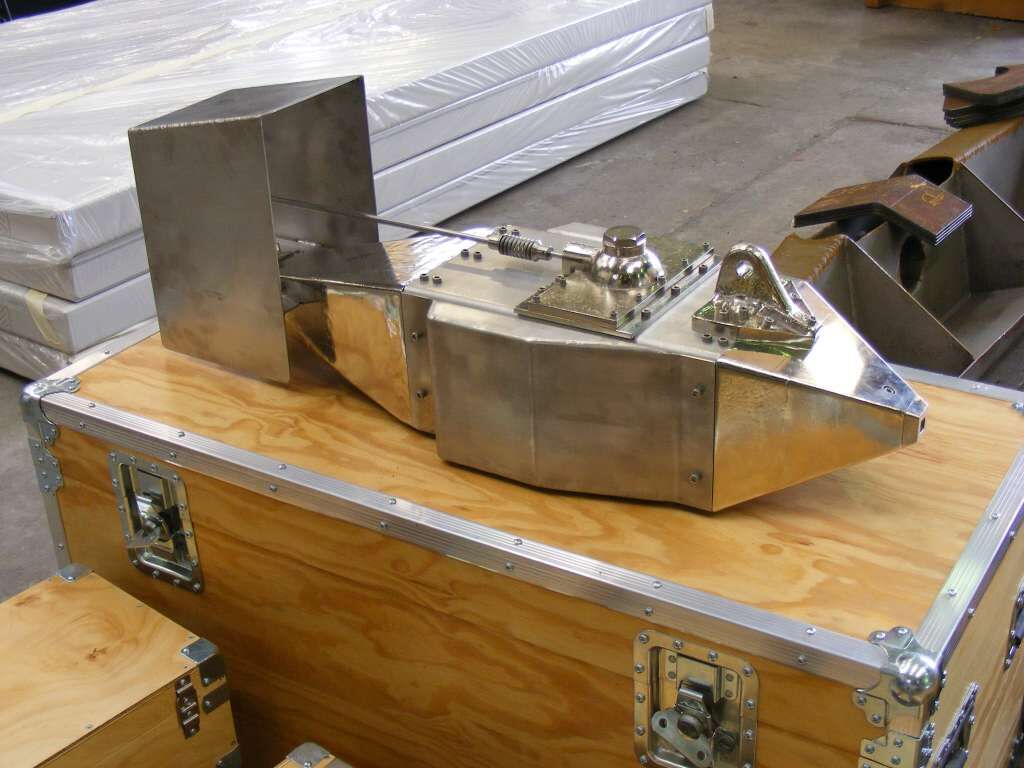
Project 4107 had a successful field season during the 2017/18 summer. Twenty-two routine CPR tows were completed over 4 Aurora Australis (AA) voyages, west, south and east of Australia, between October and March. These tows covered a distance of 8198 nautical miles (Nm) and equates to about 1640 samples each of 5 Nm. These tows were evenly spaced over the year to maintain temporal coverage of the distribution and abundance of plankton in the Southern Ocean and covered waters between Tasmania and Davis, Casey and Mawson on voyages 1, 2 and 3, respectively. Included in this collection are samples north of 47 degrees S, which is outside our normal spatial sampling area. These samples will be for AusCPR (CSIRO) but the data will be included in SO-CPR. Close collaboration with project 4313 has resulted in a further 2 standard CPR tows, and 2 modified tows during Voyage 4 to Macquarie Island and return. These samples will be used in the trial of concept, comparing results of analysis of CPR silks by both classical taxonomic and genetic means. Slight modification of the CPR was required to accommodate this sampling. Bi-annual submission of data to the AADC continues.
Collectively for SO-CPR, over 50 tows were completed from research and commercial vessels from Australia, Japan, New Zealand, South Africa, France and Brazil. Tows covered the region from south of Africa eastwards to the Ross Sea, and within the Drake Passage. This provides approximately 3,000 samples over ~15,000 nautical miles. This will bring the database to ~50,000 samples for 280+ taxa coupled with environmental data when all samples are processed. The SO-CPR database is propagated from the AADC firstly to SCAR: biodiversity.aq, and from there on to the GACS CPR database for global analyses, and also to various other data portals. To date, over 3460 download events for this data set have been logged by the Global Biodiversity Information Facility (GBIF).
Summary of the season 2016/17
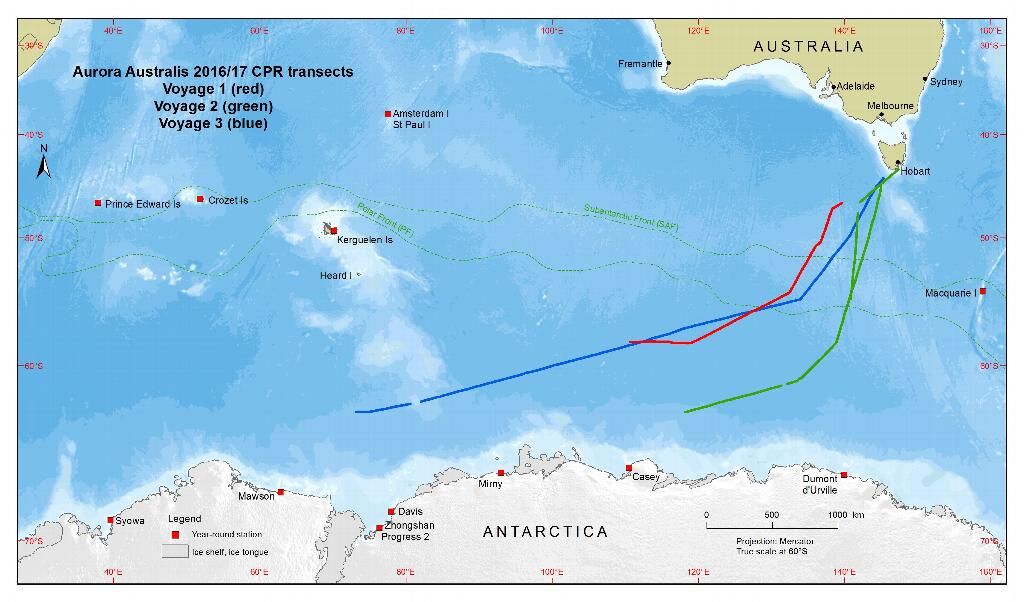
Project 4107 had a successful field season in the 2016/17 summer. Eighteen CPR tows were completed over the 3 Aurora Australis (AA) voyages, south and west of Australia, between October and February. These tows covered a distance of 6299 nautical miles (Nm), equating to about 1260 samples each of 5 Nm. Tows were evenly spaced over the year to maintain temporal coverage of the distribution and abundance of plankton in the Southern Ocean and covered waters between Tasmania and Davis, Casey and Mawson on voyages 1, 2 and 3, respectively. Three samples north of 47 degrees S, outside our normal spatial sampling area, were collected for AusCPR. An additional tow during Voyage 2 was collected for a proposed workshop in India. Bi-annual submission of data continues to the AADC.
Collectively for SO-CPR, over 50 tows were completed from research and commercial vessels from Australia, Japan, New Zealand, South Africa, France and Brazil. Tows covered the region from south of Africa eastwards to the Ross Sea, and within the Drake Passage. This provides approximately 3,500 samples over ~17,500 nautical miles. This will bring the database to ~50,000 samples for 260+ taxa, coupled with environmental data, when all samples are processed. The current SO-CPR database contributes to the GACS CPR database for global analyses.
Summary of the season 2014/15
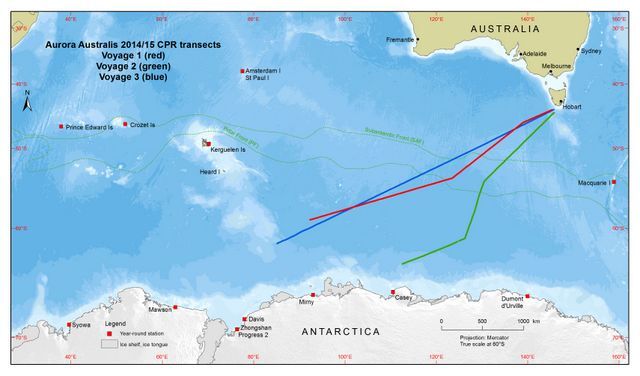
Project 4107 had a successful field season in the 2014/15 summer. Fifteen CPR tows were completed over the 3 Aurora Australis (AA) voyages, south and west of Australia, between October and February. These tows covered a distance of 6154 nautical miles (Nm) and equates to about 1231 samples each of 5 Nm. These tows were evenly spaced over the year to maintain temporal coverage of the distribution and abundance of plankton in the Southern Ocean and covered waters between Tasmania and Davis, Casey and Mawson on voyages 1, 2 and 3, respectively. It was decided to return to the collection samples north of 47 degrees S, which is outside our normal spatial sampling area. These samples will be for AusCPR but the data will be included in SO-CPR. Close collaboration with project 4313 has result in a further 6 CPR tows of 12 hours(~150 nm) duration during voyage 4 to Macquarie Island and return. These samples will be used in the trial of concept, comparing results of analysis of CPR silks by both classical taxonomic and genetic means. Modification of the CPR to accommodate this sampling is reportedly performing well. Work continues to ease the submission of data to the AADC.
Summary of the season 2012/13
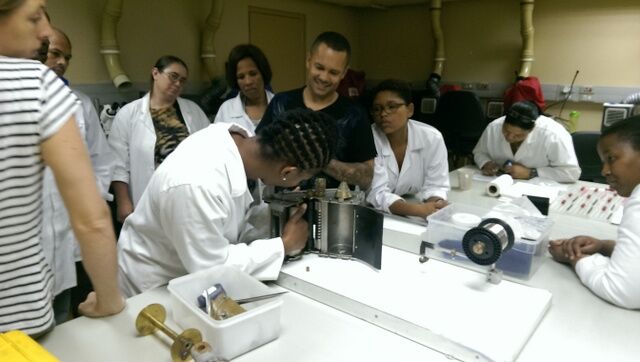
2012/13 has been one of the most successful field seasons to date. More than 90 tows were completed from seven vessels from Australia, Japan, New Zealand, and new SO-CPR members South Africa and France. Tows commenced in July 2012 providing rare winter samples and continued through to May 2013. Tows covered the region from south of Africa eastwards to the Ross Sea, providing approximately 5,400 samples over ~27,000 nautical miles. This will bring the database to ~42,000 samples for 230+ taxa when all samples are processed. The current database was contributed to the new Global CPR database for global analyses, and updated in the IMOS data portal. SO-CPR data have been central components of the new SCAR Biogeographic Synthesis Atlas due for completion in 2013. Training workshops in use of the CPR and processing of samples were conducted for participants from Brazil (Drake Passage samples), France (Kerguelen region) and Korea (future Pacific sector survey).