
Project information
Project aim
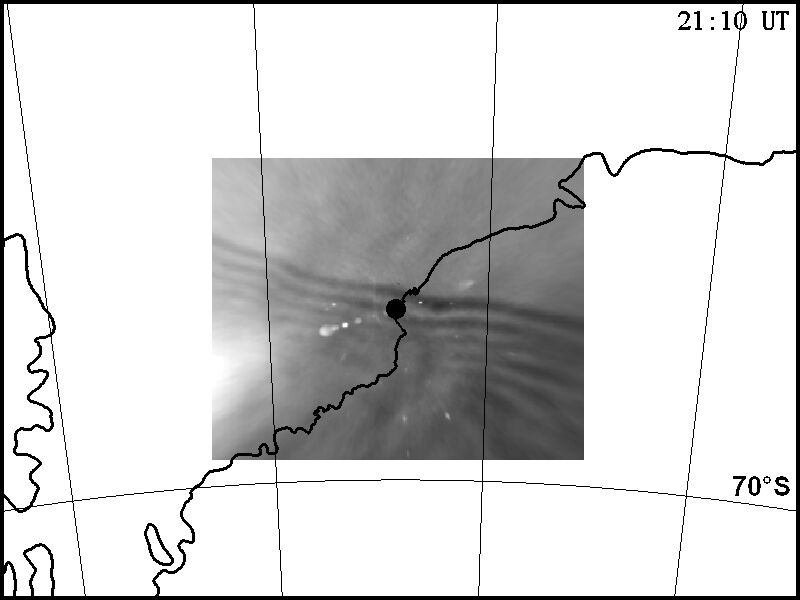
The implementation of an international collaborative ANtarctic Gravity Wave Imaging Network (ANGWIN) will provide an exceptional capability for investigating mesospheric gravity waves at selected sites encompassing the entire Antarctic continent. Importantly, this network will capitalize on existing optical and radar measurement capabilities at eight well-established national research stations. These are strategically located around the continental coast at Halley, UK, Syowa, Japan, Davis, Australia, McMurdo, USA, Rothera, UK, Ferraz, Brazil and Vernadsky, Ukraine.
Project milestones
Summary of the project achievements 2016/17
The Antarctic Gravity Wave Instrument Network (ANGWIN) is a collaborative international project focusing on the study of gravity waves in the atmosphere above Antarctica. Its primary objective has been to bring together new and existing imaging and complementary aeronomy instrumentation available at well-established research stations distributed around the Antarctic continent to investigate the properties and effects of mesopsheric gravity waves on a continental-scale for the first time. The IR camera operating at Davis station was part of this project and its continuous operations has allowed for the following achievements:
• Successful data collection during 5 consecutive winter seasons, and creation of a large database to further investigate mesospheric gravity waves
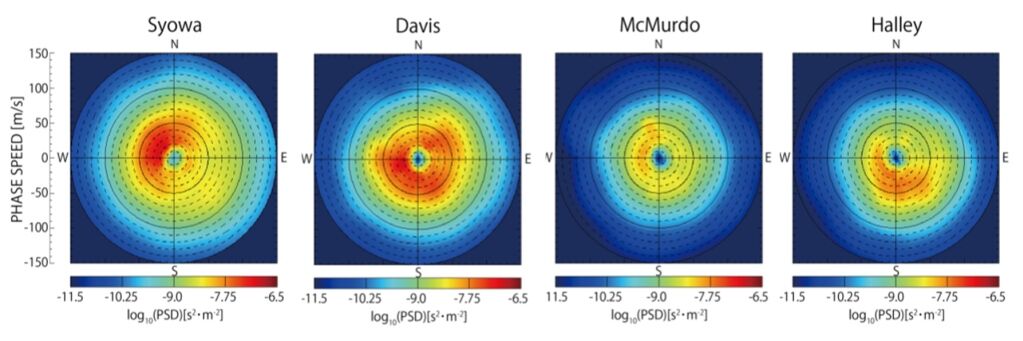
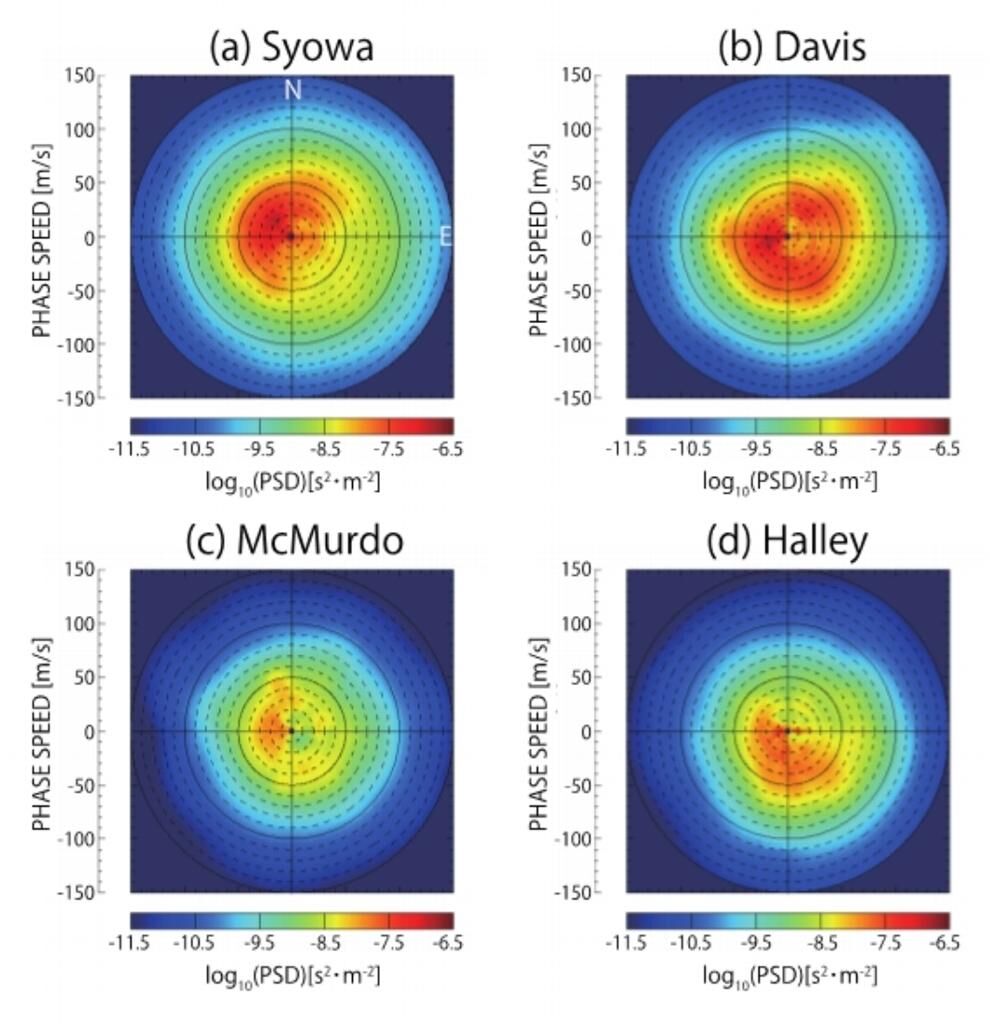
• Quantification of the longitudinal variations in mesospheric gravity wave activity and propagation headings around Antarctica
• Investigation of the propagation and ducting of gravity waves capable of traveling large distances over the Antarctic continent
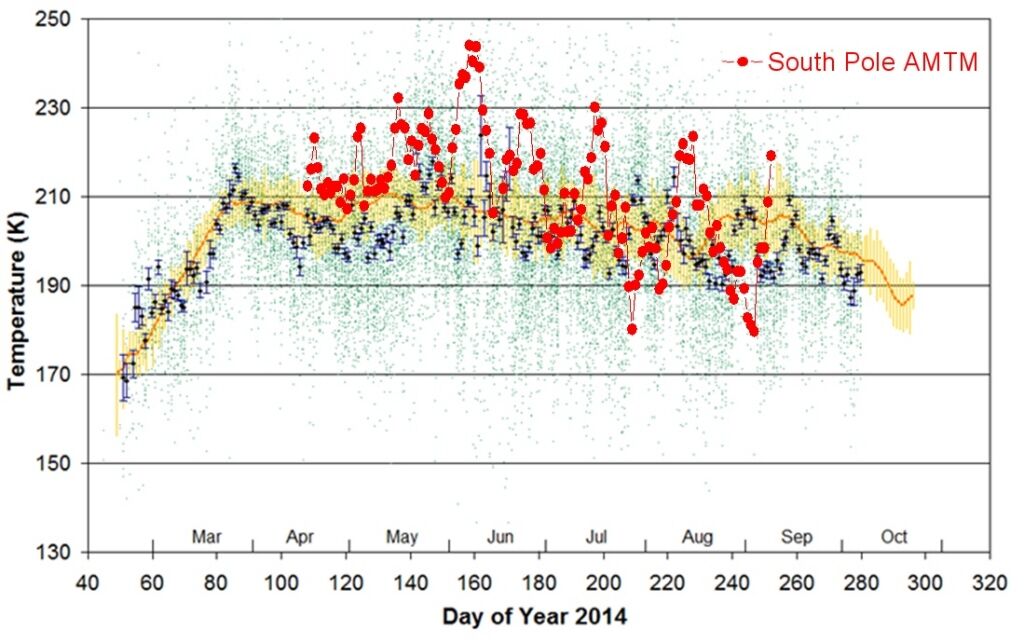
• Investigation of the planetary wave activity over South Pole and other stations
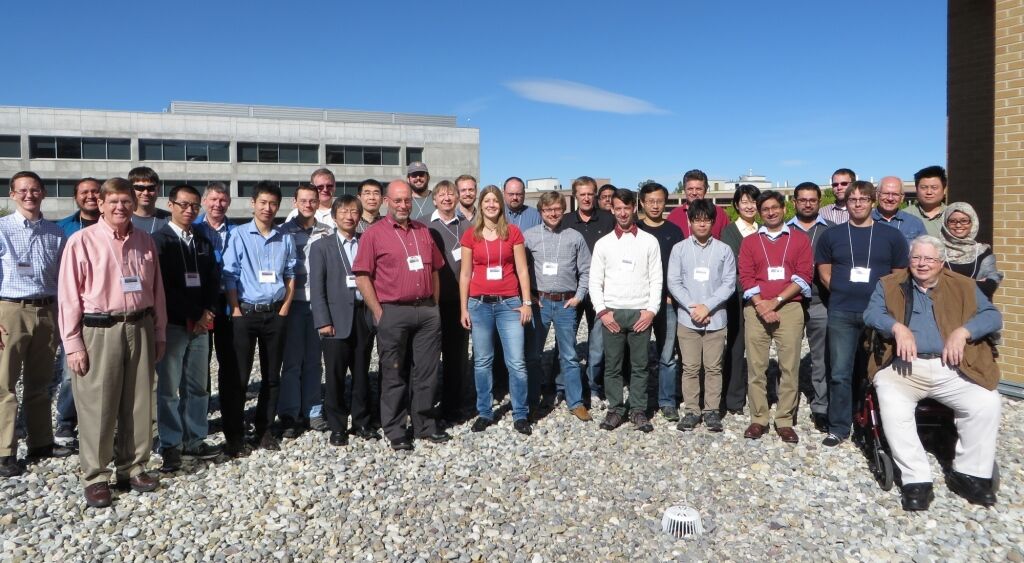
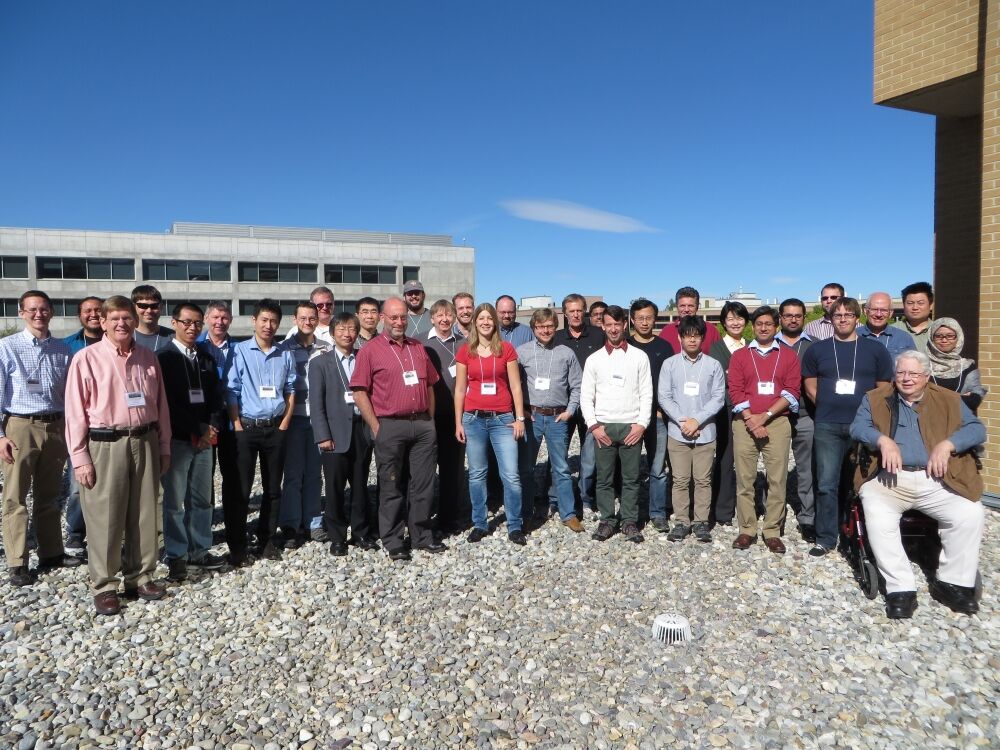
• Organization of workshops to bring together the ANGWIN community to further study and understand the gravity waves activity and impacts over Antarctica (Japan 2013, USA 2014, UK 2016, Brazil 2018)
Summary of the season 2015/16
This project involves measurements by a sensitive IR all-sky imager at Davis Station to investigate the properties of high-altitude (~87 km) atmospheric gravity waves over Antarctica. Gravity waves are generated by a range of meteorological disturbances and can transmit large amounts of energy into the upper atmosphere where they affect significantly the weather on the "edge of space". The measurements are made as part of an international collaborative program (ANGWIN) where similar observations are concurrently being made from several other international research stations around Antarctica, and deep in the interior at South Pole. The overall program goal is to determine the characteristics and impact of mesospheric gravity waves on a large, continental-wide scale, over Antarctica.
Automatic camera observations have successfully continued for a fourth consecutive winter season, as planned. We have now completed analysis of the first three years of data (2012, 2013 and 2014).
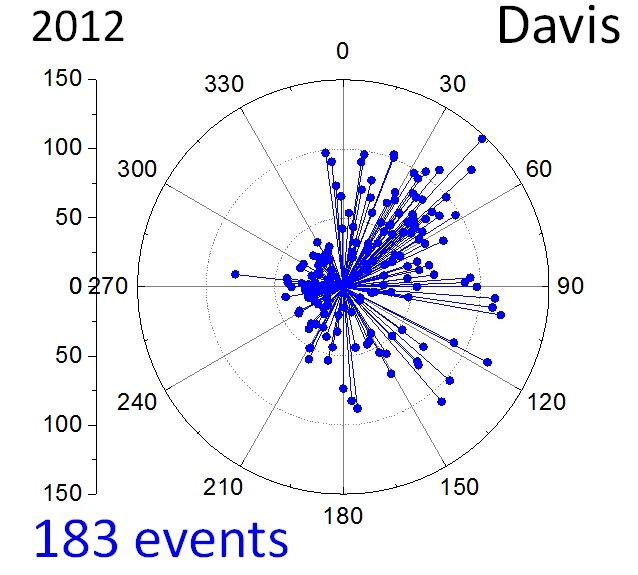
Our analysis to date has focused on measuring the spatial and temporal characteristics of the wealth of short-period (<1 hour) gravity wave events detected over Davis. These data have enabled a novel statistical study of the properties of the waves present during the long winter season. Our analyses have revealed the following new results: 1) year-to-year dominance for high velocity (>70 m/s) eastward wave motions and low velocity (<40 m/s) westward wave propagation, consistent with wind-driven filtering of the upward propagating wave spectrum, and 2) similar results from other participating ANGWIN stations at Syowa (Japan) and Rothera (U.K.) , all at similar latitudes, but separated by up to a few thousand kilometers, confirming our Davis findings, and providing the first distributed measurements of gravity waves around Antarctica.
Summary of the season 2014/15
This project involves measurements by a sensitive IR all-sky imager at Davis Station to investigate the properties of high-altitude (~87 km) atmospheric gravity waves over Antarctica. Gravity waves are generated by a range of meteorological disturbances and can transmit large amounts of energy into the upper atmosphere where they affect significantly the weather on the "edge of space". The measurements are made as part of an international collaborative program (ANGWIN) where similar observations are concurrently being made from several other international research stations around Antarctica, and deep in the interior at South Pole. The overall program goal is to determine the characteristics and impact of mesospheric gravity waves on a large, continental-wide scale, over Antarctica.
Automatic camera observations have successfully continued for a third consecutive winter season, as planned. We have now completed analysis of the first two years of data (2012 and 2013) and a hard disk with the new 2014 data was recently (April 2015) received.
Our analysis to date has focused on measuring the spatial and temporal characteristics of the wealth of short-period (<1 hour) gravity wave events detected over Davis. These data have enabled a novel statistical study of the properties of the waves present during the long winter season. Our analyses have revealed the following new results: 1) year-to-year dominance for high velocity (>70 m/s) eastward wave motions and low velocity (<40 m/s) westward wave propagation, consistent with wind-driven filtering of the upward propagating wave spectrum, and 2) similar results from other participating ANGWIN stations at Syowa (Japan) and Rothera (U.K.) , all at similar latitudes, but separated by up to a few thousand kilometers, confirming our Davis findings, and providing the first distributed measurements of gravity waves around Antarctica.
Summary of the season 2013/14
This project involves the operation of an IR all-sky imager at Davis Station to study atmospheric gravity waves in the upper mesosphere. The measurements are made as part of an international collaborative program (ANGWIN) where similar observations from several stations around Antarctica are being conducted to study the effects of mesospheric gravity waves on a continental scale over Antarctica.
Automatic camera observations sucessfully started in March and terminated in October for each year, as scheduled. For this second year of the program we have now obtained two winter seasons (2012 and 2013) of measurments from Davis.
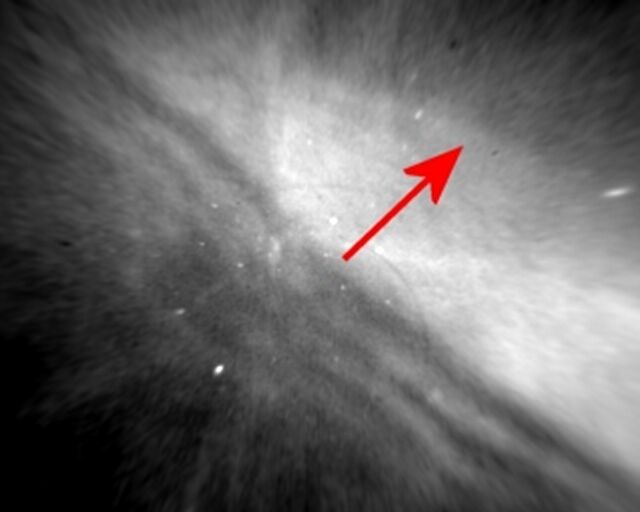
A hard disk with the data was sent to USU in February 2013 and recently in 2014. The analysis to date has focussed on 2013 data which contained high-quality information on a wealth of short-period gravity wave events over Davis. The initial data analysis has revealed the following new results: 1) a strong anisotropy in the propagation direction for the waves towards the NE, 2) preference for exceptionally high observerd wave phase speeds (>80 m/s) after winter solstice, and 3) unusual strong bursts of mesospheric "Bore" events after solstice, also with NE propagation.
Summary of the season 2012/13
This project involves the operation of a new IR all-sky imager at Davis Station to study atmospheric gravity waves in the upper mesosphere. The measurements are made as part of an international collaborative program (ANGWIN) where similar observations from several stations around Antarctica will be combine together to study the large scale dynamics of mesospheric gravity wave over the Antarctic Continent.
For this first year of the program, the all-sky IR camera was purchased by Utah State University under a grant with the National Science Foundation and was delivered to AAD (attn Damian Murphy) in September 2011. The camera was then transported to Davis and successfully installed by onsite technical support in the summer season 2011-12. Automatic observations started in March 2012 and and terminated in October 2012, as scheduled.
A hard disk with the data was sent to USU in February 2013 and we are delighted with the quality of the data which are now under initial investigation.
Related publications
-
ANGWIN: Antarctic Gravity Wave Instrument Network Poster number M04p-157 27th IUGG General Assembly, Montreal, Canada, July 8-18 2019, 2019
(Ref: 16251)
Category 3: Poster
-
A study of short-period atmospheric gravity waves observed over Rothera, Antarctica Journal of Geophysical Res. Atmosphere, 2018
(Ref: 16141)
Authors:Category 1: Peer-reviewed literature
-
Investigating gravity waves in polar mesospheric clouds using tomographic reconstructions of AIM satellite imagery Space Physics, 2018
(Ref: 16142)
Category 1: Peer-reviewed literature
-
Atmospheric gravity wave science in the Polar regions Earth and Space Science News, 2019
(Ref: 16132)
Category 3: Article
-
Characteristics of mesospheric gravity waves over Antarctica observed by Antarctic Gravity Wave Instrument Network imagers using 3-D spectral analyses Journal of Geophysical Research: Atmospheres, 2017
(Ref: 15893)
Authors:Category 1: Peer-reviewed literature