
Project information
Project aim
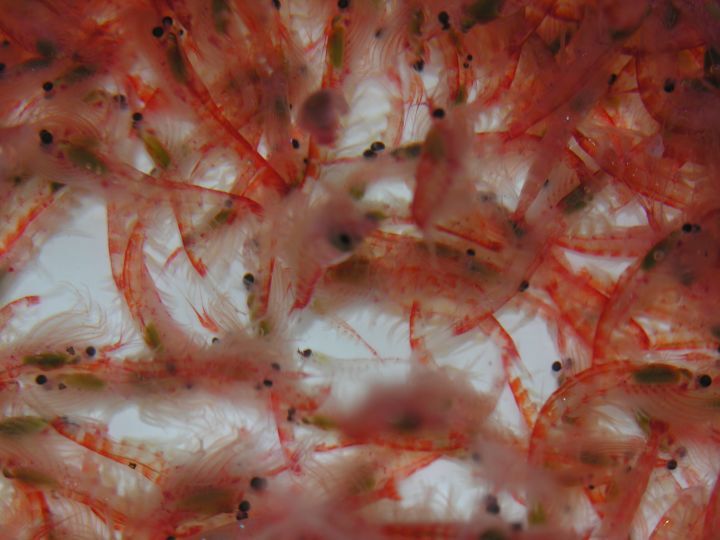
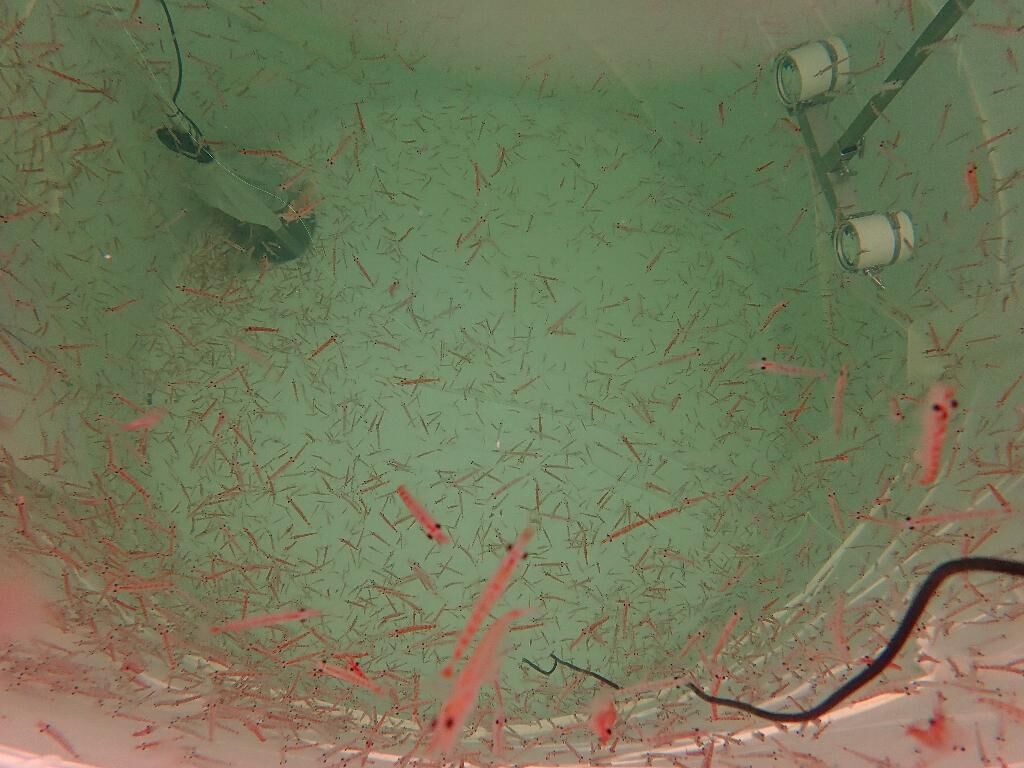
Antarctic krill is the key species of the Southern Ocean ecosystem. Its fishery is rapidly expanding and it is vulnerable to changes in climate. Australia has over a decade of krill abundance and distribution data collected off Eastern Antarctica. This project will analyse these datasets and investigate if krill abundance and distribution has altered over time. The results are important for the future management of the fishery, as well as understanding broader ecological consequences of change in this important species.
Project milestones
Summary of the project achievements 2016/17
Antarctic krill is the key species of the Southern Ocean ecosystem. Its fishery is rapidly expanding and it is vulnerable to changes in climate. This project analysed existing krill datasets aiming to understand the status and trends of krill populations in the region and to design a targeted data collection plan on research and commercial vessels that contributes differentiating the relative contributions of the effects of fishery and climate change on the regional ecosystem. We further developed a project proposal for a ship-based acoustic line-transect survey to estimate krill biomass coupled with observations of higher-order dependent species of seabirds and marine. During the course of this project krill fishery re-started after 25 years of its hiatus within the waters of the Australian Antarctic Territory. This project also played a vital role for initiating the risk assessment framework for krill fishery in the Indian Ocean ensure to ensure orderly development of the krill fishery in the region in the coming years.
Summary of the season 2015/16
Antarctic krill is the key species of the Southern Ocean ecosystem. Its fishery is rapidly expanding and it is vulnerable to changes in climate. Australia has over a decade of krill abundance and distribution data collected off Eastern Antarctica. This project will analyse these datasets and investigate if krill abundance and distribution has altered over time. The results are important for the future management of the fishery, as well as understanding broader ecological consequences of change in this important species. This season the project continued to pursue analyses on krill abundance and fishery observer data.
Summary of the season 2014/15
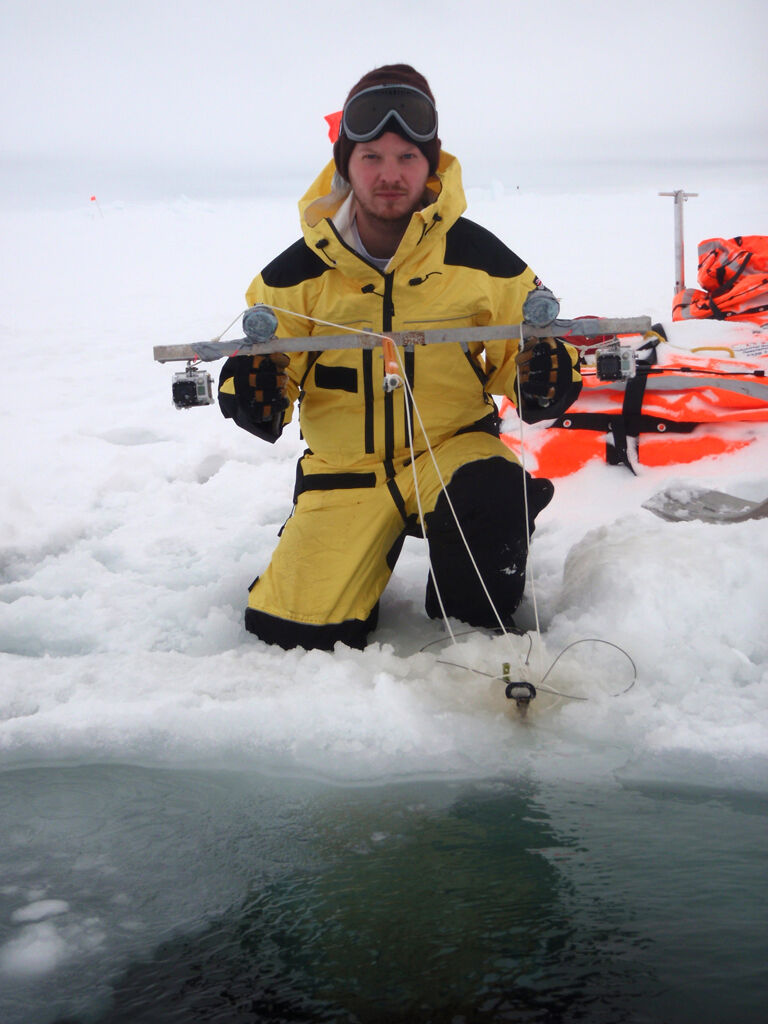
Antarctic krill is the key species of the Southern Ocean ecosystem. Its fishery is rapidly expanding and it is vulnerable to changes in climate. Australia has over a decade of krill abundance and distribution data collected off Eastern Antarctica. This project will analyse these datasets and investigate if krill abundance and distribution has altered over time. The results are important for the future management of the fishery, as well as understanding broader ecological consequences of change in this important species. This season the project pursued analysis of historical krill fishing data and krill fishery observer data. The project further undertook marine science survey to observe spatial variability of krill off predator colonies.
Summary of the season 2013/14
Antarctic krill is the key species of the Southern Ocean ecosystem. Its fishery is rapidly expanding and it is vulnerable to changes in climate. Australia has over a decade of krill abundance and distribution data collected off Eastern Antarctica. This project will analyse these datasets and investigate if krill abundance and distribution has altered over time. The results are important for the future management of the fishery, as well as understanding broader ecological consequences of change in this important species. This season the project pursued updating and analysis of Krill Base (circumpolar abundance database for Antarctic krill). Spatial modelling to elucidate features that are important drivers of krill distribution and swarm behaviour were also undertaken.
Summary of the season 2012/13
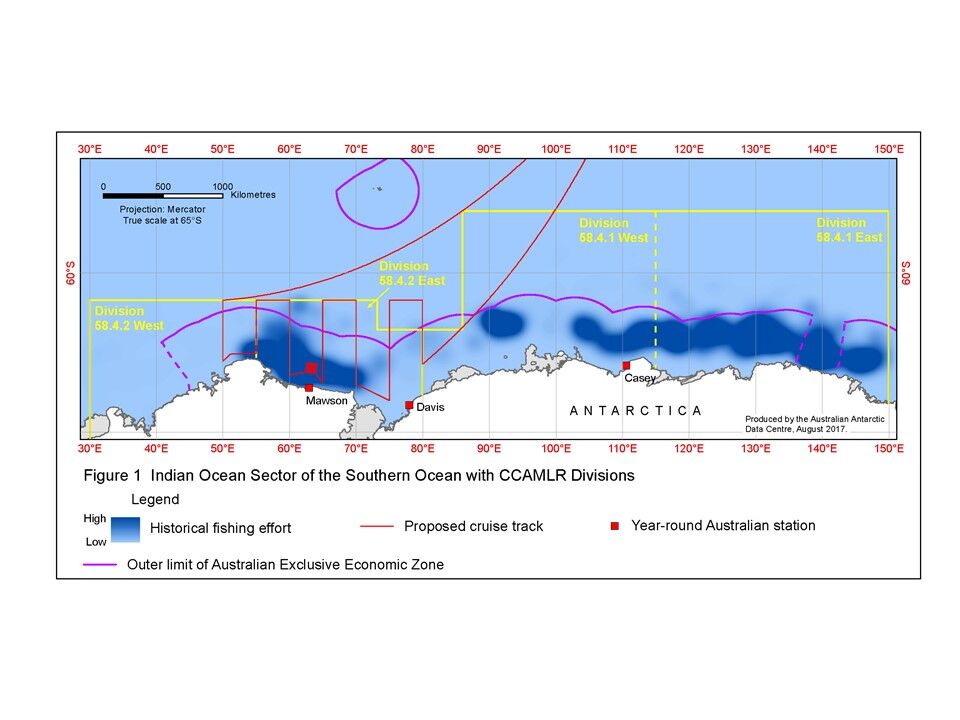
Antarctic krill is the key species of the Southern Ocean ecosystem. It's fishery is rapidly expanding and it is vulnerable to changes in climate. Australia has over a decade of krill abundance and distribution data collected off Eastern Antarctica. This project will analyse these datasets and investigate if krill abundance and distribution has altered over time. The results are important for the future management of the fishery, as well as understanding broader ecological consequences of change in this important species. This season the project pursued analysis of existing dataset and revised krill acoustic biomass estimate for CCAMLR Division 58.4.2 within Australian Antarctic Teritory. Spatial modelling to elucidate features that are important drivers of krill distribution and swarm behaviour were also undertaken.
Related publications
-
Scientific echosounder data provide a predator's view of Antarctic krill (Euphausia superba) Scientific Data, 2023
(Ref: 16853)
Category 1: Peer-reviewed literature
Raw acoustic data were collected in East Antarctica from the RSV Aurora Australis during two surveys: the Krill Availability, Community Trophodynamics and AMISOR Surveys (KACTAS) and the Krill Acoustics and Oceanography Survey (KAOS) in the East Antarctic (centre coordinate 66.5° S, 63° E).
-
Zooplankton abundance and biomass size spectra in the East Antarctic sea-ice zone during the winter–spring transition Deep-Sea Research II, 2016
(Ref: 15749)
Authors:Category 1: Peer-reviewed literature
-
Climate change and Southern Ocean ecosystems I: how
changes in physical habitats directly affect marine biota Global Change Biology, 2014
(Ref: 15297)
Authors:Constable A.J.Melbourne-Thomas J.Corney S.P.Arrigo K.R.Barbraud C.Barnes D.K.A.Bindoff N.L.Boyd P.W.Brandt A.Costa D.P.Davidson A.T.Ducklow H.W.Emmerson L.Fukuchi M.Gutt J.Hindell M.A.Hofmann E.E.Hosie G.W.Iida T.Jacob S.Johnston N.M.Kawaguchi S.Kokubun N.Koubbi P.Lea M.-A. Makhado A.Massom R.A.Meiners K.Meredith M.P.Murphy E.J.Nicol S.Reid K.Richerson K.Riddle M.J.Rintoul S.R.Smith Jr W.O.Southwell C.Stark J.S.Sumner M.Swadling K.M.Takahashi K.T.Trathan P.N.Welsford D.C.Weimerskirch H.Westwood K.J.Wienecke B.C.Wolf-Gladrow D.Wright S.W.Xavier J.C.Ziegler P.Category 1: Peer-reviewed literature
-
A method for identifying sound scattering layers and extracting key characteristics Methods in Ecology and Evolution, 2015
(Ref: 15523)
Category 1: Peer-reviewed literature
-
The R package EchoviewR for automated processing of active acoustic data using Echoview Frontiers in Marine Science, 2015
(Ref: 15524)
Category 1: Peer-reviewed literature