
Project information
Project aim
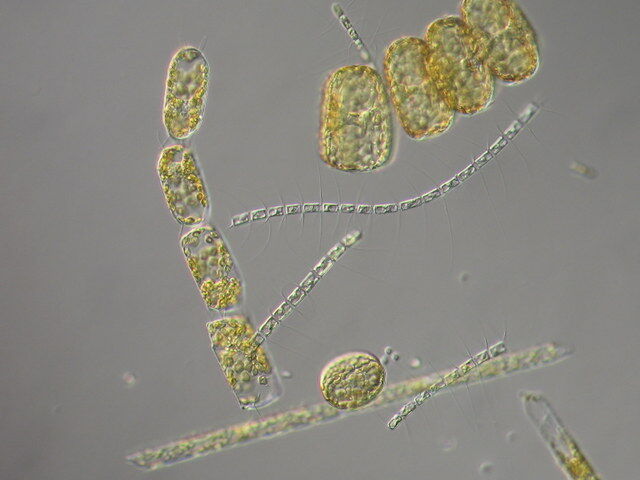
Manmade CO2 has increased ocean acidity by 30% and it is projected to rise 300% by 2100. Antarctic waters will be amongst the earliest and most severely affected by this increase. Microbes are the base of the marine food chain and primary drivers of the biological pump. This project will incubate natural communities of Antarctic marine microbes in minicosms at a range of CO2 concentrations to quantify changes in their structure and function, the physiological responses that drive these changes, and provide input to models that predict effects on biogeochemical cycles and Antarctic food webs.
Project milestones
Summary of the season 2016/17
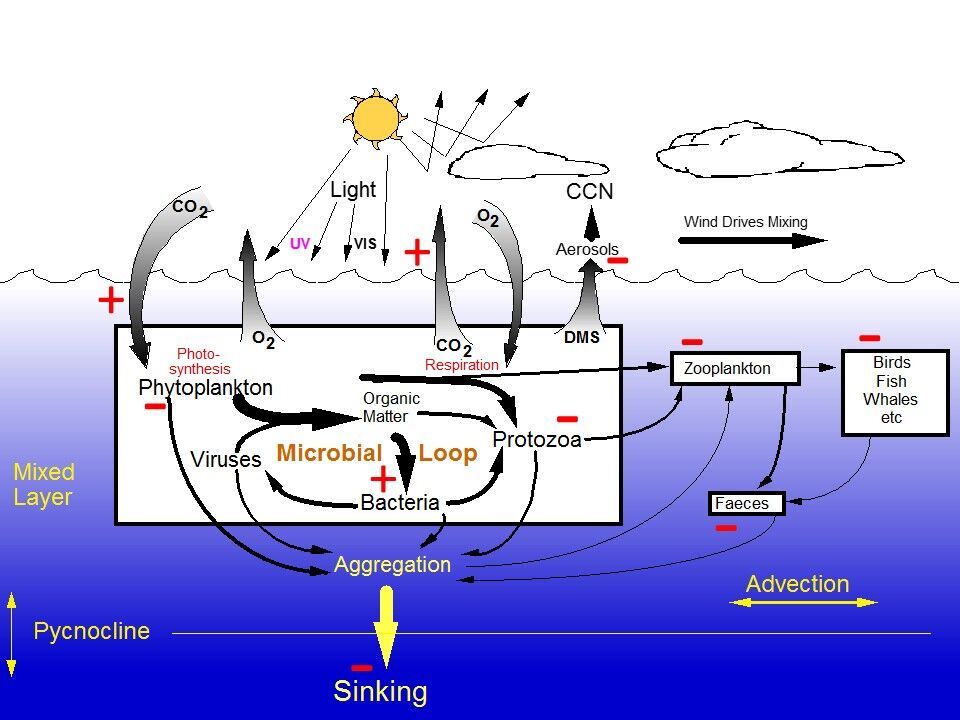
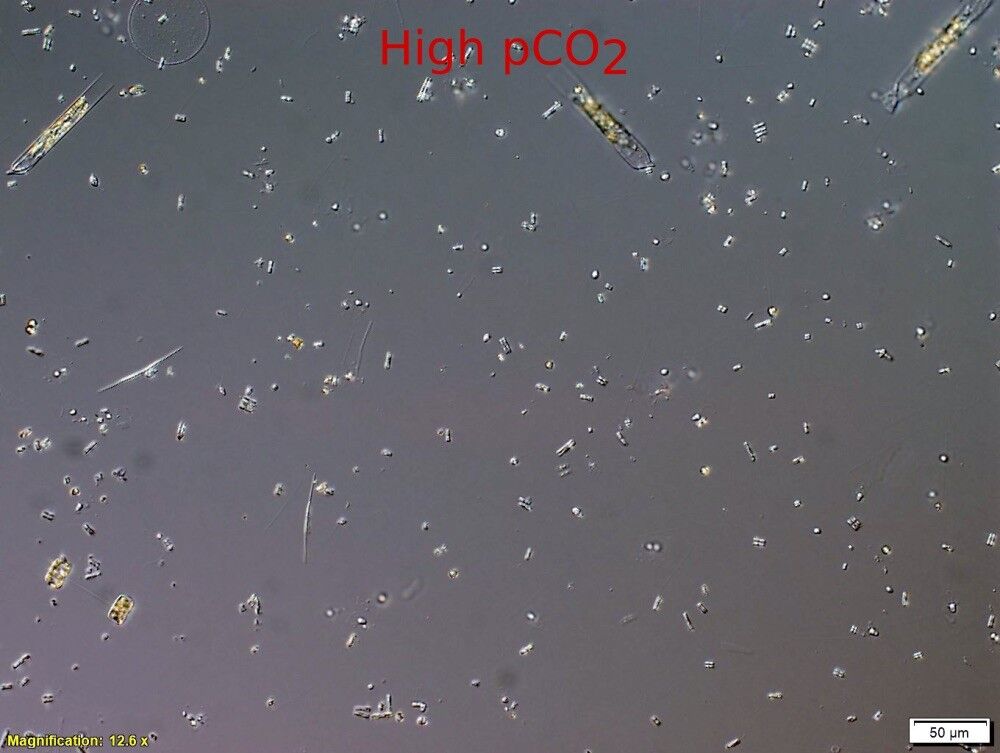
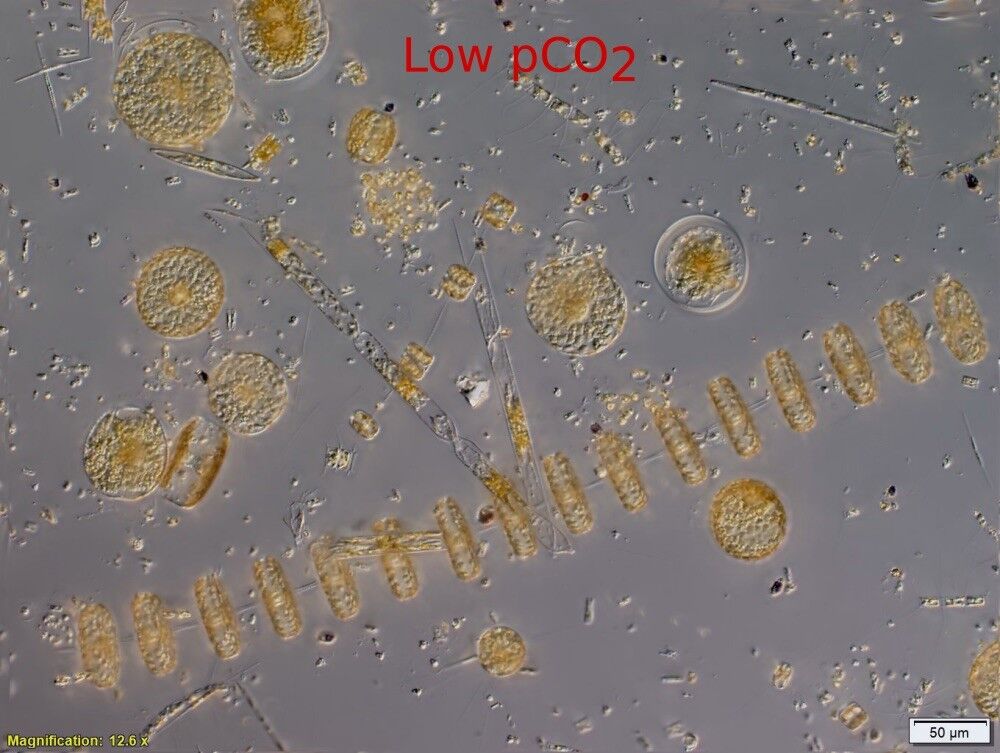
This year has been spent completing the painstaking analysis of samples necessary to determine the effects of elevated CO2 on the composition, abundance and productivity of entire microbial communities from Antarctic coastal waters. These show that elevated CO2 concentrations (and the coincident increase in hydrogen ion concentration) has pervasive effects on microbial communities in Antarctic coastal waters. For phytoplankton (single celled plants), elevated CO2 slows their growth, rate of photosynthesis, and favours small cells (both small species in the community and small strains within a species). Protozoan growth is also slowed by exposure to elevated CO2 concentrations. The inhibition of protozoa coincides with higher abundance of prokaryotes (bacteria and archea), suggesting that the effects of CO2 on these single celled animals releases prokaryotes from top-down control by grazers. Fascinatingly, these effects are consistent within seasons and among years. While the changes can be subtle, they may have profound consequences for the quality, quantity and availability of food for the rest of the Antarctic food web. Phytoplankton (single-celled marine plants) facilitate the "biological pump". Photosynthesis by phytoplankton captures CO2 from the air, some of which is carried to depth and stored in the deep ocean as the cells sink. Favouring small, slow-sinking, phytoplankton slows this ocean's capture and storage of CO2. We also find that rates of photosynthesis fall as CO2 increases, further reducing the drawdown of CO2 by phytoplankton. If indicative of the responses of Antarctic microbes to rising CO2, our results indicate ocean acidification is likely to change elemental cycles in Antarctic waters with feedbacks to climate change and alter food webs with repercussions for fisheries productivity and wildlife conservation.
Chief Investigator has now retired.
Summary of the season 2015/16
Project 4026 has progressed exceedingly well, with analysis and interpretation samples from the first successful field season in 2014/15 providing valuable insights into the nature of microbial responses to elevated pCO2. Results from the 2014/15 summer reinforced that natural microbial communities in Antarctic coastal waters are sensitive to elevated concentrations of CO2. Fascinatingly, these changes appear to be consistent within and among seasons irrespective of changes in the microbial community and their physical environment. Thus, CO2 concentrations predicted near the end of this century under the business as usual scenario (RCP 8.5, IPCC 2015), are likely to cause a decline in the biomass, productivity and size of phytoplankton, slower growth of protozoa and an increase in the abundance and productivity by bacteria. If indicative of future changes in marine microbes in Antarctic waters, such changes threaten the Antarctic food web and are likely to exacerbate global warming (see attached figure 1). However, the 2014/15 experiments also showed that various factors mediate the impact of elevated CO2 of microbial communities. The damaging effects of CO2 are greatly reduced when nutrients limit phytoplankton growth and prolonged adjustment of their physiology can benefit the growth and production of at least some phytoplankton when exposed to moderate CO2 increase (~ 500 to 650 µatm). Furthermore, exposure to elevated CO2 also changed the composition of the microbial community, selecting for organisms that better tolerate high concentrations. Thus, while the nature of the effect of CO2 remains consistent over time, the magnitude of the change varies seasonally. The challenge is now to model the season succession in CO2-induced affects and determine the cumulative impact.
Summary of the season 2014/15
Project 4026 had a brief but highly successful field season at Davis Station in the 2014/15 summer. Two separate experiments were performed to study the effects of elevated pCO2 on cell physiology and community composition of Antarctic marine microbes (phytoplankton, protozoa and bacteria). The microbial community studied differed from those studied previously but preliminary results indicate that their responses to elevated pCO2 were similar to those in experiments conducted in the 2008/09 summer. Thus despite conducting these experiments at different years and using different communities their response remains similar. Our results show that under a business as usual CO2 release scenario,rates of phytoplankton will decline and smaller phytoplankton will become more prevalent in Antarctic waters before the end of this century. As the base of the food web, such changes are likely to reduce the amount and size of food available to grazers. As mediators of global climate, the decline in productivity and increase in small phytoplankton is likely to reduce draw-down of CO2 from the atmosphere and loss of carbon to the deep ocean, exacerbating climate change.
Summary of the season 2013/14
The air transport system was unable to deliver 5 members of the Project's research team to Davis Station during the 201-14 summer. Thus it was not possible to performing the planned experiments studying the effects of different CO2 concentrations on the composition and abundance of Antarctic marine microbes. Instead the 2 project personnel at Davis ran an experiment to study the variability in growth of microbes among the 6 incubation tanks (minicosms) with all tanks were exposed to the same pCO2. Analysis of samples from this experiment continues but preliminary results show that differences in microbial community abundance and composition among tanks are very small. Consequently, any differences we observe among tanks exposed to different CO2 concentrations are likely to be due to the experimental treatment rather than unrelated variation in the microbial growth as a result of small physical or biological differences among tanks. This work provides a valuable foundation for future assessments of the effects of stressors on marine microbes using our minicosms to estimate the effects of CO2 concentration and other stressors.
Despite the limited success of the field season, papers and reviews of the effects of elevated pCO2 on marine organisms have been submitted to journals and the chief investigator on this project co-convened 2 workshops to foster collaborations among the ocean acidification research community.
Summary of the season 2012/13
Using data from 2008/09, statistics analyses and models developed during the first year of this project show that CO2 concentration significantly changes the composition, abundance and productivity of Antarctic microbes community. Increasing CO2 favoured small phytoplankton over large and the effects of these changes ramify through the ecosystem. Refinement of these statistical and modelling tools continues. The first year of this project has also allowed preparation of methods, equipment, consumables and protocols for the field season at Davis Station in 2013/14, plus adoption of techniques that will increase the speed and precision of analyses.
Related publications
-
Ocean acidification alters the nutritional value of Antarctic diatoms New Phytologist, 2022
(Ref: 16437)
Authors:Category 1: Peer-reviewed literature
-
Ocean acidification reduces growth and grazing impact of Antarctic heterotrophic nanoflagellates Biogeosciences, 2020
(Ref: 16334)
Category 1: Peer-reviewed literature
-
Effects of ocean acidification on Antarctic marine organisms: A meta-analysis Ecology and Evolution 10, 2020
(Ref: 16296)
Category 1: Peer-reviewed literature
-
Acidification diminishes diatom silica production in the Southern Ocean Nature Climate Change, 2019
(Ref: 16177)
Category 1: Peer-reviewed literature
-
Ocean acidification changes the structure of an Antarctic coastal protistan community Biogeosciences, 2018
(Ref: 16007)
Category 1: Peer-reviewed literature