

Project information
Project aim
Gravity waves are atmospheric waves that play a critical role in defining the dynamical state of our atmosphere. Numerical models cannot fully describe the atmosphere without including these waves, however, their small scale makes it difficult to represent them directly; parameterization schemes must be used. At present, the poor quality of these parameterizations limits a model's ability to accurately represent stratospheric ozone change and its consequences for our weather. This project seeks to improve climate models by improving gravity wave parameterization schemes.
Project milestones
Summary of the project achievements 2016/17
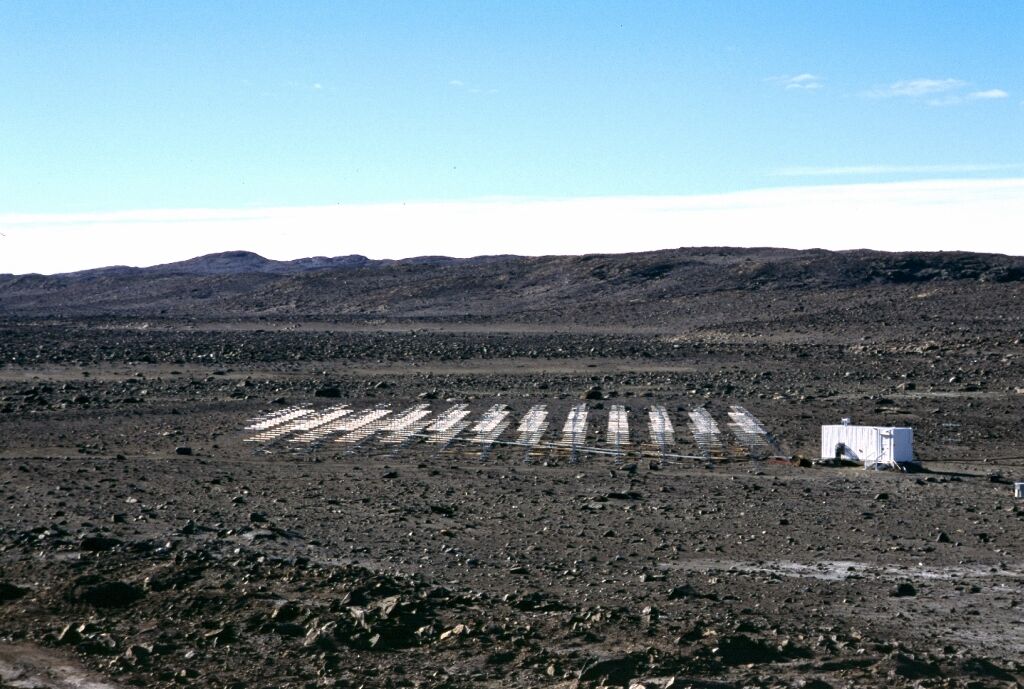
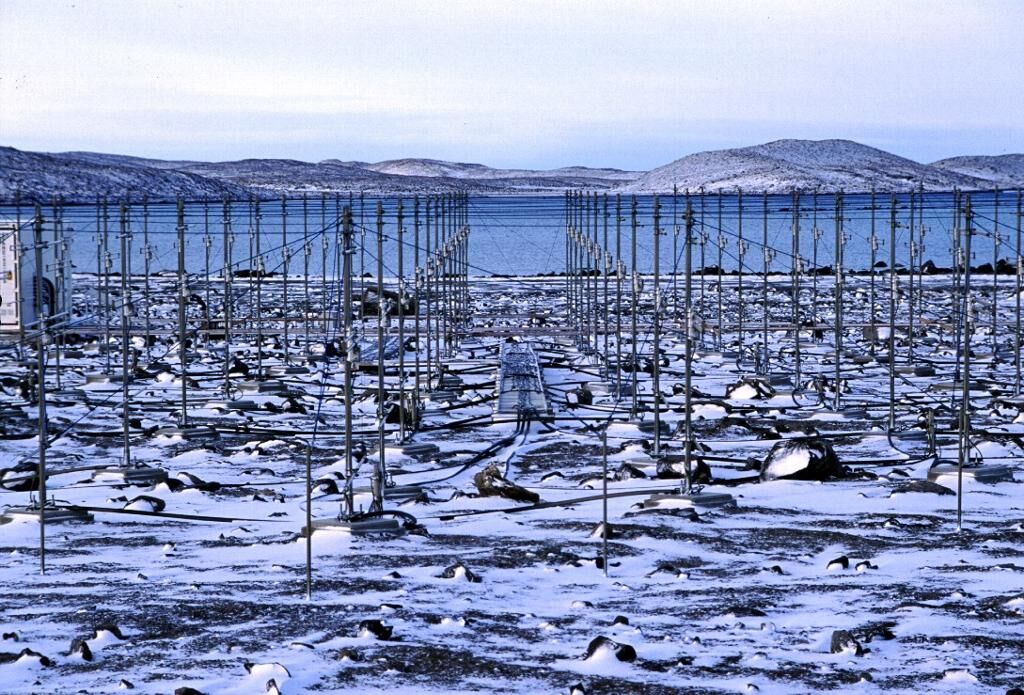
Our quest to improve our understanding of small-scale atmospheric waves and to find the best way to represent them in weather and climate models has taken our research team to a number of scientific frontiers. Improved observational capabilities have been developed at Davis station and used for wave measurements in various ways. We have seen waves created as air flows off the topography of the Antarctic plateau. High above us, we have seen large amplitude waves that can provide considerable forcing in the atmosphere.
The nature of waves near their sources has been explored both through observations made at Davis with our radar wind profiler, and through studies using very fine scale versions of atmospheric models. These modelling studies allow us to extend our knowledge of atmospheric waves beyond our direct observations.
To bring this knowledge to bear on model designs, we have focused on the workings of two climate models. They differ significantly in the way they diagnose and depict the presence of small-scale waves. These differences have allowed success in improving model design while highlighting the difficulties in making wave representations more realistic.
These difficulties prevented us from fully achieving our goal of providing parameters for new model designs. More work is needed on the way small-scale waves should be represented, but the observations and modelling carried out in this project is guiding the path we need to take.
Summary of the season 2015/16
Our quest for an improved understanding of gravity waves and the best way to represent them in climate models is leading us into new areas of investigation. Observational studies around the globe are showing that the ‘intensity’ of gravity wave activity (the wave momentum flux) spans a much larger range than previously thought; some extremely strong wave events are observed that cannot be discounted and that have a significant role to play in driving atmospheric circulations. Observational studies carried out with one of our radars at Davis support the notion of a so called ‘log-normal’ distribution of wave momentum fluxes, and show a similar structure to independent measurements at other sites. Modelling trials that incorporate these distributions are providing encouraging results.
Other modelling studies are showing that gravity waves generated by landforms such as mountains and islands have a potentially important role to play in improvements to models at levels above the troposphere. This realization expands the role of this wave class and encourages more sophisticated representations. Our observational and fine-scale model studies will provide a reference for parameterization developments. They will also allow comparisons with waves from meteorological systems and the clarification of the relative role of these two wave types.
Our research is bringing new knowledge to the problem of representing gravity waves. At the same time, these new realizations underline the unpredictable nature of science.
Summary of the season 2014/15
Improvements to our understanding of gravity waves and their representation in climate models have global consequences. It is appropriate then, that recent activities within this project have spanned three countries and both hemispheres.
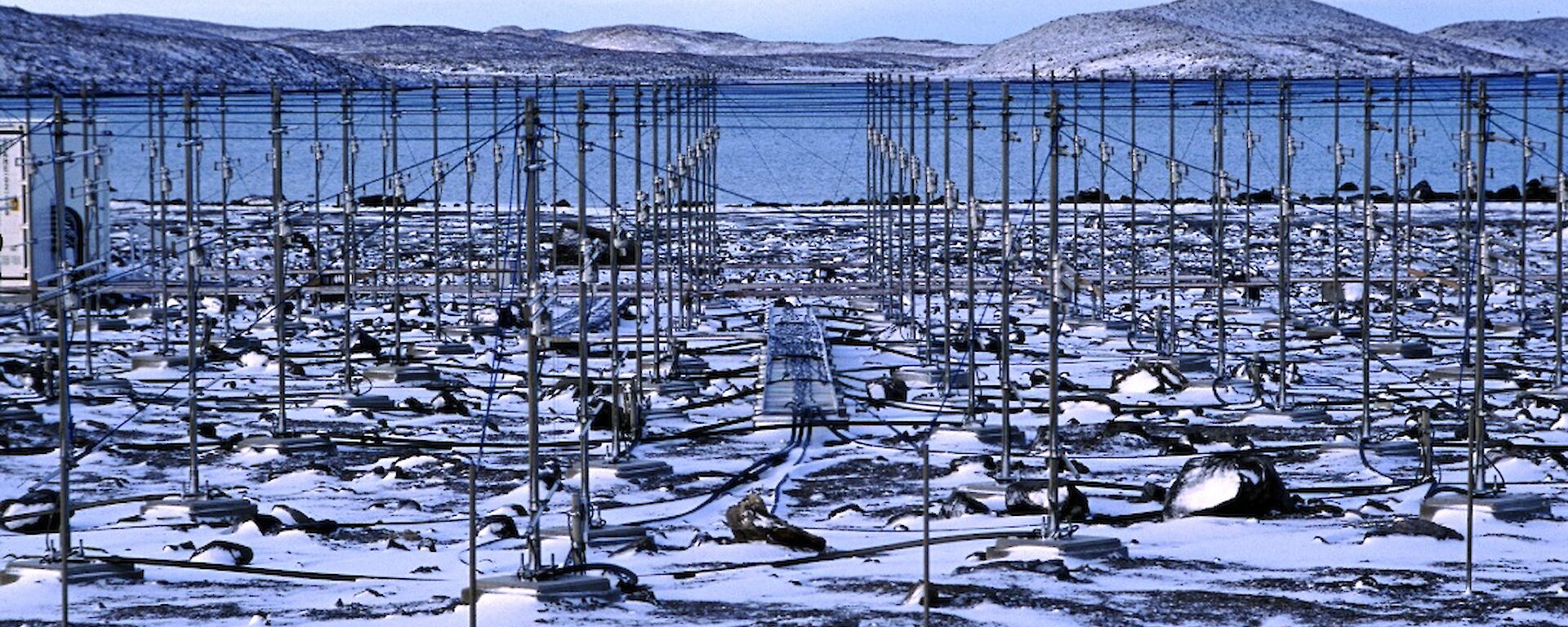
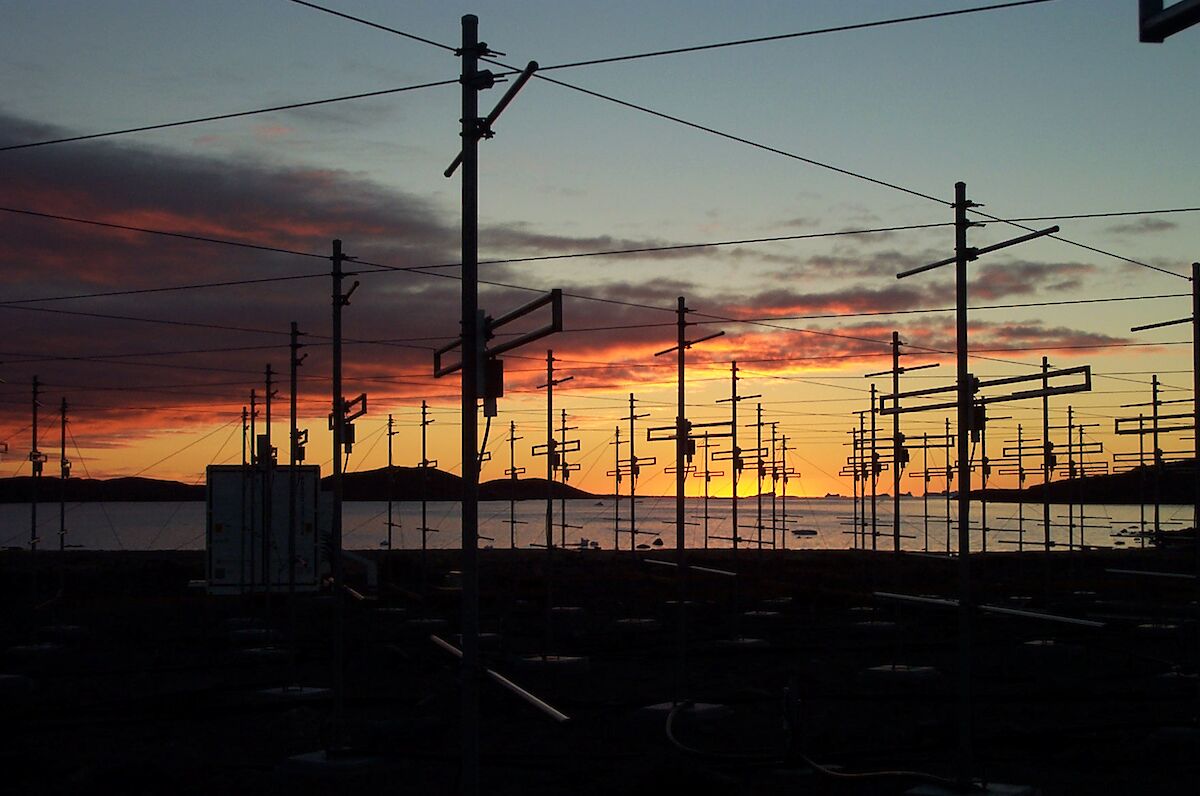
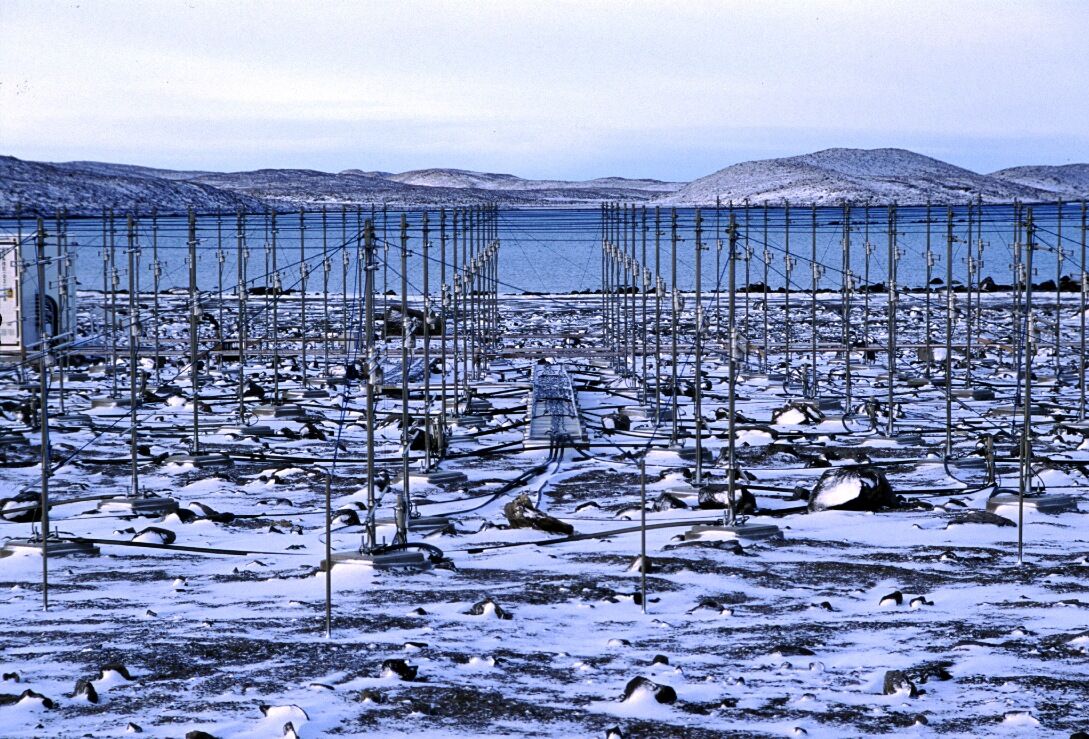
Our recently upgraded atmospheric radar at Davis station is now providing excellent wind observations over a large range of heights. During the summer of 2014-15, it was tasked with making measurements of a parameter of central importance to gravity wave parametrization schemes: the momentum flux. It has also provided observations that have allowed us to better understand the interaction between large scale meteorological systems and wave production near Davis.
Our observing program extended beyond Antarctica through our involvement in the American-led DEEPWAVE airborne gravity wave experiment, with sorties of the NCAR aircraft flown from Christchurch, New Zealand over Tasmania, Macquarie Island and the southern ocean. In collaboration with colleagues from the University of Adelaide, we were able to operate an atmospheric radar from Kingston that provided the high quality wind and tide measurements needed for analysis of DEEPWAVE observations.
Relationships between modelling and observational communities were further strengthened through collaborative activities. High resolution model studies have been carried out by Australian and Japanese researchers using a Japanese model. An American climate model has been used as a test bed for wave parameterization development and the findings of these tests are being used to aid in developments of our Australian climate and weather model.
The research activities of this project are bringing together scientists from around the world to improve linkages between modelling and observations. The resulting improvements to climate models will allow better predictions of our future climate.
Summary of the season 2013/14
Although called upon to meet some unexpected challenges, the project team has achieved much in the last year. Relationships between small-scale wave (gravity wave) characteristics and the state of large-scale wind fields in the troposphere (0-10 km) and lower stratosphere (15-32 km) have been explored. Collaborations with model developers have been strengthened and the final hurdles in updating our radar system at Davis have been overcome. An opportunity to contribute to an international observing program has been taken up.
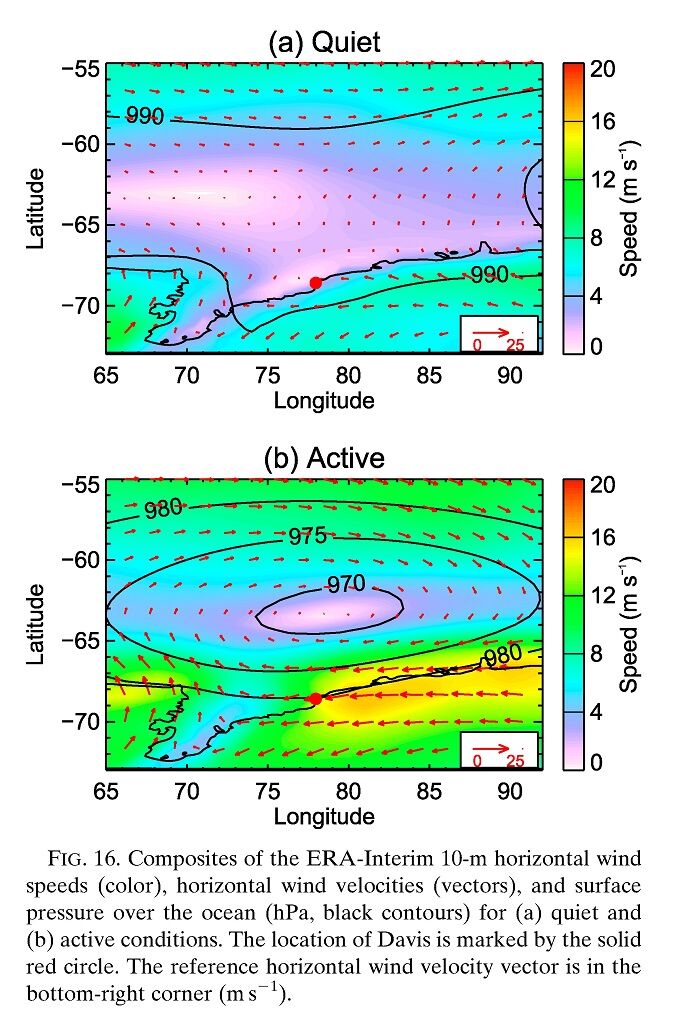
Two manuscripts describing the gravity wave field have been prepared. The first shows that the strongest high-frequency wave activity above Davis in winter, as measured by our wind profiler, coincides with the presence of low pressure systems to the north of the station. The second uses weather balloon observations to show that low-frequency gravity waves are being made throughout the lower stratosphere above Davis in winter.
Improvements to the Davis wind profiling radar’s power system have yielded an increase in data quality and extent. Wind measurements from 2 to approximately 15 km are now obtained every few minutes. These are providing both AAD and Bureau of Meteorology scientists with unprecedented views of the wind field above Davis.
Finally, we are participating in the international DEEPWAVE experiment being conducted from Christchurch in June and July of 2014. Flights of a research aircraft, with an extensive array of imagers, lidars and other instruments, are being undertaken over New Zealand, Tasmania and the surrounding oceans. The installation of a meteor detection wind radar at the AAD’s Kingston site with colleagues from Adelaide University and ATRAD, the radar manufacturer has allowed critical wind measurements between 80-100 km altitude. These will provide an important reference for DEEPWAVE observations and modelling and will add another dimension to activities within the gravity wave drag parameterization project.
Summary of the season 2012/13
In the first year of this five-year project, the focus has been on improving our ability to observe small-scale waves in the wind and temperature, predict the consequences of their production and dissipation and further assess what has so far been acheived by our international colleagues. This has been successful: our wind-profiling radar at Davis has been upgraded for increased data quality and ease of use; a new member of our research team has brought extensive new skills and experience; and a review on the state of the field has been presented to our peers.
The international linkages of the project have remained strong and team members are working closely with colleagues from the US and Japan on their observing instruments and atmospheric models.
Although unforseen factors and the isolation of the Antarctic provide us with challenges, good progress is being made toward our goal of improving the representation of the stratosphere's influence in climate and weather models.
Related publications
-
Seasonal and Local Time Variation in the Observed Peak of the Meteor Altitude Distributions by Meteor Radars JGR Atmospheres, 2024
(Ref: 17209)
Authors:Category 1: Peer-reviewed literature
Meteoroids of sub-milligram sizes burn up high in the Earth's atmosphere and cause streaks of plasma trails detectable by meteor radars. The altitude at which these trails, or meteors…
-
Climatological comparison of polar mesosphere summer echoes over the Arctic and Antarctica at 69°. Annales Geophysicae, 2024
(Ref: 17150)
Authors:Category 1: Peer-reviewed literature
Polar mesosphere summer echoes (PMSE) have been observed for more than 30 years with 50?MHz VHF radars at various locations in the Northern Hemisphere. Continuous observation of PMSE is conducted on the northern Norwegian island of Andøya (69.3°?N) using the ALWIN radar (1999–2008) and MAARSY…
-
Interhemispheric Coupling Study by Observations and Modelling (ICSOM): Concept, Campaigns, and Initial Results Journal of Geophysical Research - Atmospheres, 2023
(Ref: 16848)
Category 1: Peer-reviewed literature
-
Interhemispheric differences of mesosphere–lower thermosphere winds and tides investigated from three whole-atmosphere models and meteor radar observations Atmospheric Chemistry and Physics, 2021
(Ref: 16572)
Authors:Category 1: Peer-reviewed literature
-
Characteristics of Gravity Wave Horizontal Phase Velocity Spectra in the Mesosphere Over the Antarctic Stations, Syowa and Davis Journal of Geophysical Research, 2023
(Ref: 16750)
Category 1: Peer-reviewed literature