

Project information
Project aim
Australia is exceptionally well placed to lead and partner international programs in Antarctic astronomy. These bring industry access to cutting edge technology and create opportunities in the infrastructure and support of Antarctic research. This project aims to maintain Australia’s lead in Antarctic astronomy, allowing us to capture the benefits of future international investment. Our participation in astronomical programs ensures continued technology exchange and builds our knowledge base in robotics and harsh-environment engineering while creating important new science opportunities.



Project milestones
Summary of the project achievements 2016/17
Over a five year period this project has enabled Australian collaboration with major astronomical experiments being conducted by China, the US, and Japan at the Antarctic stations at Dome A, South Pole, and Dome Fuji respectively.
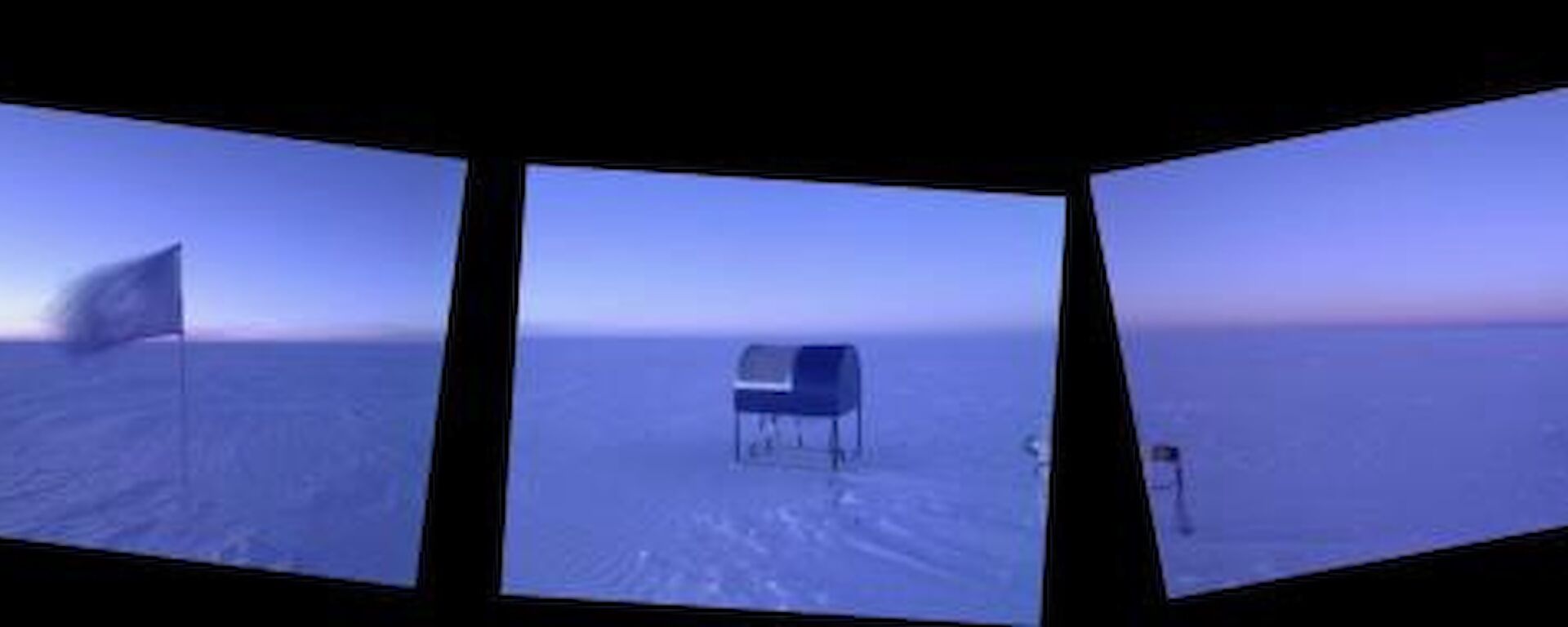
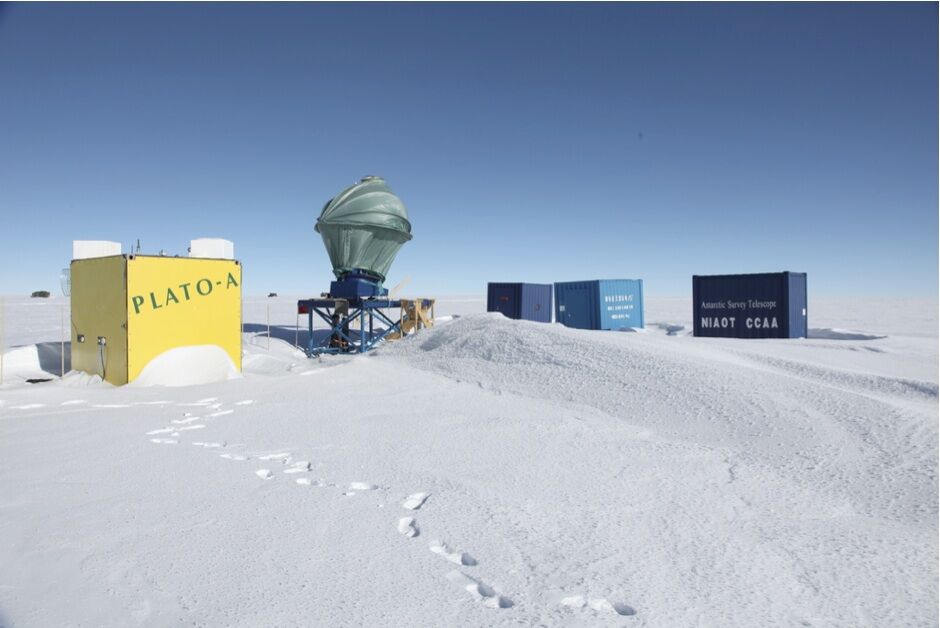
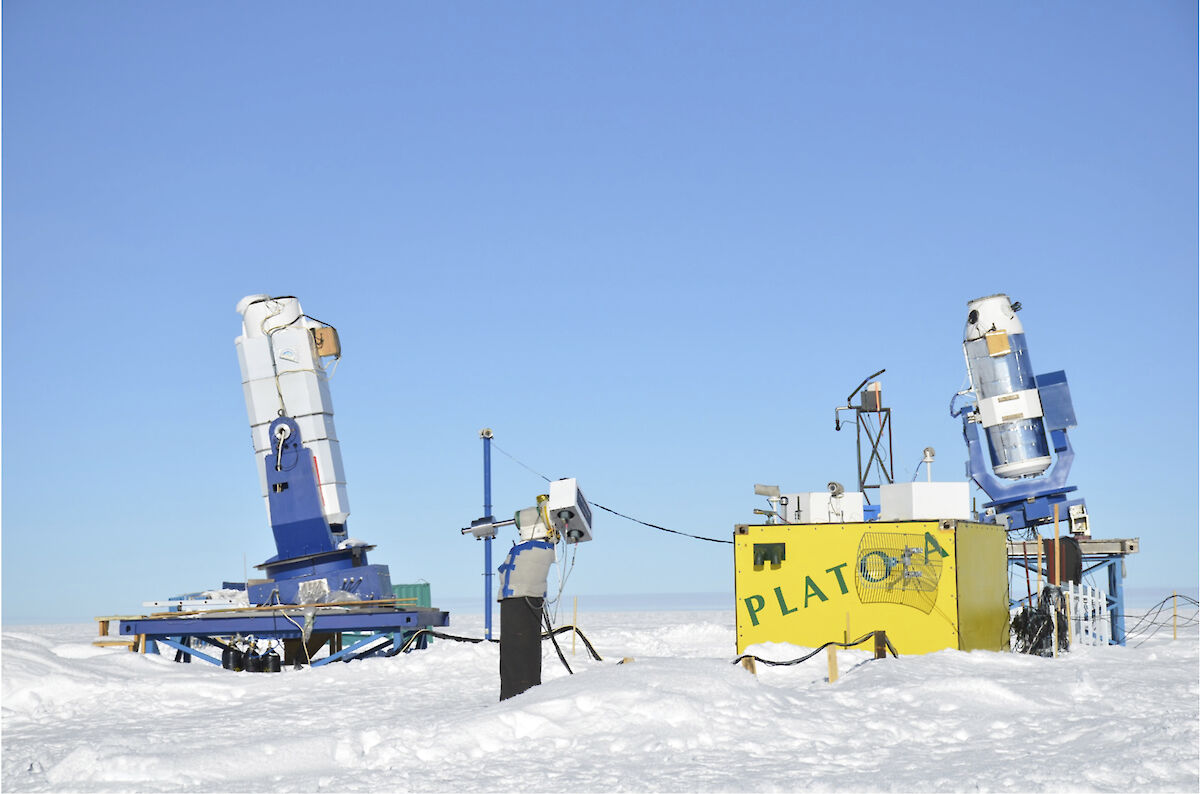
The AST3 project with China has seen the successful deployment of two 0.5 metre aperture optical telescopes at Dome A. The second telescope, AST3-2, has been working for two complete seasons now and 30 terabytes of astronomical images have been obtained. The 2016 data have been distributed freely to the Australian astronomical community. The 2017 data - currently awaiting return by traverse - includes the only observations from Antarctica of the gravitational wave event GW170817, which is one of the most significant astronomical discoveries of the decade.
We have recently begun a new collaboration with China on a third AST3 telescope, to be equipped with an infrared camera. The camera is funded by the Australian Research Council, and is currently under construction at the Australian Astronomical Observatory.
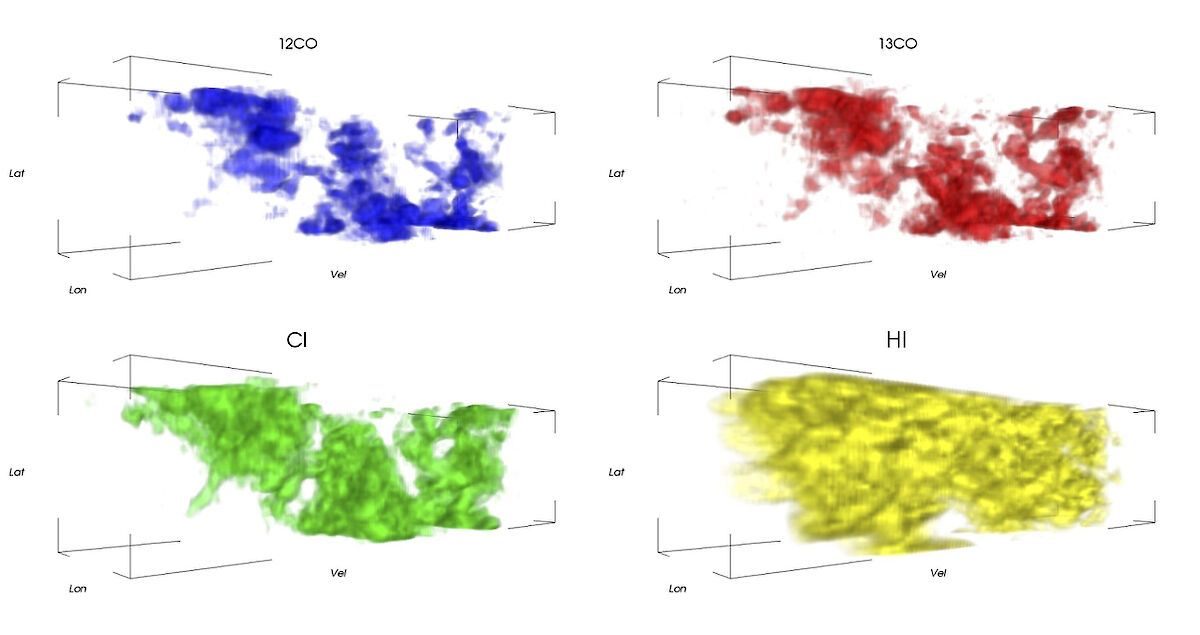
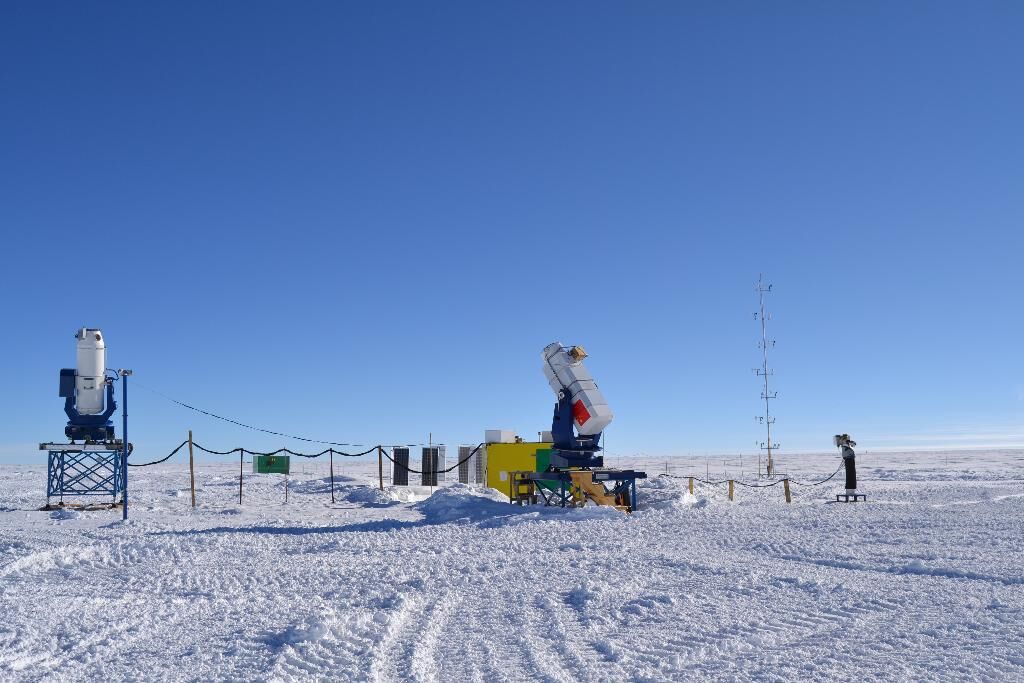
In collaboration with the US we have just completed a four year mission PLATO-R/HEAT to establish a 0.6 metre aperture terahertz telescope at Ridge A, a deep-field location in Antarctica 950 km from South Pole. Ridge A was chosen since satellite observations indicated that it was likely to be the best place on Earth for conducting terahertz observations. Our data from HEAT have confirmed that this is true. The main science driver was to map the Milky Way Galaxy at terahertz frequencies, which gives unique insight into how stars form. In particular, PLATO-R/HEAT can see emission from carbon atoms that is invisible to other telescopes.
Finally, in collaboration with Japan we have conducted the first measurements of the astronomical "seeing" (a measure of the quality of the atmosphere for astronomy) from Dome Fuji. The results confirm the extraordinary benefits of observing from Antarctica for astronomy.
Summary of the season 2015/16
PLATO-R/HEAT is a project to establish a 0.6 metre aperture terahertz telescope at Ridge A, a remote location in Antarctica. Ridge A was chosen since satellite observations indicated that it was likely to be the best place on Earth for conducting terahertz observations. These observations can otherwise only be performed from a high-altitude balloon or from space. The main science driver is to map the Milky Way Galaxy at terahertz frequencies (THz), which gives unique insight into how stars form. In particular, PLATO-R/HEAT can see emission from carbon atoms that is invisible to other telescopes.
PLATO-R was serviced during January 2016 by a team of 2 people from the University of Arizona. It was a dramatic moment when the Twin Otter aircraft landed & the team saw PLATO-R working perfectly under solar power, after having last been visited 12 months previously. Astronomical data of excellent quality has been returned via the Iridium satellite network. An public release of data from the experiment has been made available on-line. The first THz imaging from the Earth's surface has been undertaken in Antarctica.
The AST3 project provides an Australian contribution at the 10% level to a new optical telescope facility being established by the Chinese Centre for Antarctic Astronomy at Kunlun Station. The aim of AST3 is to survey the sky at high-precision using wide-field optical telescopes. The data will be used for a variety of scientific programs, notably searching for planets around other stars, rapidly detecting supernova explosions, astroseismology & studying variable stars. A successful service mission to Dome A was conducted in January 2016 by our Chinese colleagues, who serviced our PLATO laboratory there. The second AST3 telescope is now operating, and taking its first data as the winter darkness descends on Dome A.
Summary of the season 2014/15
PLATO-R/HEAT is a project to establish a 0.6 metre aperture terahertz telescope at Ridge A, a remote location in Antarctica. Ridge A was chosen since satellite observations indicated that it was likely to be the best place on Earth for conducting terahertz observations. These observations can otherwise only be performed from a high-altitude balloon or from space. The main science driver is to map the Milky Way Galaxy at terahertz frequencies (THz), which gives unique insight into how stars form. In particular, PLATO-R/HEAT can see emission from carbon atoms that is invisible to other telescopes.
PLATO-R was successfully serviced & upgraded during January 2015 by a team of 4 people from UNSW & University of Arizona. It was a dramatic moment when the Twin Otter aircraft landed & the team saw PLATO-R working perfectly under solar power, after having last been visited 12 months previously. The HEAT telescope was upgraded in January with a new cryostat and detectors that can simultaneously measure emission lines from atomic carbon and carbon monoxide. PLATO-R and HEAT are now fully operational and working well. Astronomical data of excellent quality are being returned via the Iridium satellite network. An initial public release of data from the experiment has been made available on-line. The first THz imaging from the Earth's surface is now underway in Antarctica.
The AST3 project provides an Australian contribution at the 5-10% level to a new optical telescope facility being established by the Chinese Centre for Antarctic Astronomy at Kunlun Station. The aim of AST3 is to survey the sky at high-precision using wide-field optical telescopes. The data will be used for a variety of scientific programs, notably searching for planets around other stars, rapidly detecting supernova explosions, astroseismology & studying variable stars. A successful service mission to Dome A was conducted in January 2015 by our Chinese colleagues, who serviced our PLATO laboratory there.
Summary of the season 2013/14
PLATO-R/HEAT is a project to establish a 0.6 metre aperture terahertz telescope at Ridge A, a remote location in Antarctica. Ridge A was chosen since satellite observations indicated that it was likely to be the best place on Earth for conducting terahertz observations. These observations can otherwise only be performed from a high-altitude balloon or from space. The main science driver is to map the Milky Way Galaxy at terahertz frequencies (THz), which gives unique insight into how stars form. In particular, PLATO-R/HEAT can see emission from carbon atoms that is invisible to other telescopes.
PLATO-R was successfully serviced and upgraded during January 2013 by a team of four people from UNSW. It was a dramatic moment when the Twin Otter aircraft landed and the team saw PLATO-R working perfectly under solar power, after having last been visited 12 months previously. The HEAT telescope was upgraded in January with a new cryostat and detectors that can simultaneously observe three emission lines from atomic carbon and carbon monoxide. PLATO-R and HEAT are now fully operational and working well. Astronomical data of excellent quality are being returned via the Iridium satellite network. An initial public release of data from the experiment has been made available on-line. The first THz imaging from the Earth's surface is now underway in Antarctica.
The AST3 project provides an Australian contribution at the 5-10% level to a new optical telescope facility being established by the Chinese Centre for Antarctic Astronomy at Kunlun Station. The aim of AST3 is to survey the sky at high-precision using wide-field optical telescopes. The data will be used for a variety of scientific programs, notably searching for planets around other stars, rapidly detecting supernova explosions, astroseismology, and studying variable stars. Data taken by AST3 in 2012 was returned to Australia by the Chinese traverse team in March 2013 and distributed to the science teams.
Related publications
-
Exoplanets in the Antarctic Sky. III. Stellar Flares Found by AST3-II (CHESPA) within the Southern CVZ of TESS The Astronomical Journal, 2020
(Ref: 16463)
Category 1: Peer-reviewed literature
The CHinense Exoplanet Searching Program from Antarctica is a ground-based wide-field photometric survey using the AST3 and CSTAR telescopes located at Dome A, Antarctica. Blessed with the unparalleled observing conditions on the highest point of the Antarctic plateau, three remotely controlled…
-
Automation of the AST3 optical sky survey from Dome A, Antarctica Monthly Notices of the Royal astronomical Society, 2020
(Ref: 16464)
Category 1: Peer-reviewed literature
-
Year-round record of near-surface ozone and O3 enhancement events (OEEs) at Dome A, East Antarctica Earth System Science Data, 2020
(Ref: 16465)
Category 1: Peer-reviewed literature
-
Night-time measurements of astronomical seeing at Dome A in Antarctica, Nature, 2020
(Ref: 16466)
Category 1: Peer-reviewed literature
-
Cloud cover and aurora contamination at dome A in 2017 from KLCAM Monthly Notices of the Royal Astronomical Society, 2021
(Ref: 16467)
Category 1: Peer-reviewed literature