

Latest publications
Results 151 to 175 of 1020
The software platform CASAL (C++ algorithmic stock assessment laboratory) has been used to implement integrated statistical catch-at-age toothfish stock assessments in CCAMLR since 2005. However, CASAL is no longer being developed or maintained.
Exploratory fishing for Antarctic toothfish (Dissostichus mawsoni) in East Antarctica (Divisions 58.4.1 and 58.4.2) began in 2003. Since 2017/18, exploratory fishing has been conducted under successive research plans by Australia, France, Japan, Republic of Korea and Spain. Here…
Exploratory fishing for Antarctic toothfish (Dissostichus mawsoni) in East Antarctica (Divisions 58.4.1 and 58.4.2) began in 2003. While preliminary integrated stock assessments have been developed for these Divisions…
Exploratory fishing for Antarctic toothfish (Dissostichus mawsoni) in East Antarctica (Divisions 58.4.1 and 58.4.2) began in 2003. While preliminary integrated stock assessments have been developed for these Divisions…
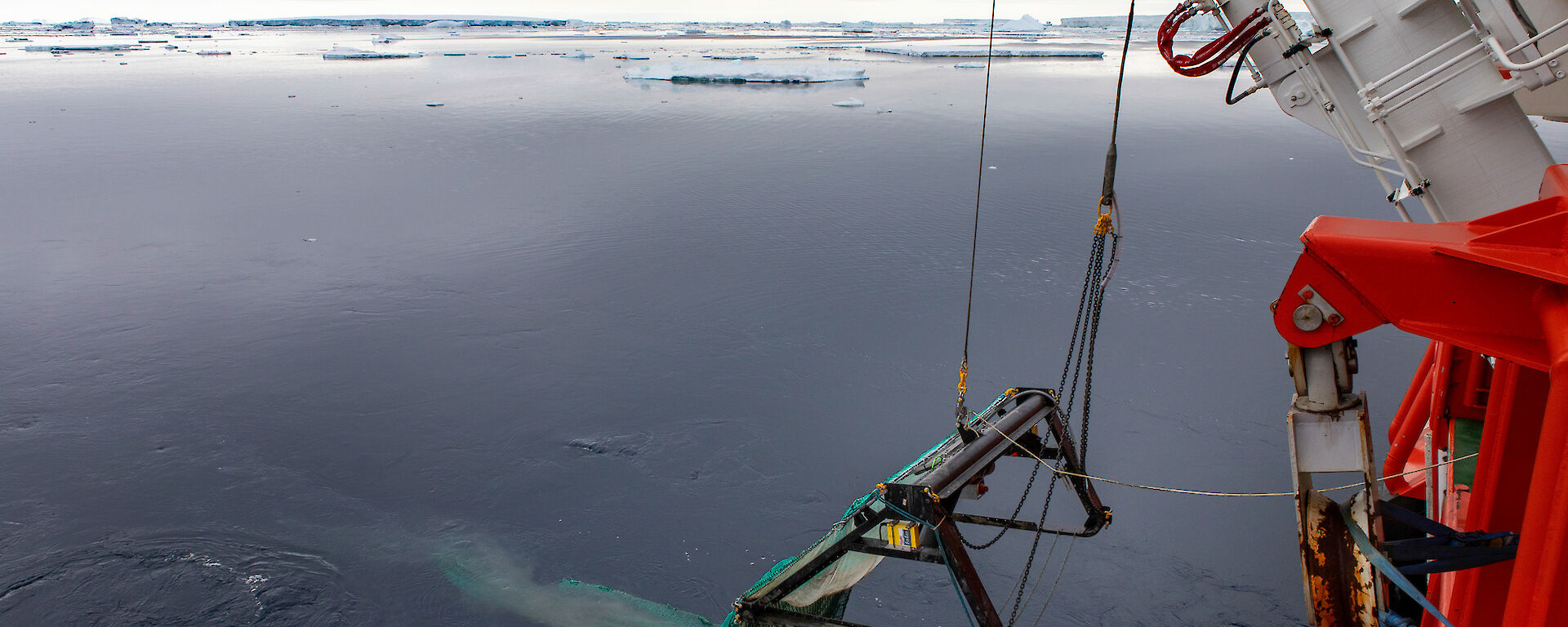
Dr So Kawaguchi was Chief Scientist on the recent voyage of CSIRO Research Vessel Investigator to Antarctica. His research will help protect krill from over-harvesting and be used to research long-term impacts on the ecosystem.
The SCAR Krill Action Group (SKAG) provides a conduit for science to feed into the management of the Antarctic krill fishery, as well a more general forum to promote collaboration, help early career researchers, improve understanding of krill biology and ecology, and facilitate information exchange.
In response to a report of the incidental mortality of three juvenile humpback whales in the Antarctic … krill trawl fishery in Subareas 48.1 and 48.2 during the 2021 calendar year, SC-CAMLR reconvened … the Working Group on Incidental Mortality Associated with Fishing (WG-IMAF).
Abstract … Recommendations … That Model 2 presents best available science for the 2021 Patagonian toothfish stock assessment in Division 58.5.2. That CCAMLR set a catch limit of 3010 tonnes for 2021/22 and 2022/23 in CM 41-08 based on the result of this assessment and the CCAMLR decision rules.
Recommendations … We recommend the catch limits in Conservation Measure 42-02 be set at 1528 t in the 2021/22 season and 1138 t in the 2022/23 season. Abstract … The annual random stratified trawl survey was undertaken in Division 58.5.
During late March to mid-April 2021, the annual random stratified trawl survey (RSTS) around Heard Island and McDonald Islands (HIMI) was conducted in CCAMLR Division 58.5.2, with the completion of 163 stations. The survey was conducted for the first time on the Cape Arkona.
Robust stock assessments and catch limits for Dissostichus mawsoni according to CCAMLR decision rules remain to be determined for Divisions 58.4.1 and 58.4.2. Precautionary management arrangements are in place as set out in Conservation Measures 41-11 and 41-05. WG-FSA-16/29, WG-FSA-18/59…
Recommendations … When modelling multiple fleets in a GYM assessment, we recommend the use of the presented extension to the Grym package based on its shown capacity to model more complex fisheries and fishing practices with a high degree of consistency in results.
Introduction: v … 1. The annual meeting of the SCAR Krill Action Group (SKAG) was held online from 7 to 11 March 2022 at 1500-1700 UTC, with a series of Zoom meetings. 2.
During three surveys in the austral summers of 2013, 2015, 2019, data on Antarctic blue whale blow rates, dive times, swim speeds, and broadscale movements were collected using video photogrammetric tracking and intra-voyage photo-identification. A total of 24.
In February and March 2021 an acoustic-trawl survey was carried out to estimate the biomass of Antarctic krill (Euphausia superba) in the eastern sector of the CCAMLR Division 58.4.2 (area = 775,732 km2.)…
Ecosystem dynamics at the northwest Antarctic Peninsula are driven by interactions between physical and biological processes. For example, baleen whale populations are recovering from commercial harvesting against the backdrop of rapid climate change…
Pygmy blue whales in the South-east Indian Ocean migrate from the southern coast of Australia to Indonesia, with a significant part of their migration route passing through areas subject to oil and gas production.
Total biomass and areal biomass density are often necessary to establish ecological relationships and enable informed management decisions, in particular setting fisheries catch limits.
The availability of iron (Fe) to marine microbial communities is enhanced through complexation by ligands. In Fe limited environments, measuring the distribution and identifying the likely sources of ligands is therefore central to understanding the drivers of marine productivity.
Antarctic minke whales (Balaenoptera bonaerensis, AMW) are an abundant, ice-dependent species susceptible to rapid climatic changes occurring in parts of the Antarctic. Here, we used remote biopsy samples and estimates of length derived from unoccupied aircraft system (UAS)…
Marine migratory species tend to be overlooked in marine spatial planning due to limited knowledge of their habitats and migration pathways, resulting in a disconnect between animal migration ecology and spatial management decision making.
Next week, the Convention on the Conservation of Antarctic Marine Living Resources (CCAMLR) convenes in Hobart, Tasmania, to examine the state of marine life in the Southern Ocean. As part of the Antarctic Treaty System, this convention entered into force in 1982…
An automated algorithm for passive acoustic detection of blue whale D-calls was developed based on established deep learning methods for image recognition via the DenseNet architecture. The detector was trained on annotated acoustic recordings from the Antarctic…
Background … Satellite tags were deployed on two Antarctic blue whales (Balaenoptera musculus intermedia) in the east Antarctic sector of the Southern Ocean as part of the International Whaling Commission’s Southern Ocean Research Partnership initiative.