

Latest publications
Results 26 to 50 of 1020
Blue whales Balaenoptera musculus at South Georgia were heavily exploited during 20th century industrial whaling, to the point of local near-extirpation. Although legal whaling for blue whales ceased in the 1960s…
Southern hemisphere humpback whale (Megaptera novaeangliae, SHHW) breeding populations follow a high-fidelity Antarctic krill (Euphausia superba) diet while feeding in distinct sectors of the Southern Ocean.
Around 176500 whales were killed in the sub-Antarctic waters off South Georgia (South Atlantic) between 1904 and 1965. In recent decades, whales have once again become summer visitors, with the southern right whale (SRW) the most commonly reported species until 2011. Here…
Southern right whales (Eubalaena australis) migrate between Austral-winter calving and socialising grounds to offshore mid- to high latitude Austral-summer feeding grounds. In Australasia…
An automated algorithm for passive acoustic detection of blue whale D-calls is developed based on established deep learning methods for image recognition via the DenseNet architecture. Koogu—an open-source Python package—was used for developing the detector.
Knowledge about the movement ecology of endangered species is needed to identify biologically important areas and the spatio-temporal scale of potential human impacts on species. Blue whales (Balaenoptera musculus)…
Identification of species' Biologically Important Areas (BIAs) is fundamental to conservation planning and species distribution models (SDMs) are a powerful tool commonly used to do this.
Marine protected areas (MPAs) are a commonly used management tool to safeguard marine life from anthropogenic impacts, yet their efficacy often remains untested.
The East Antarctic krill fisheries are spread across two Divisions of the Commission for the Conservation of Antarctic Marine Living Resources (CCAMLR), Division 58.4.1 between 80-150°E and Division 58.4.2 between 30-80°E.
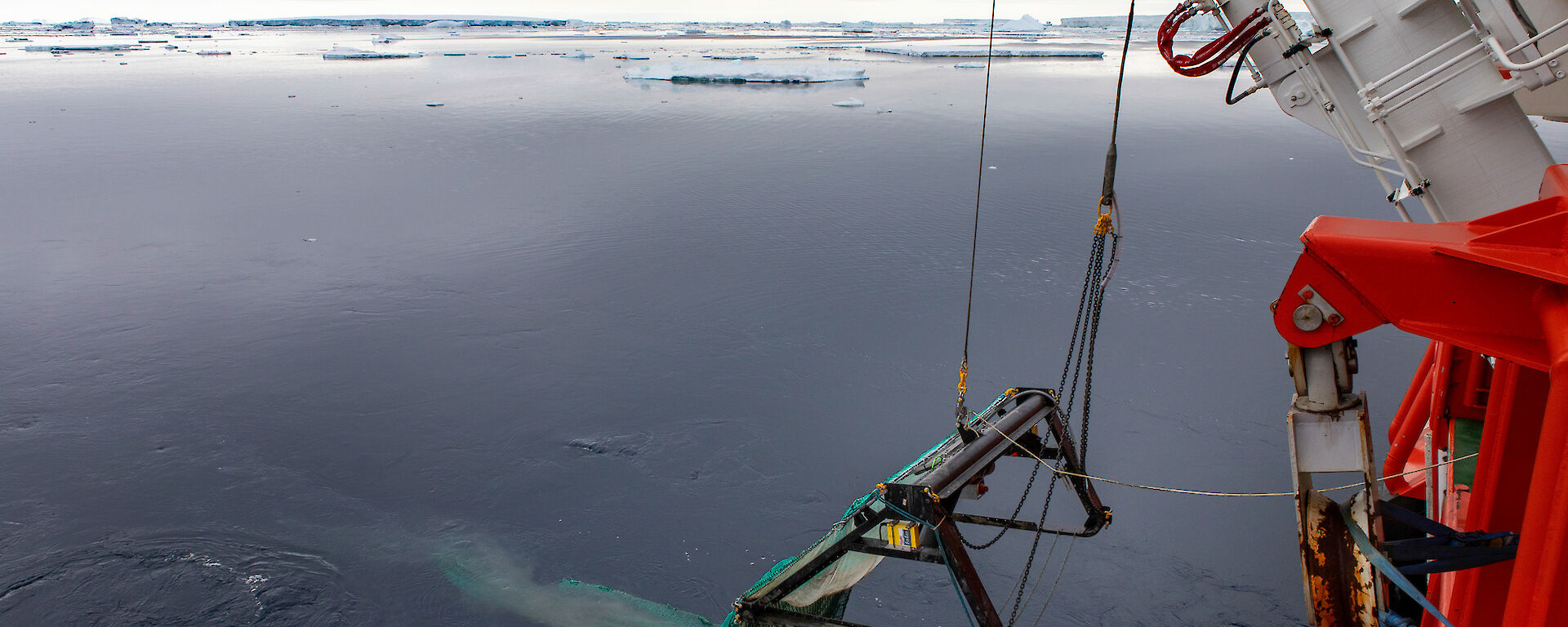
During the summer of 2021, we conducted a comprehensive study on zooplankton communities along East Antarctica (55°E to 80°E) as part of the Trends in Euphausiids off Mawson, Predators, and Oceanography (TEMPO) survey program.
The blue whale (Balaenoptera musculus) is a listed endangered species under the Commonwealth Environment Protection and Biodiversity Conservation Act 1999. A distinct population of blue whales, the eastern Indian Ocean pygmy blue (EIOPB) whale…
An underwater acoustic recorder was moored off Heard Island from September 2017 through March 2018 to listen for marine mammals. Analysis of data was initially conducted by visual inspection of long-term spectral averages to reveal sounds from sperm whales, Antarctic and pygmy blue whales…
Since 2001, hundreds of thousands of hours of underwater acoustic recordings have been made throughout the Southern Ocean south of 60° S. Detailed analysis of the occurrence of marine mammal sounds in these circumpolar recordings could provide novel insights into their ecology…
Hundreds of large whales have been tracked using consolidated (Type-C) satellite tags, yet there have been few studies on their impacts on whale health. In 2011, we initiated the first study designed to evaluate the effects of these tags on a baleen whale. Between 2011 and 2018…
There is growing interest from research and conservation groups in the potential for using small unoccupied aerial vehicles (UAVs; <2 kg) to conduct wildlife surveys because they are affordable, easy to use, readily available and reliable. However, limitations such as short flight endurance…
Aerial surveys are frequently used to estimate the abundance of marine mammals, but their accuracy is dependent upon obtaining a measure of the avail?ability of animals to visual detection.
Baleen whales are predominately summer visitors to Antarctic waters, where they feed on large swarms of zooplankton, primarily Antarctic Krill (Euphausia superba). Over 2 million whales were killed in Southern Hemisphere whaling operations in the 20th Century 1.
Photo-identifications of Antarctic blue whales (Balaenoptera musculus intermedia) collected from 2003/2004 to 2018/2019 were used in a capture-recapture analysis to estimate abundance and population growth rate for the circumpolar Antarctic. Two capture-recapture models, POPAN and Pradel…
Heard Island and McDonald Islands (HIMI) are an external Territory of Australia, located approximately 4000 kilometres southwest of Australia in the southern Indian Ocean.
Antarctic krill (Euphausia superba) are a circumpolar species with an omnivorous diet. Knowledge of krill diet within different regions will help predict how environmental change may impact local krill populations. Krill from the Atlantic, Indian…
Antarctic krill (Euphausia superba) are a key component of the Antarctic food web with considerable lipid reserves that are vital for their health and higher predator survival. Krill lipids are primarily derived from their diet of plankton, in particular diatoms and flagellates.