21 November 2025
Location: Dome C North (DCN)—MYIC Inland Station, 75.0422°S, 123.6312°E, 3239 m asl.
Personnel at DCN: Damien Beloin (traverse leader), Derryn Harvie (deputy traverse leader & drill engineer), David Holley (carpenter), Dave Burdon (diesel mechanic), Ed Maguire (diesel mechanic), Kris Keen (diesel mechanic), Aaron Doherty (diesel mechanic), Andy Lewis (electrician), Meg O’Connell (medical doctor), Dane Eden (mechanic).
Personnel at Concordia: Lenneke Jong (glaciologist), Julius Rix (driller), Joel Pedro (science lead), Chris Richards (drill technician), Chris Young (drill technician), Thom Whyte (electrician).
Weather at DCN: • Air temp: -32˚C • Wind speed and direction: 2/3 knots, S 190˚ • Forecast for next 24 hours: Partly cloudy. Winds SW 10/15 knots. Min/Max -39/-35˚C.
Inland Station Operations, Science, Drilling
The 2025-26 Million Year Ice Core field season is underway at Dome C North (DCN)! Below a summary of how we got here this season and current operations.
Arrival, Traverse
It’s a long commute to the drill site.The 10-person Australian Antarctic Program (AAP) traverse team arrived to DCN on 18 Nov, after 17 days and 1168 km of travel inland from Casey station (see Long haul for science begins). Traverse arrival to DCN so early in the season positions the project for a long science and drilling season and has been the result of much teamwork and planning across the AAD.
In particular, the planning and support for deployment of the traverse team to Casey on the 5th of October by helicopter off the AAD icebreaker Nuyina. An ADF-supported C17 air-drop of critical traverse and MYIC cargo into Casey also helped secure the early departure. Traverse spent the next few weeks busily preparing machines, cargo and equipment before departing from Casey on the 1st November on the long journey to DCN.
Arrival, MYIC team
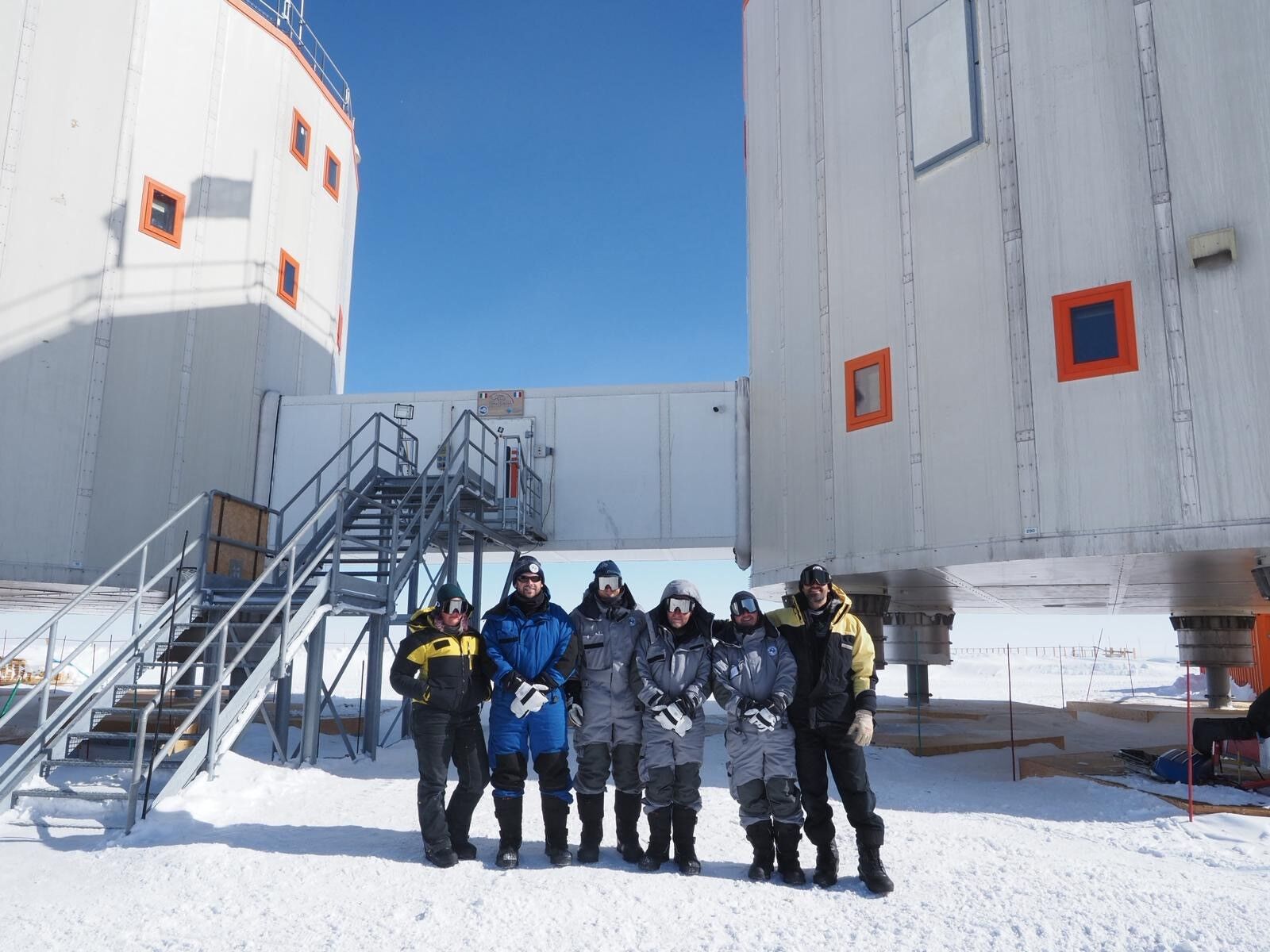
The first five members of the MYIC science team flew into the Wilkins runway near Casey Station on 15 Nov (Jong, Pedro, Rix) and 20 Nov (Richards, Young). The route for us from Casey to DCN required a flight by Basler from Casey Skiway to the French and Italian Concordia Station, 10 km from our drill site.
Thanks to great support from Casey Station and Concordia and good weather, we got this flight in today, 21st November. The final two members of the MYIC team, ice core processors Chris Plummer and Mingxia Lai will fly in early December to join us.
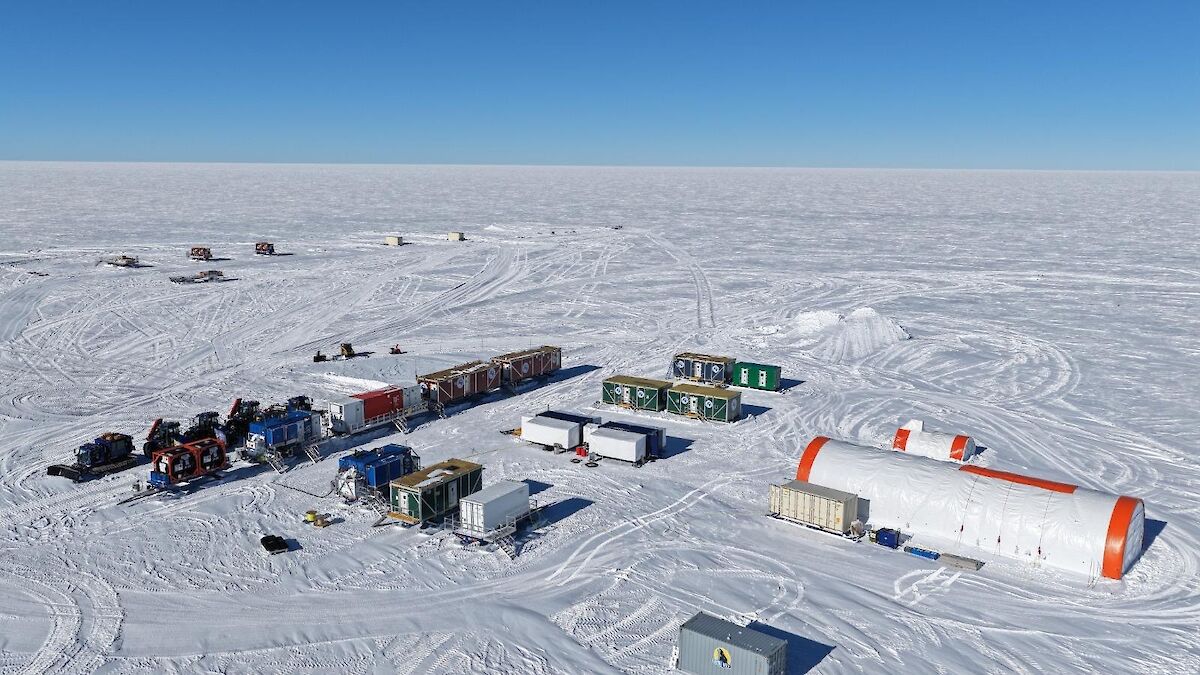
Inland Station / MYIC drilling camp
The Traverse team arrived to find the drilling camp in good shape after the long cold (<-75˚C) winter. The drifts of snow will be cleared by Piston Bulley groomers. We are happy to find that no significant snow made it into the structures.
Operations
Two people spent the day at Concordia to de-winterise K-42, the cab snow groomer. It was parked up and covered with a large canvas tarp over the winter months on the snow berms next to Concordia station. The vehicle started fine, and despite the winter temps it is in an excellent condition.
The remainder of the team at the Inland Station positioned the MECC kitchen, ILS Genvan, and swapped the base sled under the MECC mess. The electrician started to run cables between buildings and assets. The MYIC team started the 48-hr acclimation to altitude at Concordia.
We are very grateful to Station Leader Riccardo Scipinotti and our hosts at Concordia for their hospitality and the amazing food the chefs turn out!
Intentions next 24 hours
The Traverse team will continue setting up the Inland Station drilling camp tomorrow, with intention to power up the MECC mess, position the water services container, and install cold porches on the MECC mess and kitchen. The MYIC team will spend 2 nights at Concordia station to acclimatise to the high altitude before going on to DCN to join our traverse teammates and start the season’s work.
22 November, 2025
Location: Dome C North (DCN)—MYIC Inland Station, 75.0422°S, 123.6312°E, 3239 m asl.
Personnel at DCN: Damien Beloin (traverse leader), Derryn Harvie (deputy traverse leader & drill engineer), David Holley (carpenter), Ed Maguire (diesel mechanic), Kris Keen (diesel mechanic), Andy Lewis (electrician), Meg O’Connell (medical doctor), Dane Eden (diesel mechanic).
Personnel at Concordia: Lenneke Jong (glaciologist), Julius Rix (driller), Joel Pedro (science lead), Chris Richards (drill technician), Chris Young (drill technician), Thom Whyte (electrician).
Weather at DCN: • Air temp: -31.5˚C • Wind speed and direction: 2/3 knots, S 180˚ • Forecast for next 24 hours: Partly cloudy. Winds SW 10/15 knots. Min/Max -39/-35˚C
Inland Station Operations, Science, Drilling
The MYIC team continued with our 48-hr acclimation at Concordia Station – a privilege to spend this time in a place with such impressive history of support for Antarctic science.
Members of the European Beyond EPICA Oldest Ice Project have also been here at Concordia acclimatising. Our project has benefited from cooperation and collaboration with the European team including in site selection and logistics. We wish the Beyond EPICA team the very best for their season 40 km from us at Little Dome C, you can read more about their project here: Beyond EPICA.
The Traverse team at the Inland Station continued setup of the buildings, including positioning the Water Services container and commenced activation of the kitchen and dining MECCs - Mobile Expandable Container Configuration. The traverse team were invited to Concordia for Saturday night dinner – burger and chips night followed by some music and maybe a little dancing in the one and only Concordia lounge!
The electrician has continued setup of the Inland Station generator van and the roll out of cables, powering the MECCs and main drill tent.
Intentions next 24 hours
The Traverse team will continue setting up the Inland Station drilling camp tomorrow, with intention to power up the MECC mess, position the water services container, and install cold porches on the MECC mess and kitchen. The MYIC team will spend 2 nights at Concordia station to acclimatise to the high altitude before going on to DCN to join our traverse teammates and start the season’s work.
23 November, 2025
Location: Dome C North (DCN)—MYIC Inland Station, 75.0422°S, 123.6312°E, 3239 m asl.
Personnel at DCN: Damien Beloin (traverse leader), Derryn Harvie (deputy traverse leader & drill engineer), David Holley (carpenter), Ed Maguire (diesel mechanic), Kris Keen (diesel mechanic), Andy Lewis (electrician), Meg O’Connell (medical doctor), Dane Eden (diesel mechanic), Thom Whyte (electrician), Lenneke Jong (MYIC glaciologist), Julius Rix (MYIC driller), Joel Pedro (MYIC science lead), Chris Richards (MYIC drill technician), Chris Young (MYIC drill technician).
Weather at DCN (cold!): • Air temp: -36˚C • Wind speed and direction: 6/8 knots, S 180˚ • Forecast for next 24 hours: Becoming cloudy. Possible snow shower. Winds: S 15/20 knots. Min/Max: -39/-35 ° C
Inland Station Operations, Science, Drilling
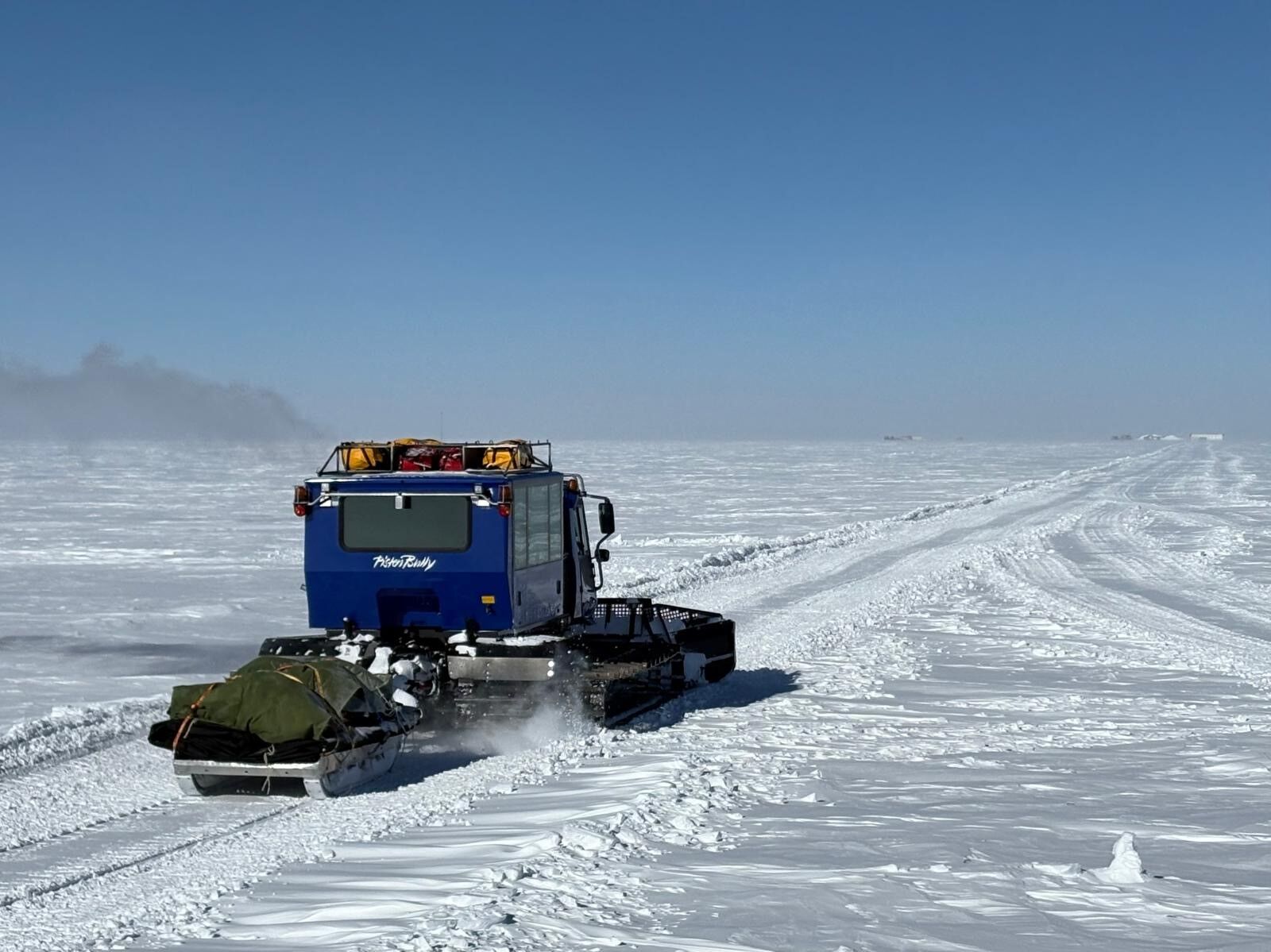
Arrival to Dome C North! The MYIC team completed altitude acclimation at Concordia Station and Kris and Damien from Traverse picked us up for the for the 40 min ride by Pisten Bulley cab groomer to DCN. Woohoo! We are very happy to arrive after the many steps in the journey from Australia and with two months ahead to progress the drilling.
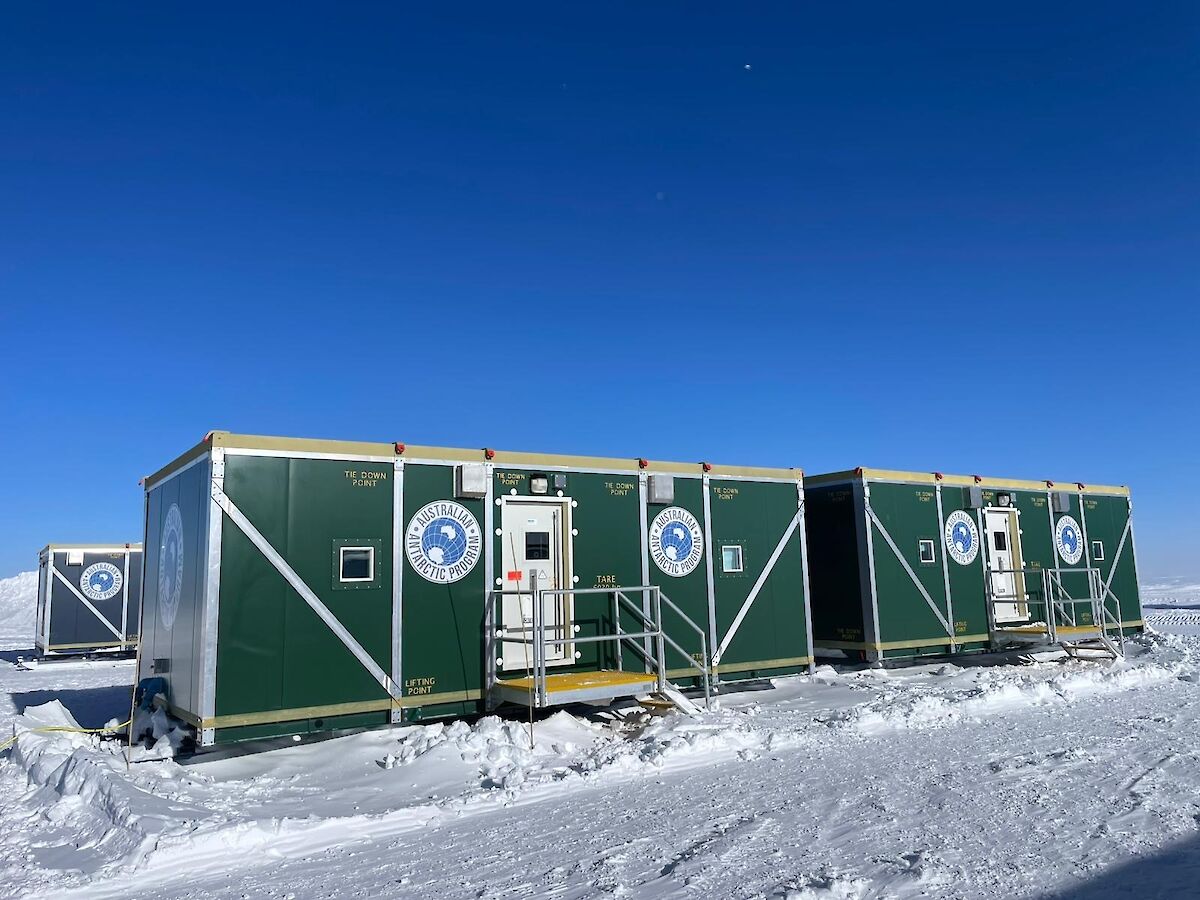
We were welcomed to camp and had an induction by Traverse leader Damien and settled into our rooms. Beds were already made with a chocolate on the pillow – 5 stars! The Inland Station has grown since last year with traverse delivery of the install of the amenities van (toilets, showers), inland station MECC kitchen, inland station generator and our medical support van (deep field medical facility).
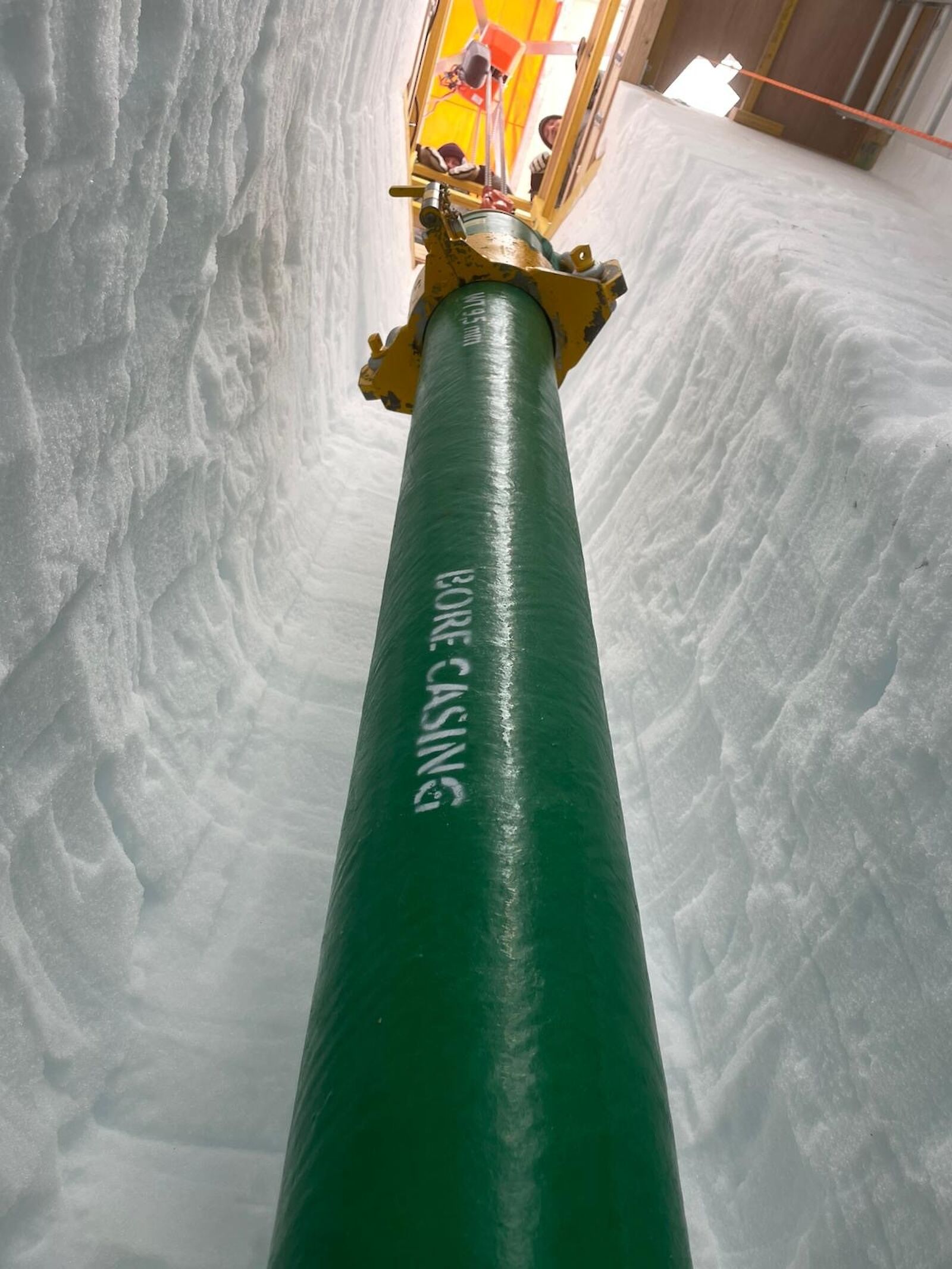
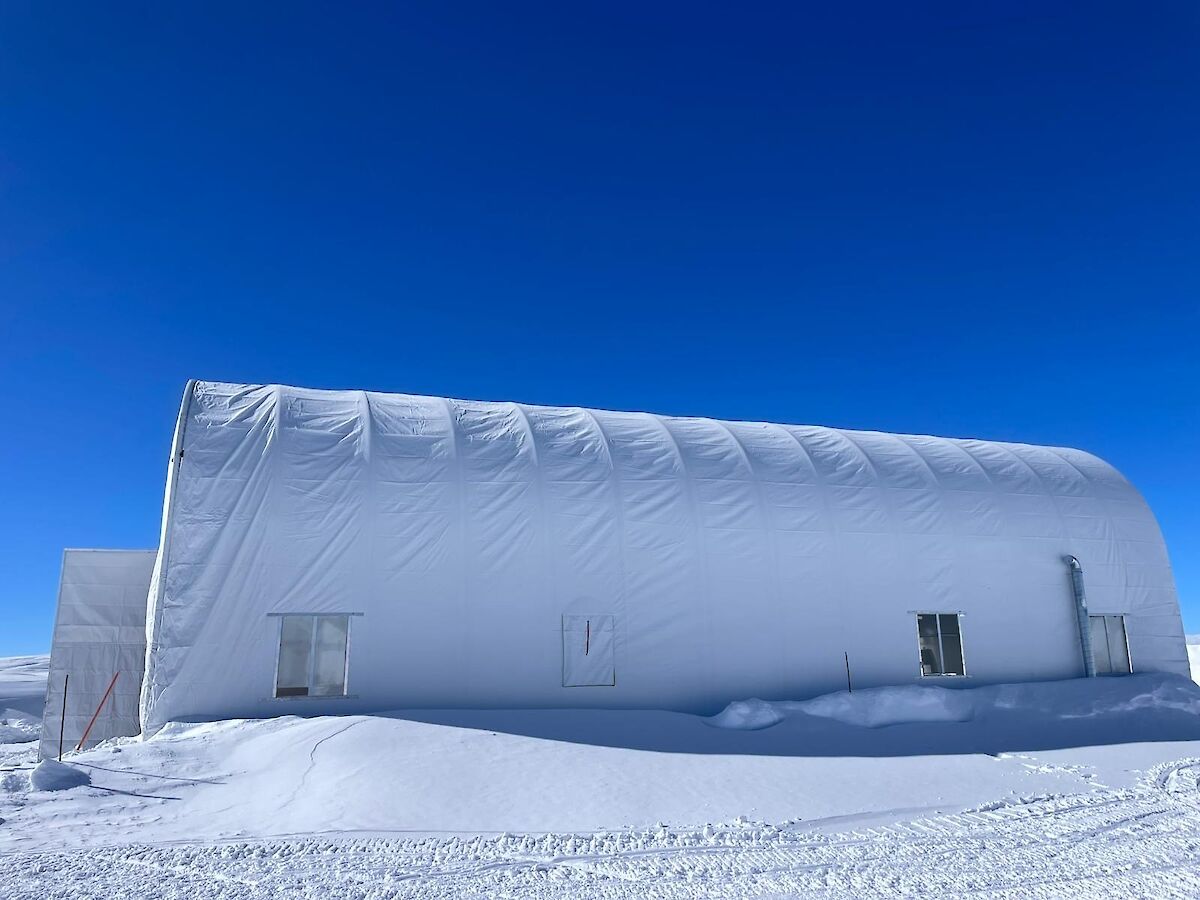
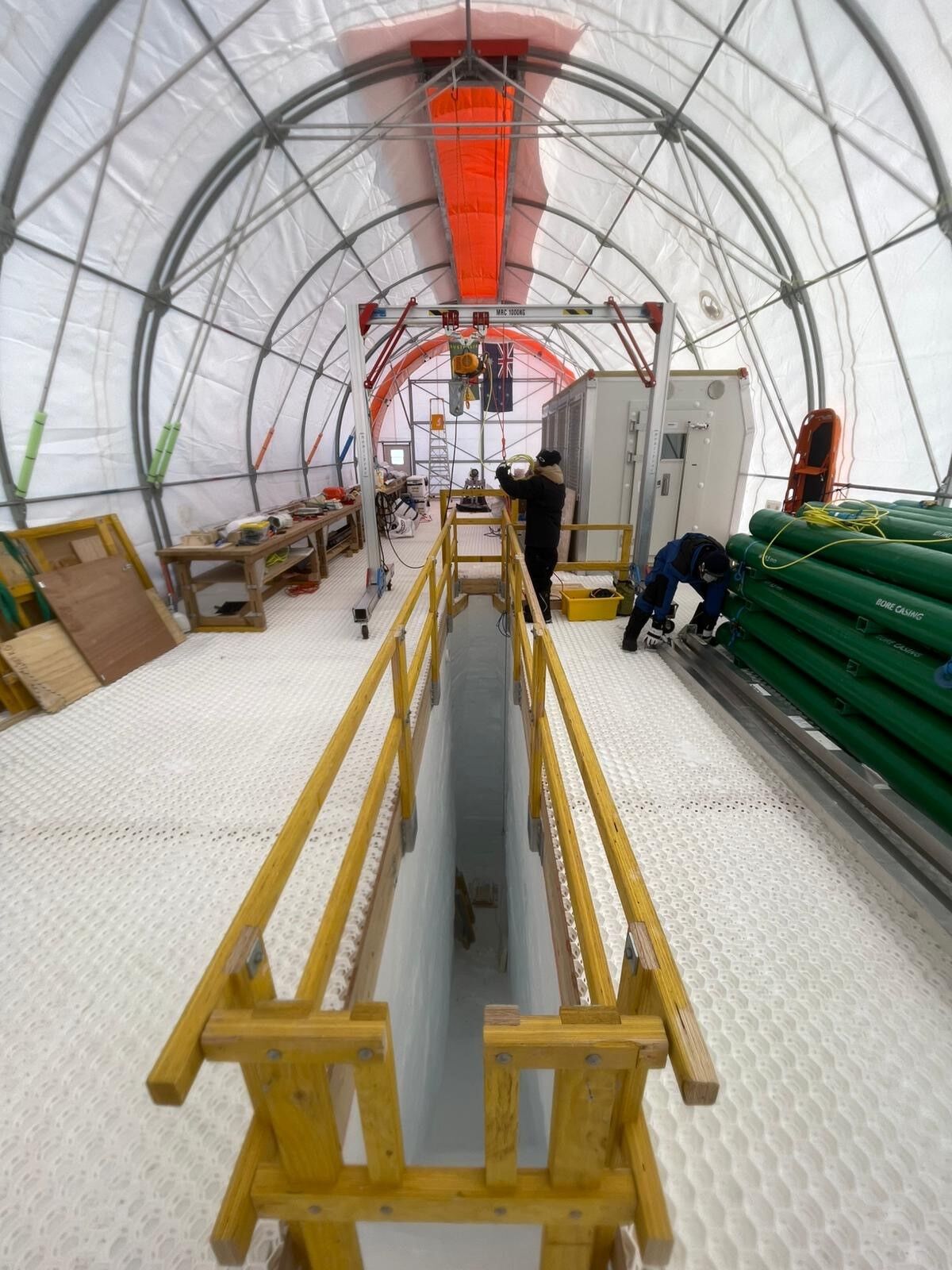
The drill shelter looks just as we left it last year, with the Eclipse drill tower and winch in place. We left the Eclipse in place in case we need to re-ream parts of the borehole before installing the 120-m of fibreglass bore casing. More on that tomorrow! Today Derryn installed a ventilation fan and ducting into the 6-m deep drill trench, which you see in the picture above. This will ensure good ventilation to the trench which we need to enter for installing the bore casing and for other tasks.
We enjoyed a first dinner at DCN of rogan josh and butter chicken prepared by our doctor and chef Meg. Good food and good company!
24 November, 2025
Location: Dome C North (DCN)—MYIC Inland Station, 75.0422°S, 123.6312°E, 3239 m asl.
Personnel at DCN: Damien Beloin (traverse leader), Derryn Harvie (deputy traverse leader & drill engineer), David Holley (carpenter), Ed Maguire (diesel mechanic), Kris Keen (diesel mechanic), Andy Lewis (electrician), Meg O’Connell (medical doctor), Dane Eden (diesel mechanic), Thom Whyte (electrician), Lenneke Jong (MYIC glaciologist), Julius Rix (MYIC driller), Joel Pedro (MYIC science lead), Chris Richards (MYIC drill technician), Chris Young (MYIC drill technician).
Weather at DCN: • Air temp: -31˚C • Wind speed, direction: 8/12 knots, S 190˚ • Forecast for next 24 hrs: Possible freezing fog. Winds: SW 5/10 knots. Min/Max: -37/-30°C
Inland Station Operations, Science, Drilling
On the logistics side, the team has positioned the Inland Station snow melter, the Deep Field Medical Facility and the -20 reefer at their planned locations. The snow groomer tiller has been dewinterised in preparation for some works assisting at Concordia Station later this week. The team also moved our ice core boxes over to the side drill shelter where they wait their time and provide some shade to the side of the drilling tent where we want it to be as cold as possible to process ice core.
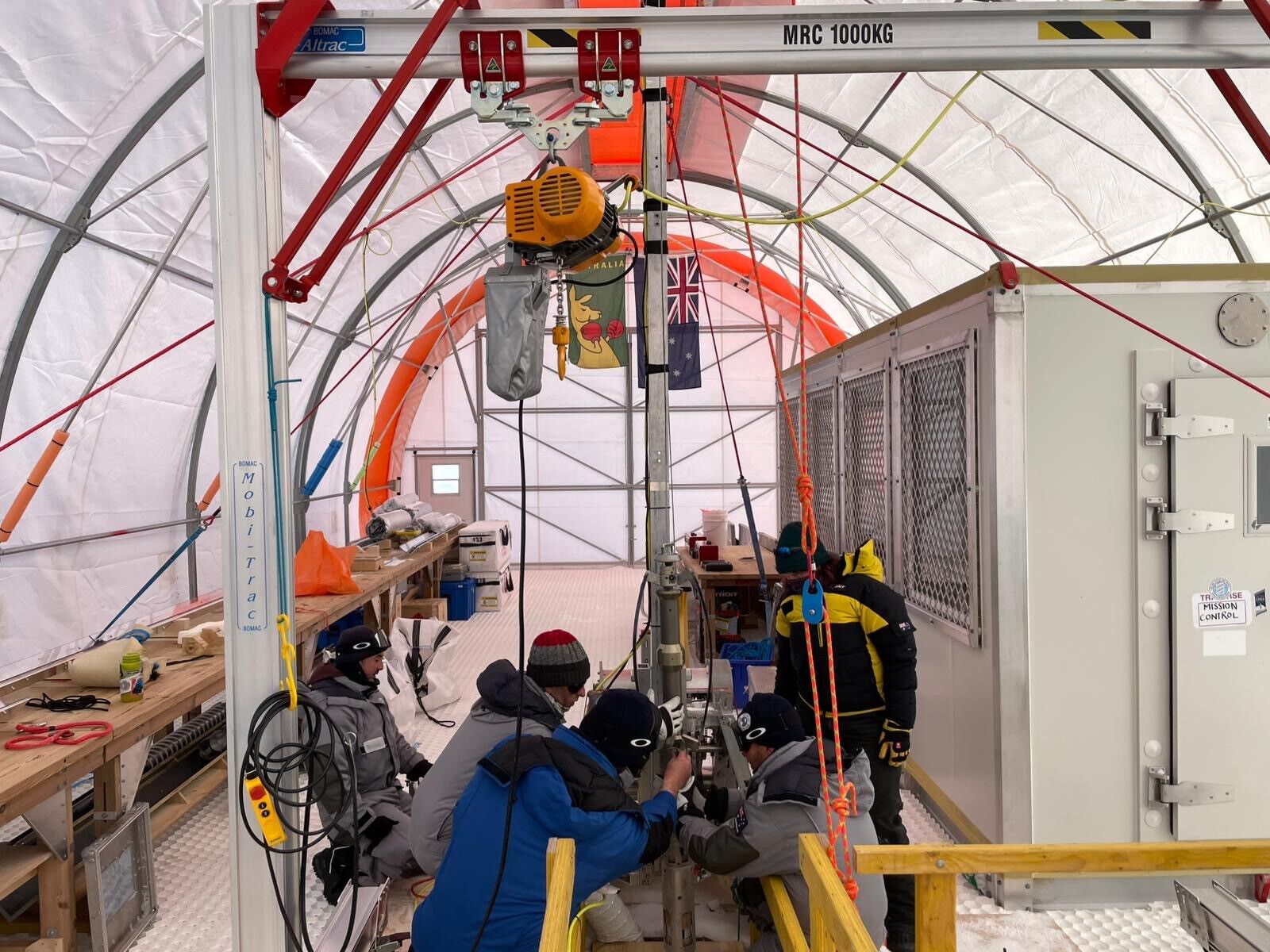
The MYIC team reviewed our operating procedures and job hazard assessments (JHAs) this morning. We then retrieved some of the gear stored at the bottom of the trench over winter. We use an electric hoist for this job which you see in the shots below. We choose to store some of our electronic equipment in the trench where the mean temperature is around -50˚C all year, rather than leave it at the surface where the temperature fluctuates more and drops in winter to an electronically-unfriendly -75˚C. This included the Eclipse drill control panel and drill motor and gear box. With these at the surface we connected the system and powered back up the drill—the winch and drill motor started up with no problems. Excellent!
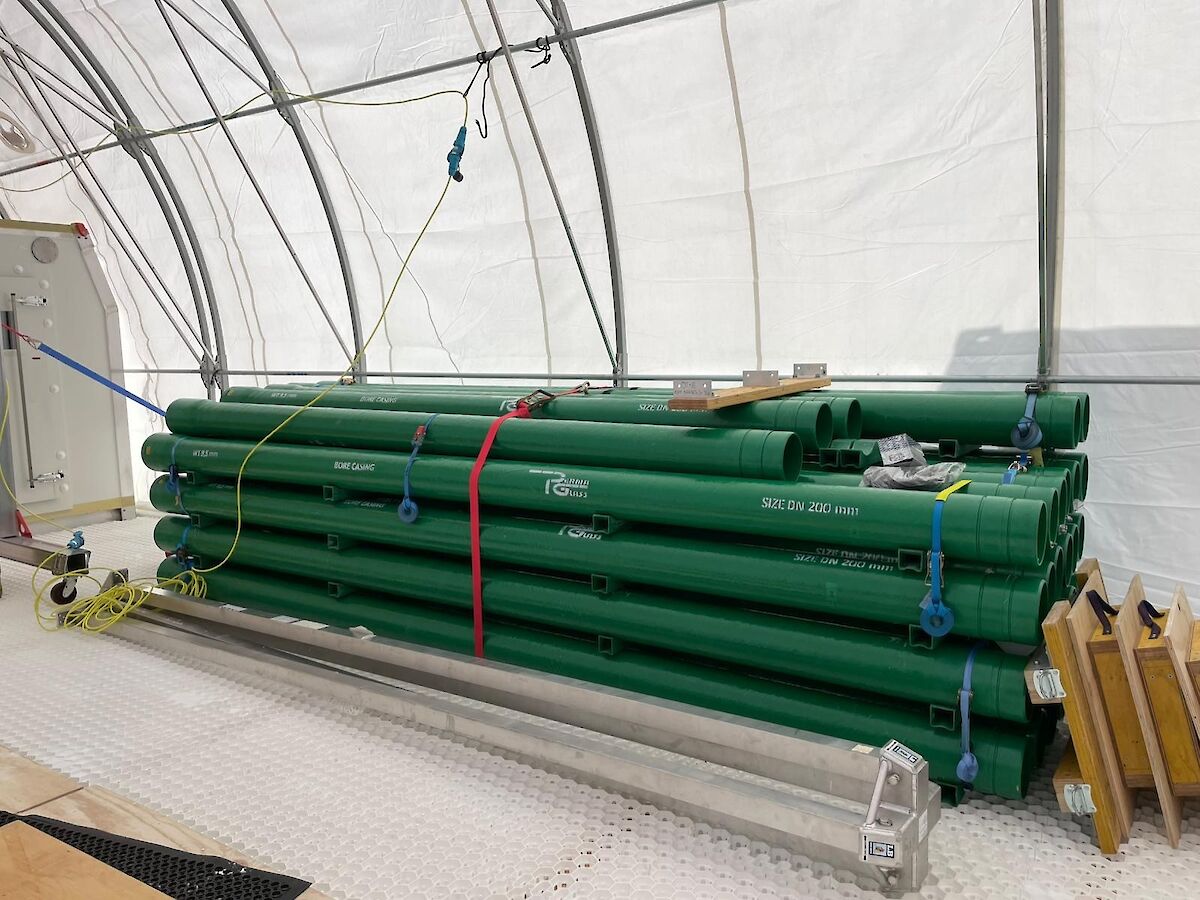
One of our first major tasks is to install 120 m of fibreglass bore casing to the borehole drilled last season with the Eclipse drill. This is to prevent gradual closure of the hole by ice flow and to ensure our drill fluid (Estisol-140, a bio-degradable ester) does not leak into the porous firn layer. Our reaming steps last season were 260 mm diameter to 121.2 m, then 227 mm to 121.9 m, then 209 mm to 131 m, then 130 mm (drill diameter) to 150 m. We want the base of the bore casing starting to seat into the 227 mm reaming step. It pays to be cautious in this business, so we will re-test the diameter of the bore hole to ensure that the 255 mm external diameter of the casing couplings will pass unhindered through the nominal 260 mm bore.
Derryn came up with the ingenious idea to freeze a 260 mm plug of ice to the bottom of the small Eclipse reamer and check that it passes easily to ca. 121 m. It turns out the white food buckets as in the photo have the right diameter for this job. The plug of ice currently freezing on to the end of the reamer and we should be ready to run the diameter test tomorrow.
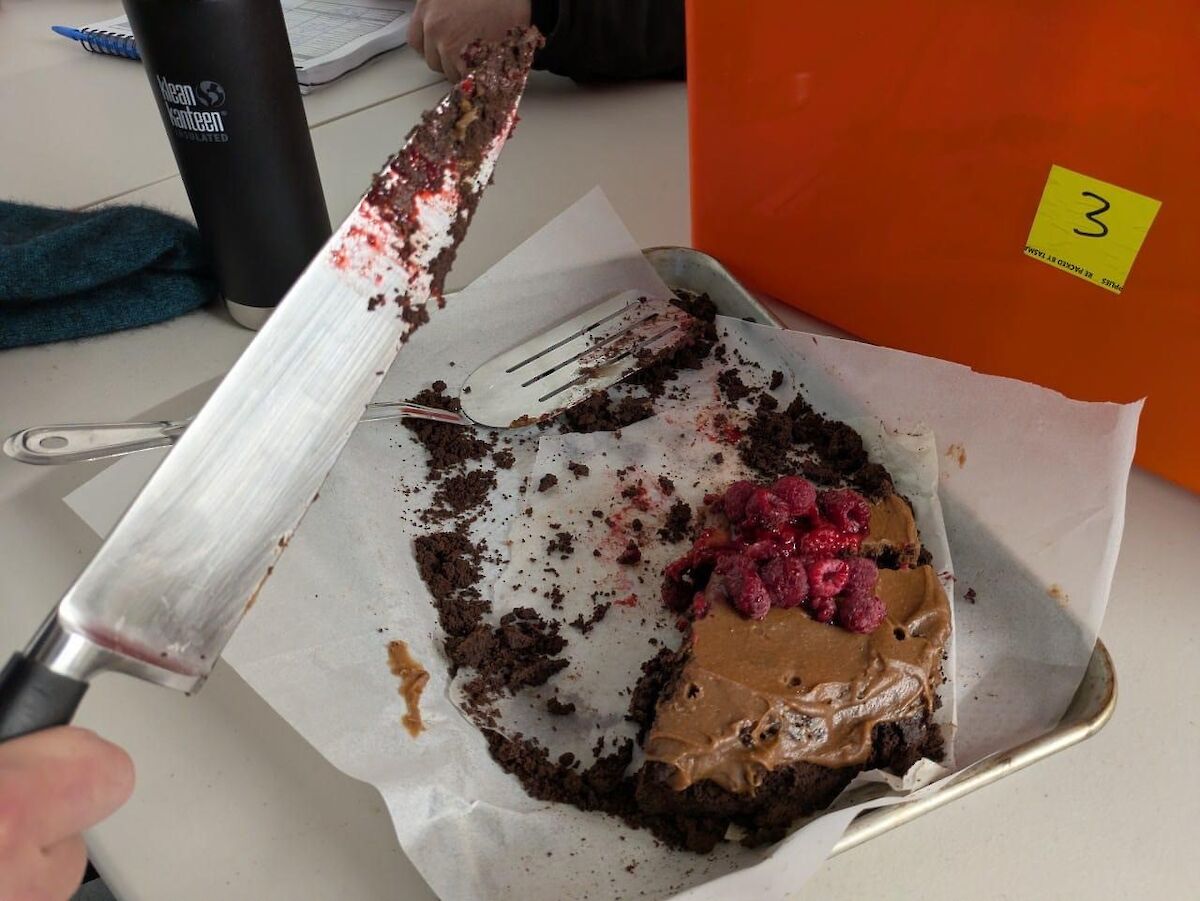
And happy birthday to our glaciologist Lenneke! Well celebrated with happy birthday renditions from the team and Stevie Wonder along with a traverse van baked chocolate birthday cake by Dr Meg with, kid you not, three whole blocks of melted Whittaker’s dark chocolate.
25 November, 2025
Location: Dome C North (DCN)—MYIC Inland Station, 75.0422°S, 123.6312°E, 3239 m asl.
Personnel at DCN: Damien Beloin (traverse leader), Derryn Harvie (deputy traverse leader & drill engineer), David Holley (carpenter), Ed Maguire (diesel mechanic), Kris Keen (diesel mechanic), Andy Lewis (electrician), Meg O’Connell (medical doctor), Dane Eden (diesel mechanic), Thom Whyte (electrician), Lenneke Jong (MYIC glaciologist), Julius Rix (MYIC driller), Joel Pedro (MYIC science lead), Chris Richards (MYIC drill technician), Chris Young (MYIC drill technician).
Weather at DCN: • Air temp: -30˚C • Wind speed, direction: 6/8 knots, WSW 250˚ • Forecast for next 24 hrs: Becoming cloudy. Possible snow shower, most likely in afternoon. Winds: SW 10/15 knots. Min/Max: -27/-17°C.
Inland Station Operations, Science, Drilling
First task this morning for the MYIC team was the long-awaited test of the bore diameter.
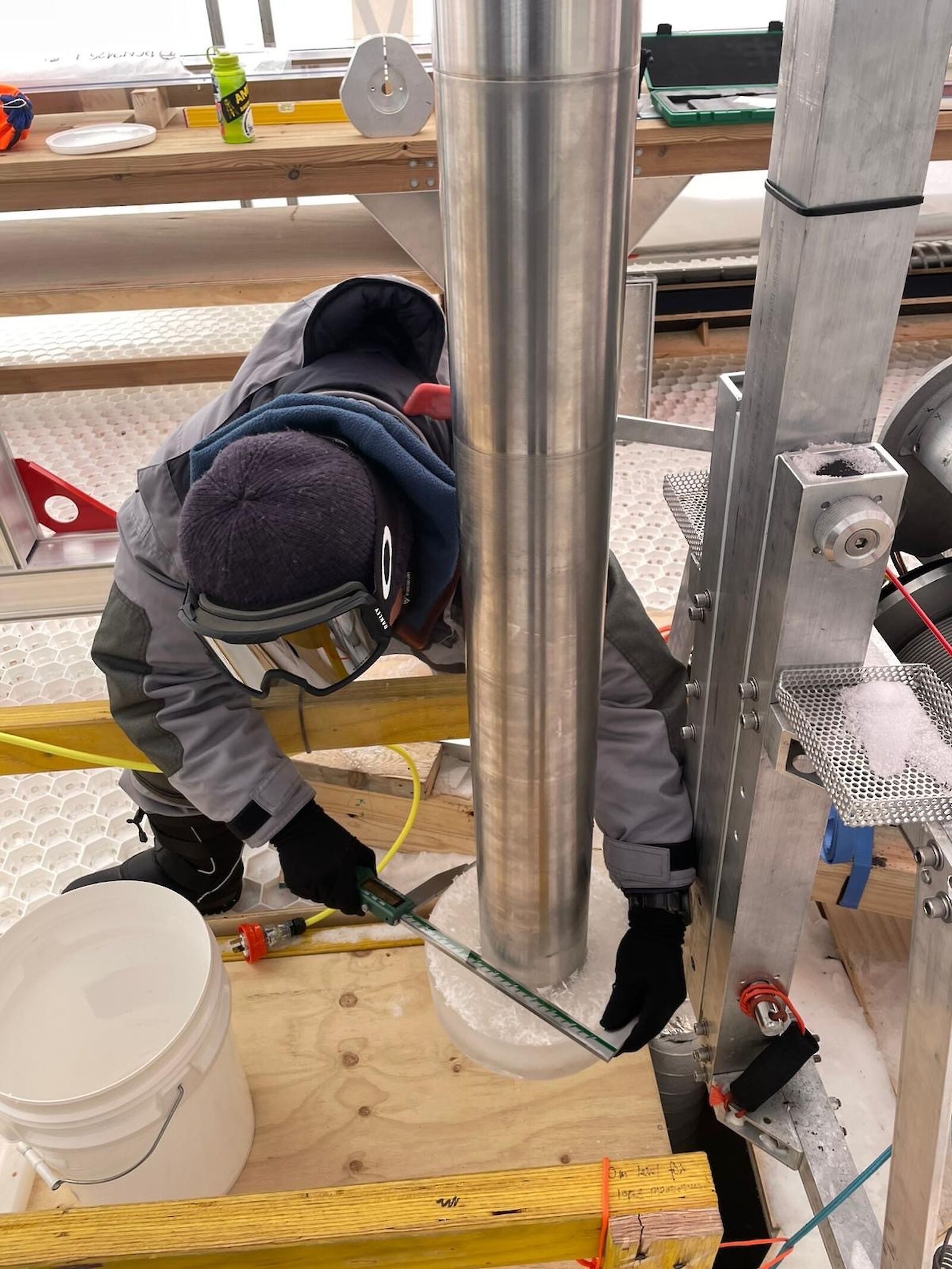
I admit to having sweated a little over this all year. Had the bore hole diameter reduced in the last 10 months enough that we would need to re-ream? Reaming again is possible but time consuming and there is always a risk of getting stuck – so we don’t want to do it unless it’s required. The ice plug frozen to the end of the smallest (safest) reamer was released from its bucket and measured in at 259.5 mm. If it passes through the bore then so must the 255 mm casing. If it gets stuck pulling with the winch will shatter it, so it’s a low risk test. We lowered down steadily with Derryn feeling the tension on the cable for any slackening that would indicate obstruction. Down it went.. past 50 m, 80 m, 100 m, 110 m (we slow the rate of descent) and at 120 m the cable slackened. Spot on!
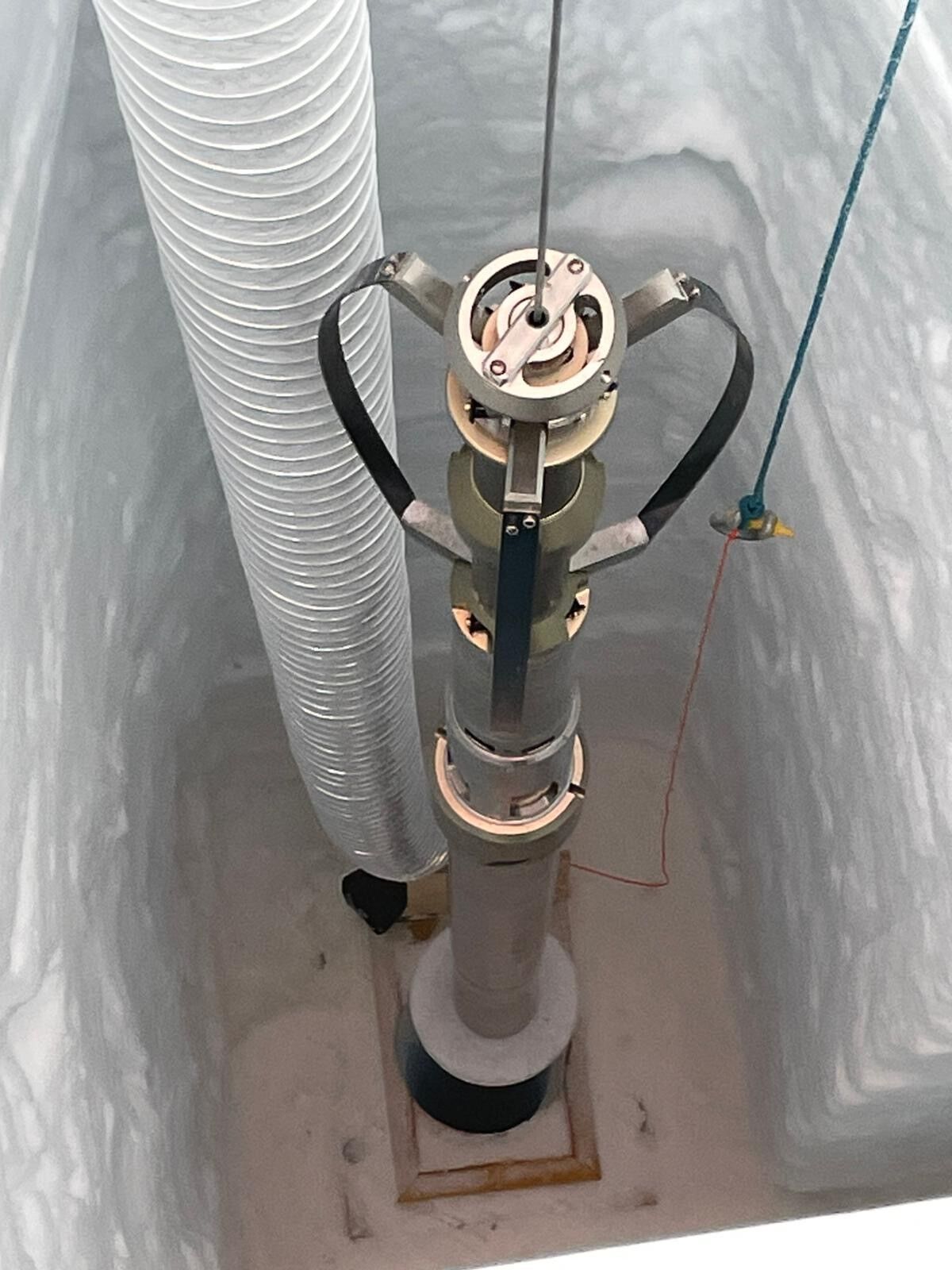
We retrieved the reamer and the ice plug was still attached. Our casing should seat just below 120 m into our 227 mm reaming step. The negligible closure is what the calculations suggest for ice at this temperature (-55˚C), but it is better still to measure! With the diameter test complete we packed down the Eclipse drill to make way for our rigging to install the bore casing. This meant removing the ply that was covering the full length of the drill trench and re-installing the Chippy Dave built trench guard rails.
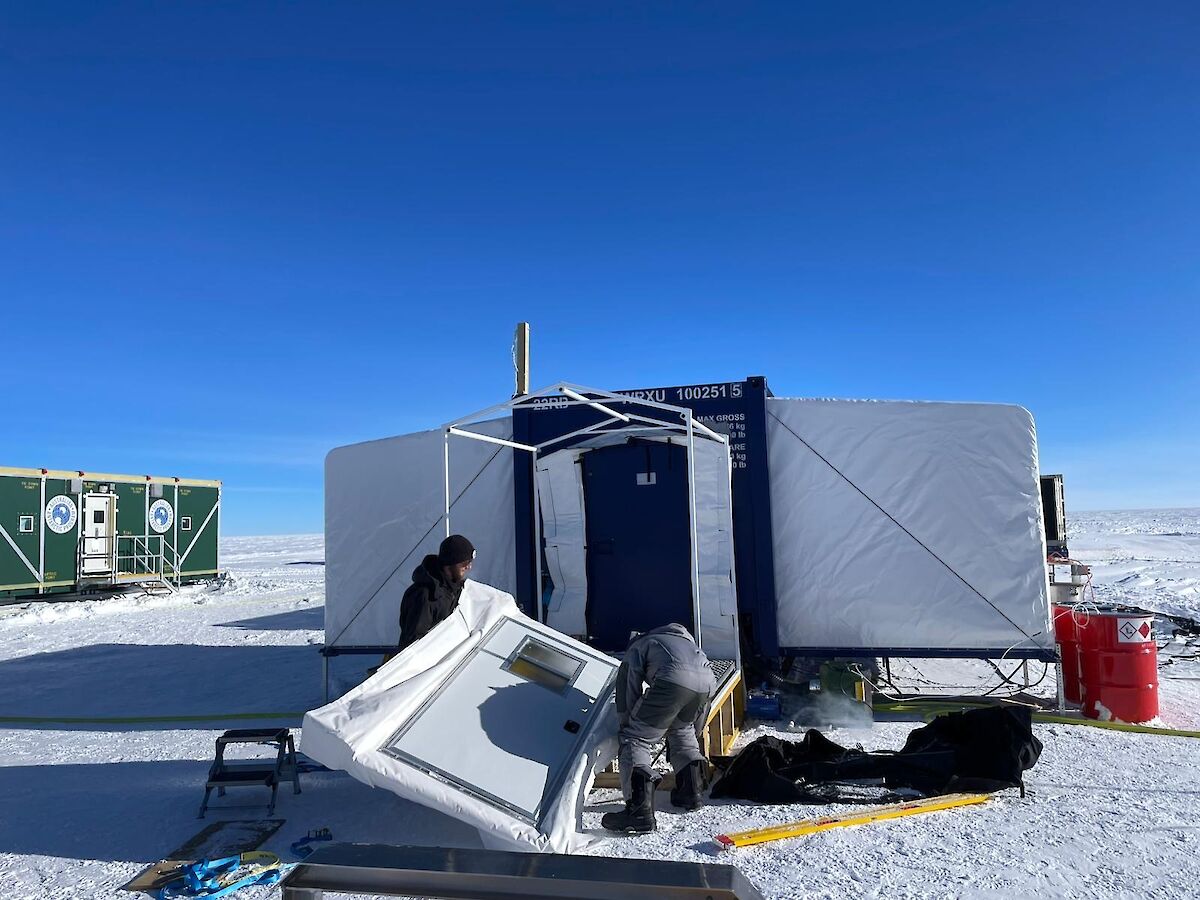
On the operations side the Traverse team successfully installed the MECC mess cold porch, and installed more heating into the mess itself. The sparkies Andy and Thom positioned and terminated all electric cables, and started to heat up the amenities building. The Inland Station genvan was started today to manage the electrical load, which before now was powered by the two gensets in the Traverse generator van.
A productive day!
26 November, 2025
Location: Dome C North (DCN)—MYIC Inland Station, 75.0422°S, 123.6312°E, 3239 m asl.
Personnel at DCN: Damien Beloin (traverse leader), Derryn Harvie (deputy traverse leader & drill engineer), David Holley (carpenter), Ed Maguire (diesel mechanic), Kris Keen (diesel mechanic), Andy Lewis (electrician), Meg O’Connell (medical doctor), Dane Eden (diesel mechanic), Thom Whyte (electrician), Lenneke Jong (MYIC glaciologist), Julius Rix (MYIC driller), Joel Pedro (MYIC science lead), Chris Richards (MYIC drill technician), Chris Young (MYIC drill technician).
Weather at DCN: • Air temp: -19˚C • Wind speed, direction: 4/6 knots, WSW 250˚ • Forecast for next 24 hrs: Possible snow shower, most likely in morning. Moderate chance of freezing fog. Winds: S 10/15 knots. Min/Max: -34/-23°C.
Inland Station Operations, Science, Drilling
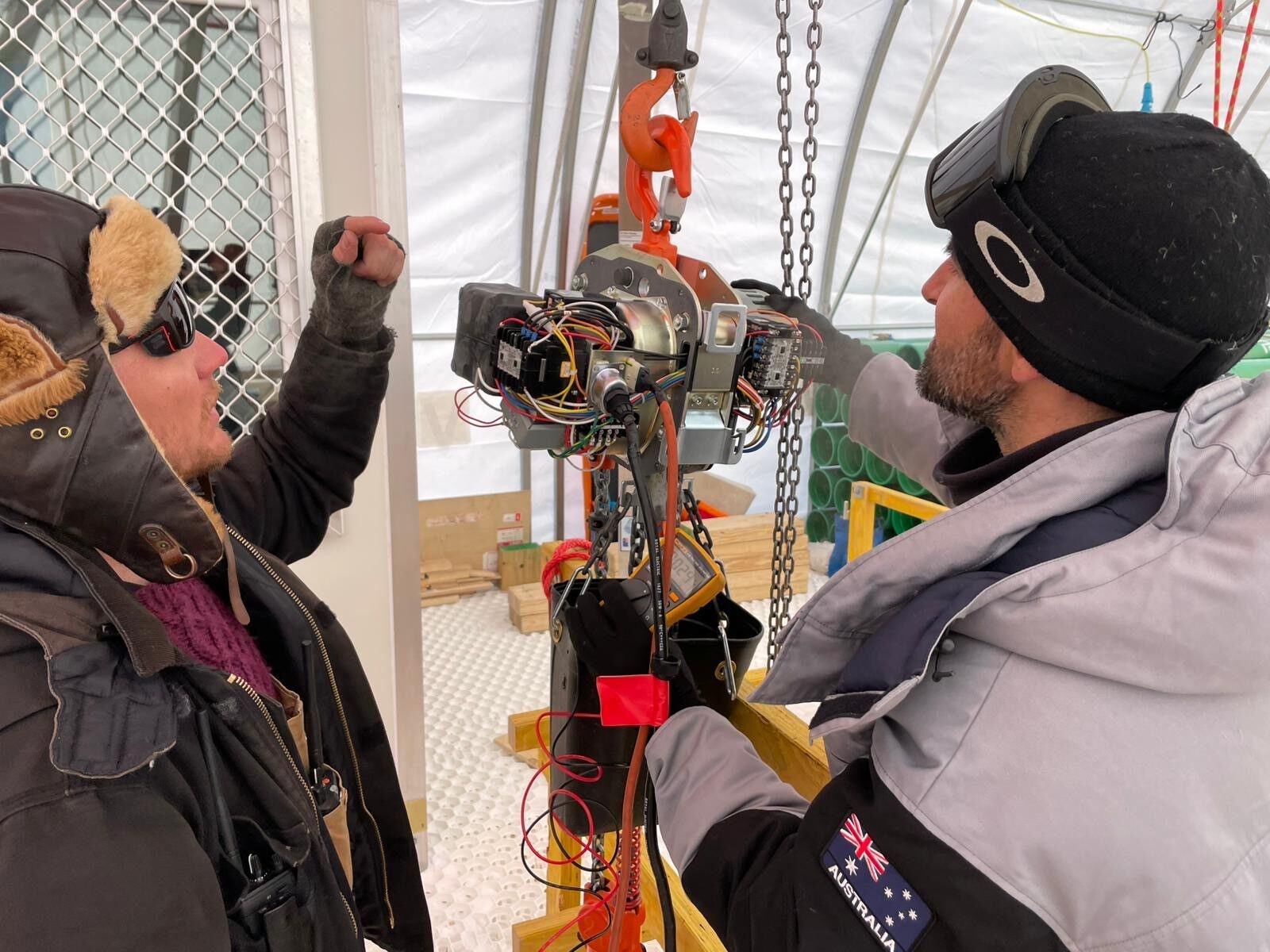
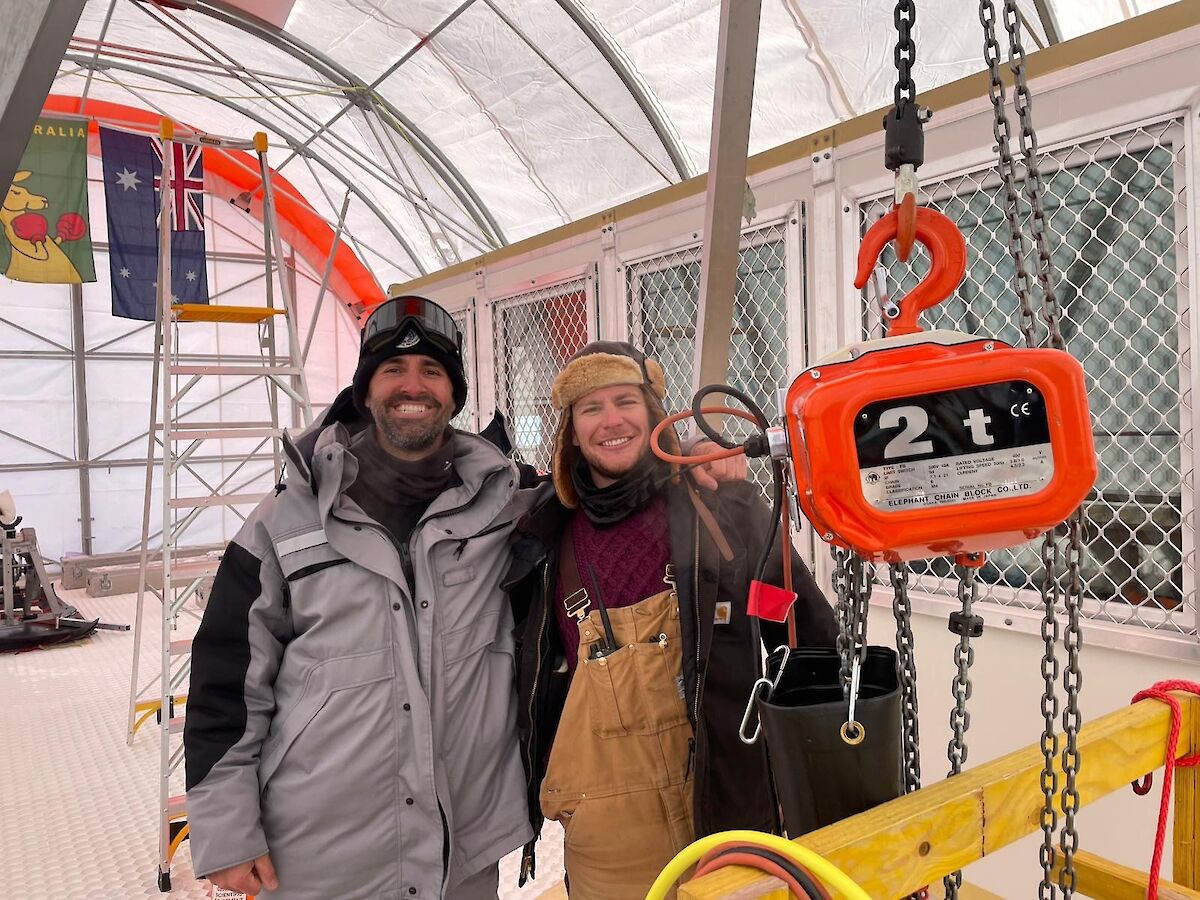
With the bore diameter confirmed yesterday our focus today in the drill shelter was on starting to install casing. Our friends and collaborators at Beyond EPICA lent us a 2T power winch at the end of the season last year for this purpose. The winch has been in the cold for several seasons. It ran briefly then stopped. So, we called in sparkies Thom and Andy for a priority job.
They worked on the winch through the morning and after a couple call backs the fault was resolved - great to have such skilled people on the project.
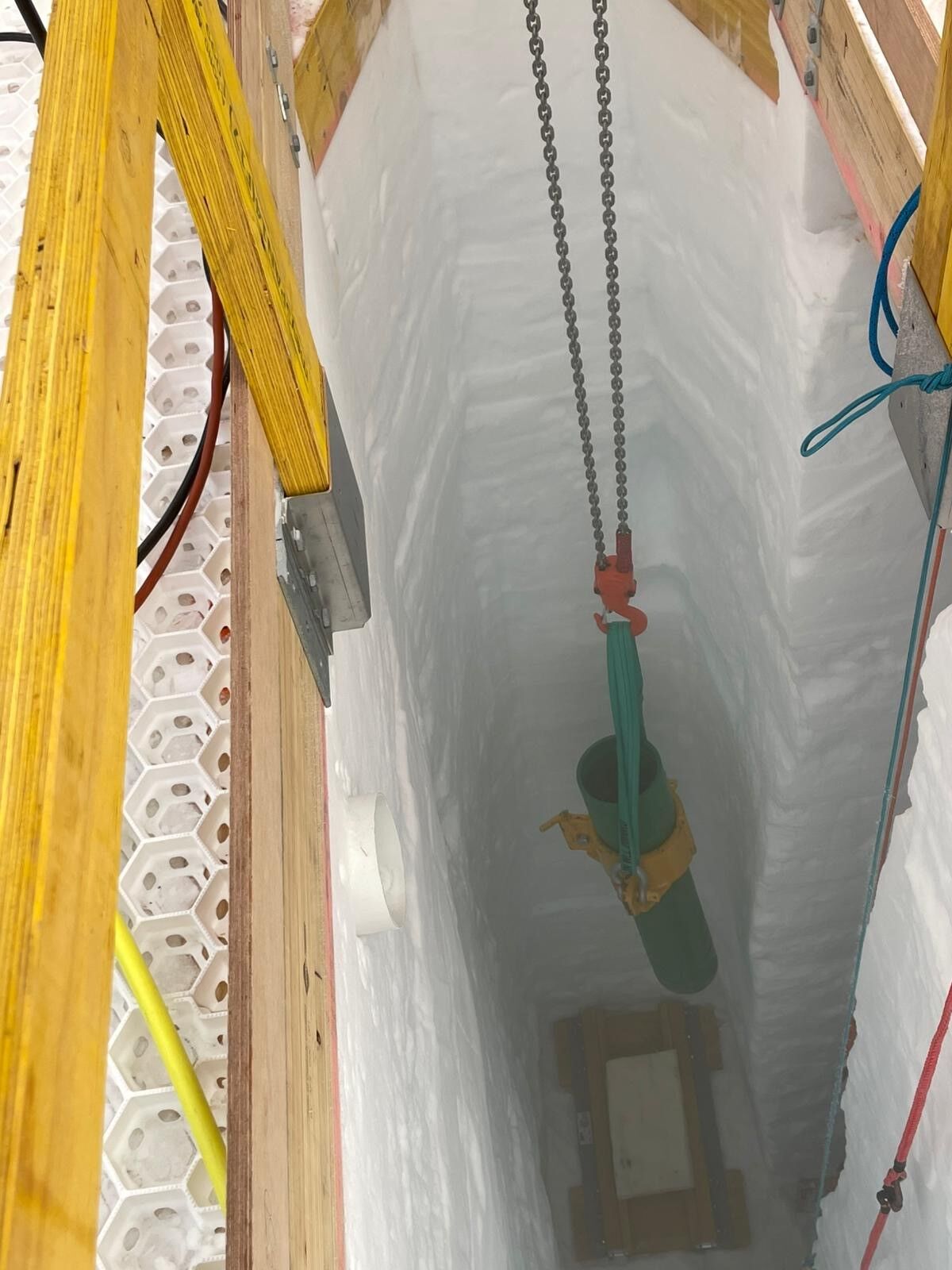
Chris R (Richo) and Chris Y (Youngy) test-fitted some casing together at the surface. Each section seals to the next with an o-ring and a locking wire slid internally around the coupling. Good to practise this before doing it in the trench at -50˚C. By the afternoon, with the winch running and the quad pod firmly fixed to the floor of the drill shelter, we test raised and lowered a 5 m length of casing.
This worked, so we went for it and installed the first piece of casing. This piece has been specially machined and fitted with three o-rings to match the ream diameter and seal into the glacial ice just below 120 m.
Outside the drill shelter the MECC dining and kitchen shelter are now connected via a cold porch and two small fuel heaters are running in addition to the electric heaters to keep the structures warm. Working outside was more pleasant today with the relatively high temperatures (-19˚C) and low wind.
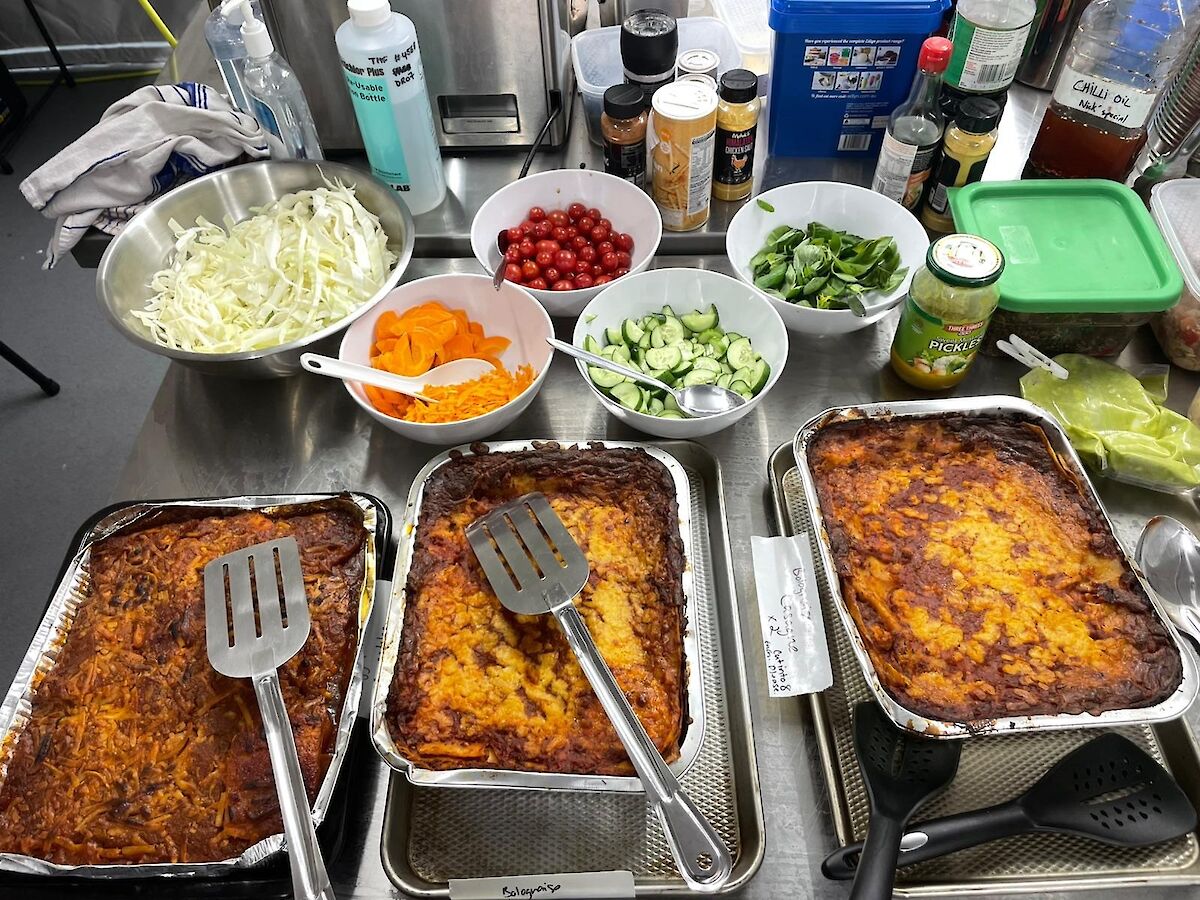
We eat very well up here thanks to Dr Meg. Tonight was lasagne, egglpant mousakka and some fresh veggies from the Casey hydroponics that came in on the flight with us the other day.
Tomorrow, we proceed with the casing.
27 and 28 November, 2025
Location: Dome C North (DCN)—MYIC Inland Station, 75.0422°S, 123.6312°E, 3239 m asl.
Personnel at DCN: Damien Beloin (traverse leader), Derryn Harvie (deputy traverse leader & drill engineer), David Holley (carpenter), Ed Maguire (diesel mechanic), Kris Keen (diesel mechanic), Andy Lewis (electrician), Meg O’Connell (medical doctor), Dane Eden (diesel mechanic), Thom Whyte (electrician), Lenneke Jong (MYIC glaciologist), Julius Rix (MYIC driller), Joel Pedro (MYIC science lead), Chris Richards (MYIC drill technician), Chris Young (MYIC drill technician).
Weather at DCN: • Air temp: -29 (-55.8˚C at the bottom of the drill trench) • Wind speed: 4 - 10 knots • Forecast for next 24 hours: Winds: S/SW 5/10 knots. Min/Max: -35/-29°
Inland Station Operations, Science, Drilling
Making this a bumper two-day edition as we’ve been busy sending down casing. Yesterday (27-11) we settled into a system and made good progress with 66 m of casing down the borehole.
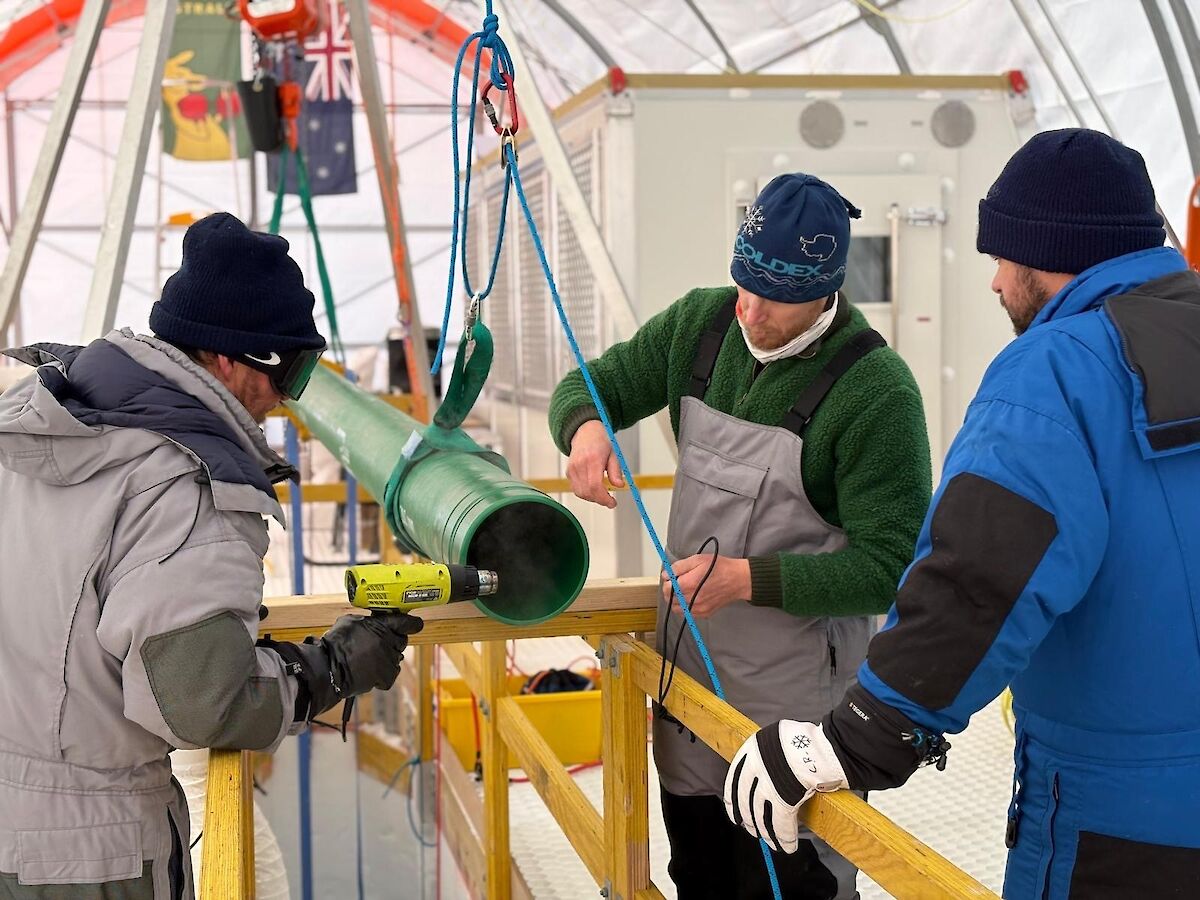
The critical thing is to keep the o-ring that seals each casing section together as warm as possible, else it turns solid as wood in the -55˚C temperature at the bottom of the trench and refuses to seat into the casing string suspended below. After some trial and error we settled on heating the end of each new piece of casing to around 30˚C using heat guns. The pre-warmed piece is then lowered into the trench with the power winch and a tag line. The receiving end is pre-greased with low temperature grease.
Derryn was the trench master. When the new section reaches the bottom of the trench the tag line is removed and an o-ring (kept inside his jacket for warmth) is quickly installed on the end of the casing. We then lower this new piece into the casing already hanging down the borehole from a clamp at the bottom of the trench. Occasionally the new piece seats in under its own weight, but mostly more encouragement is required. The method we found to work was to crank down two ratchet straps looped over the top of the casing and connected to the clamp at the base. Holding your tongue right and a few whacks with a rubber mallet sometimes helps too. There is satisfying ‘CLUNK’ when the new piece drops in and the o-ring seats. A length of cable is then threaded internally connecting the new piece into the casing string. Now the casing string is lowered so the new piece is at the bottom of the trench ready to receive the next. 28/11. casing continued smoothly with our system sorted. At lunch the whole DCN team signed one of the last pieces for posterity, and around 3pm the final piece went in. In the finish, the borehole is cased to a physical depth of 123.4 m (from our surface reference point, top of V-beam in trench). For the final 19 cm of descent we were no-longer able to spin the hanging casing in the borehole.. lifting back up by more than that and the casing would spin freely again. The bottom piece of casing has the final 20 cm machined to diameter to seat into the 227 mm reaming step. This is a good indication that the machined end is seating into the glacial ice as intended. Hooray! We’re all very happy to complete this milestone a had a little celebration in the drill shelter.
It’s the first ice core borehole cased by the Australian Antarctic Program since the Law Dome ice core deep drilling project commenced in the late 80’s.
We have 30 m spare casing if anyone wants to try this at home ;)
Elsewhere around camp the Traverse team have nearly completed the water amenities van, so we will soon not all be using the one shower in the traverse living quarters. The inland station kitchen is also looking close to complete. Hoping to christen it with a barbecue tomorrow!