

22 December, 2025
Location: Dome C North (DCN)—MYIC Inland Station, 75.0422°S, 123.6312°E, 3239 m asl.
Personnel at DCN: Damien Beloin (traverse leader), Derryn Harvie (deputy traverse leader & drill engineer), David Holley (carpenter), Ed Maguire (diesel mechanic), Kris Keen (diesel mechanic), Andy Lewis (electrician), Meg O’Connell (medical doctor), Dane Eden (diesel mechanic), Thom Whyte (electrician), Lenneke Jong (MYIC glaciologist), Julius Rix (MYIC driller), Joel Pedro (MYIC science lead), Chris Richards (MYIC drill technician), Chris Young (MYIC drill technician).
Weather at DCN:
- Air temp: -23˚C.
- Wind speed: 4 knots, NNW 30˚
- Forecast for next 24 hours: Cloudy, Possible light snow showers. Winds: N 10/15 knots. Min/Max: -26/-18 °C
Inland Station Operations, Science, Drilling
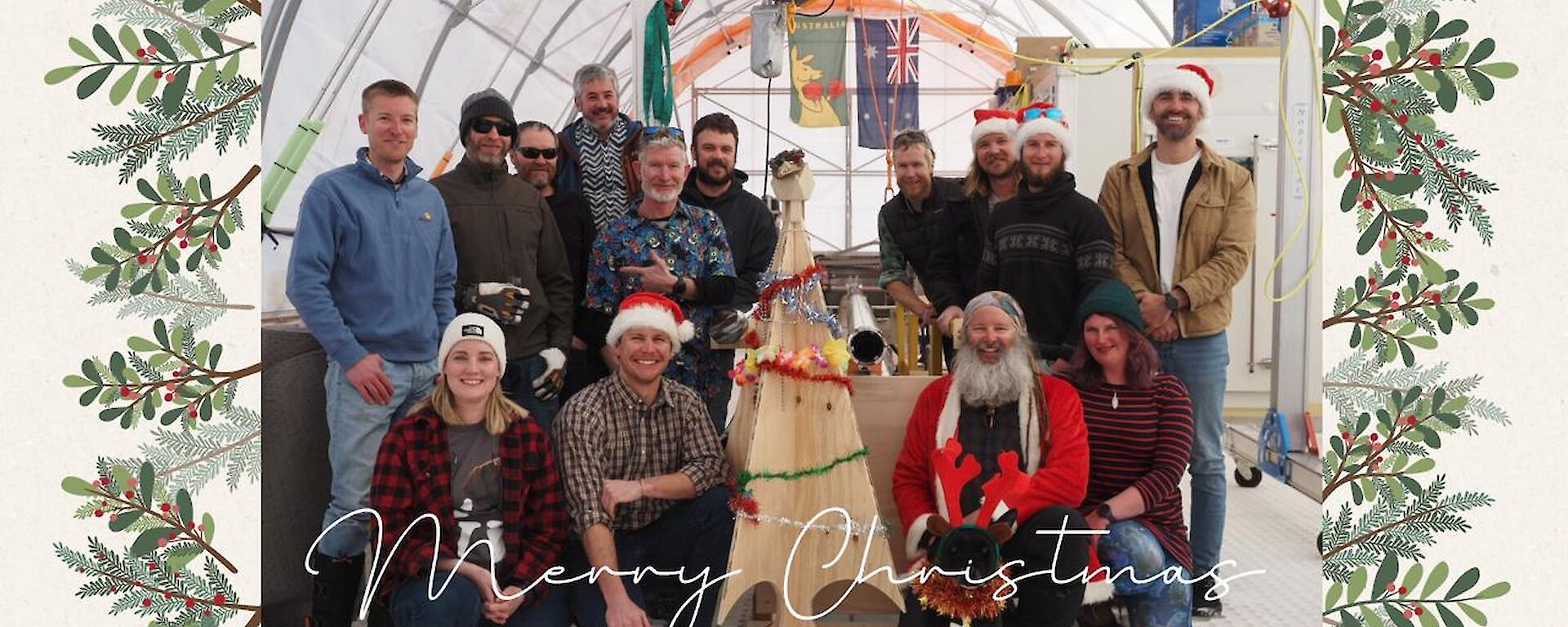
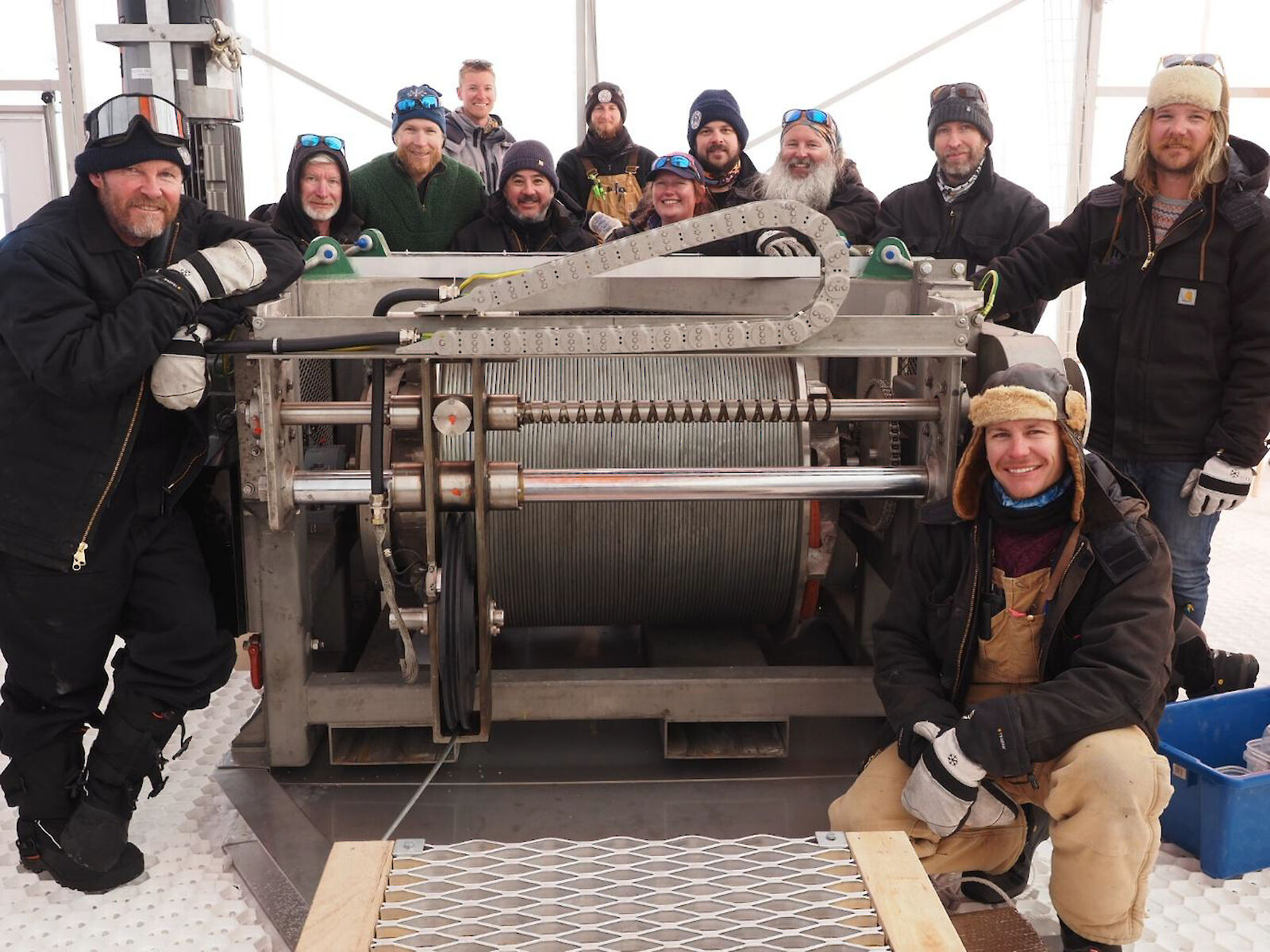
Happy solstice everyone and an important milestone in commissioning the drill system reached for us today at DCN. After much patient and careful work connecting the winch power and control system by Thom and Andy since we received it into camp 11 days ago it was tested for the first time today. The haul and creep functions worked as they should, and full rotation of the drum found no issues. We had a little celebration in the drill tent to mark this occasion.
Tomorrow the drilling team will run the winch cable through the tower, which requires partial disassembly of the anti-torque section currently on the end of the cable and then we will look to build and spin the complete drill.
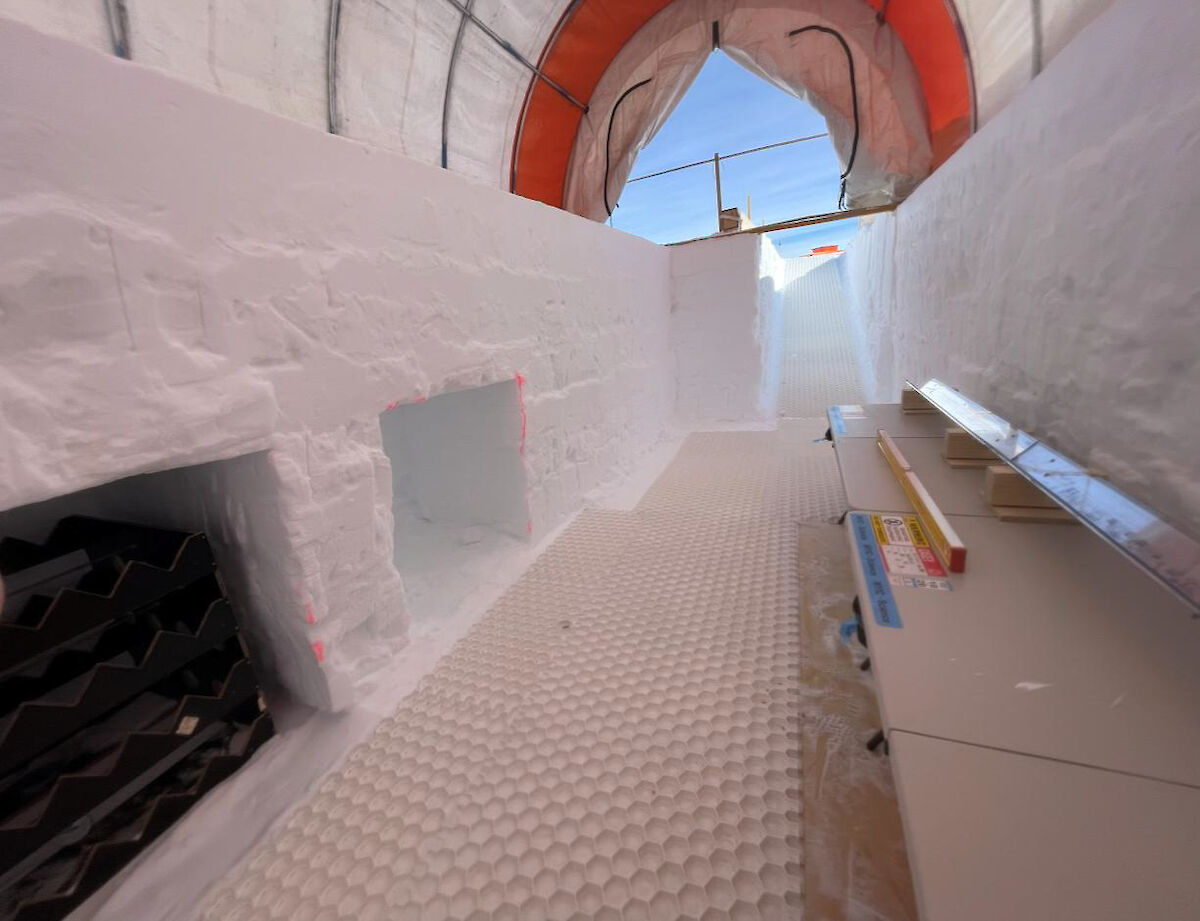
Outside the drill tent the snow miners have completed excavating the floor of the small Weatherhaven core processing shelter down to two metres. There is still some work to complete on the ramp into the shelter and then core racks can be installed.
Chippy Dave and Ed have completed an excellent winch cable guard.
The Basler flight to bring in our four team members from Casey and cargo was cancelled today, again due to poor weather on the route. It unfortunately looks unlikely that our teammates will make it here by Christmas.
23 December, 2025
Location: Dome C North (DCN)—MYIC Inland Station, 75.0422°S, 123.6312°E, 3239 m asl.
Personnel at DCN: Damien Beloin (traverse leader), Derryn Harvie (deputy traverse leader & drill engineer), David Holley (carpenter), Ed Maguire (diesel mechanic), Kris Keen (diesel mechanic), Andy Lewis (electrician), Meg O’Connell (medical doctor), Dane Eden (diesel mechanic), Thom Whyte (electrician), Lenneke Jong (MYIC glaciologist), Julius Rix (MYIC driller), Joel Pedro (MYIC science lead), Chris Richards (MYIC drill technician), Chris Young (MYIC drill technician).
Weather at DCN:
- Air temp: -18˚C.
- Wind speed: 4 knots, NNE 40˚
- Forecast for next 24 hours: cloudy, possible snow showers. Winds: NE 15/20 knots. Min/Max: -20/-12 °C
Inland Station Operations, Science, Drilling
The solstice has certainly brought warmth to DCN with -18˚C and heading for -12 °C tomorrow. That’s very warm for 3239 m altitude and 1100 km inland.
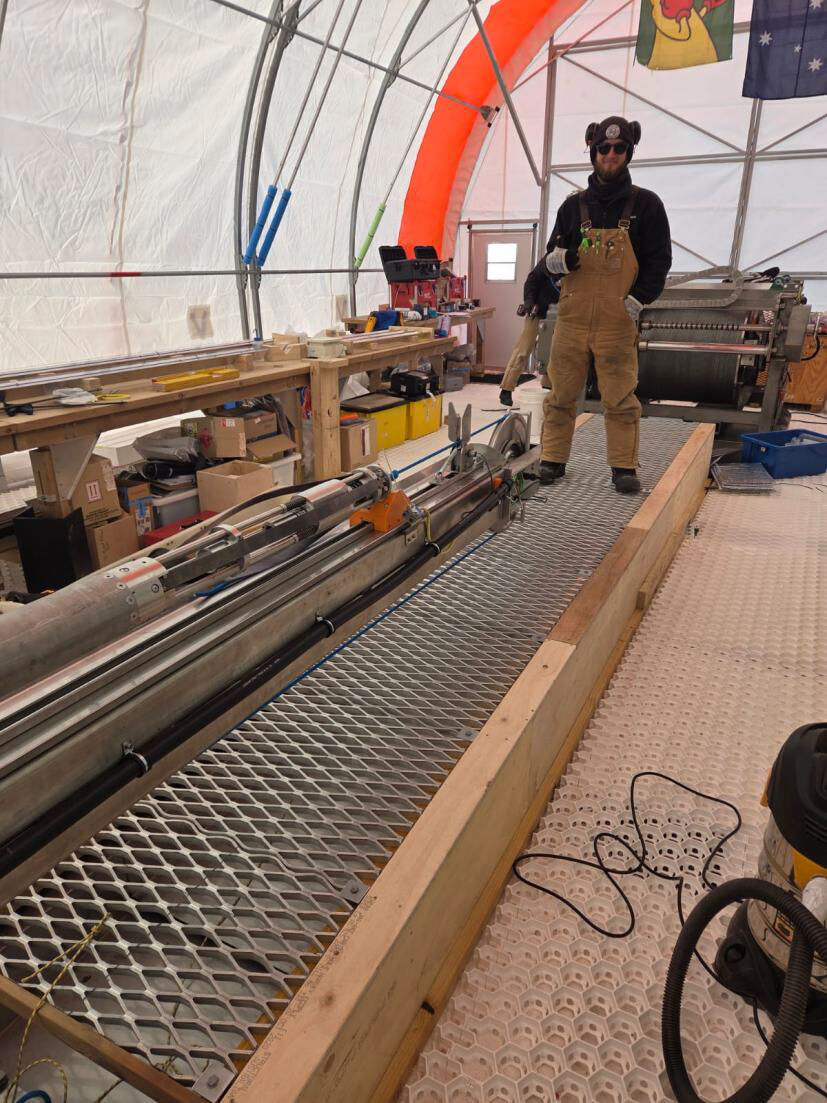
More good milestones today in the drill shelter! Initially the winch would not move, but the team kept cool and tracked this issue down to a temperature limit senser for the gearbox that was preventing the gear box heater coming on. With this resolved, the drill anti-torque section attached to the end of the winch cable was partially dissembled so that the cable could be run through the tower and over the crown-sheeve to allow us to build the complete drill on the tower.
Before building the drill a set of crown-sheeve load-cell calibration tests were run using tractor weights suspended from the anti-torque section into the drill slot.
With the tests complete, the drill team completed assembly of the full drill and raised and lowered it partially into the borehole. The winch controls are working smoothly. Then came a long anticipated moment to give the drill its first run on the tower after major works rebuilding the sondes earlier this year – and away it went. Not in the ice just yet, we are warming up to that! But spinning on the tower suspended over the borehole. It might sound like a small thing but it is major step in commissioning the system to start drilling ice. Congratulations to all involved at the AAD and here in the field in reaching this point. As Richo commented, some have spent a substantial part of their careers working on this drill!
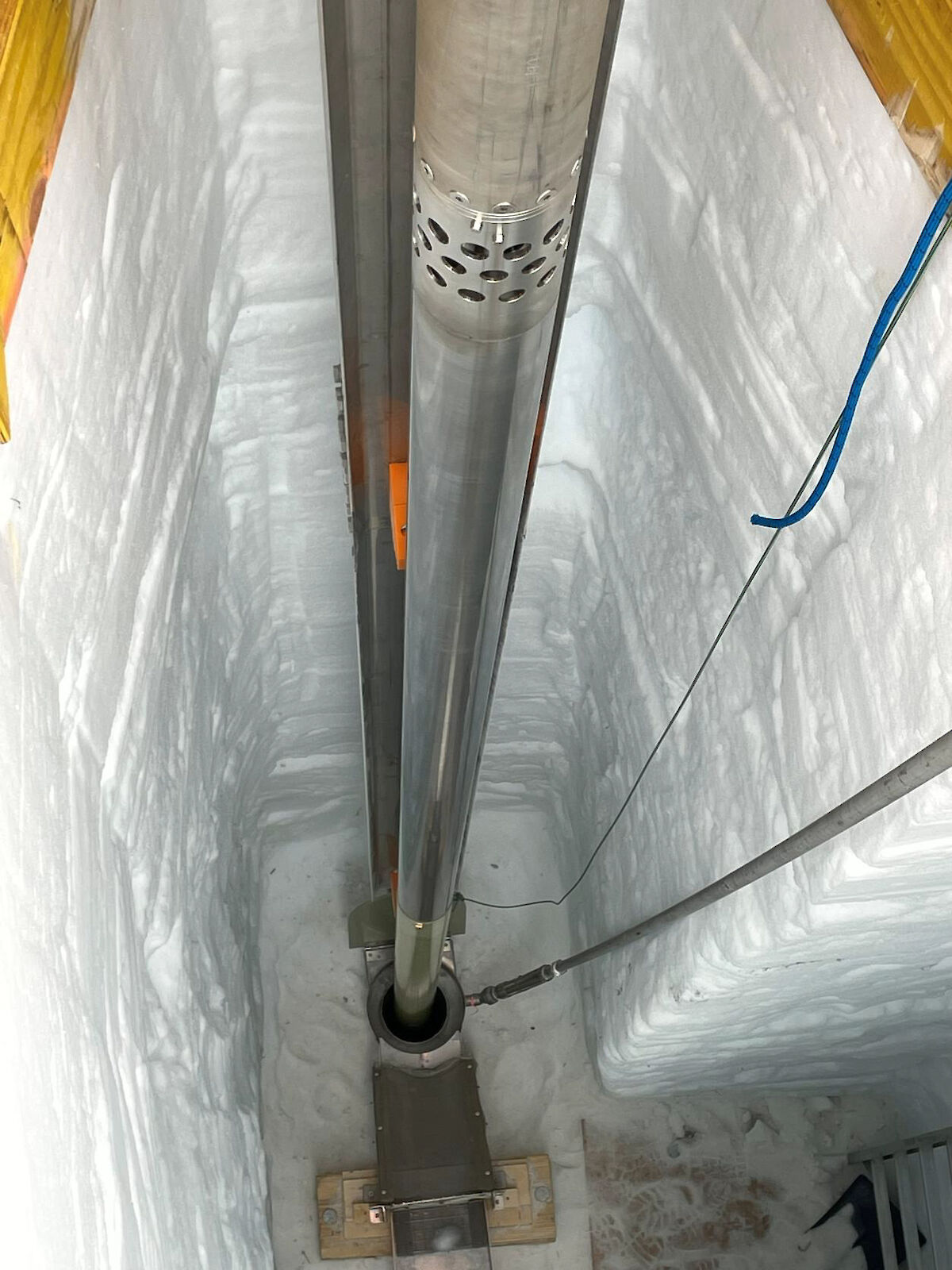
Tomorrow, we plan to attach a camera to the drill and descend for a view of the casing and the interface of the casing with the glacial ice at just over 120 metres.
Outside the drill shelter there was also a lot of action!
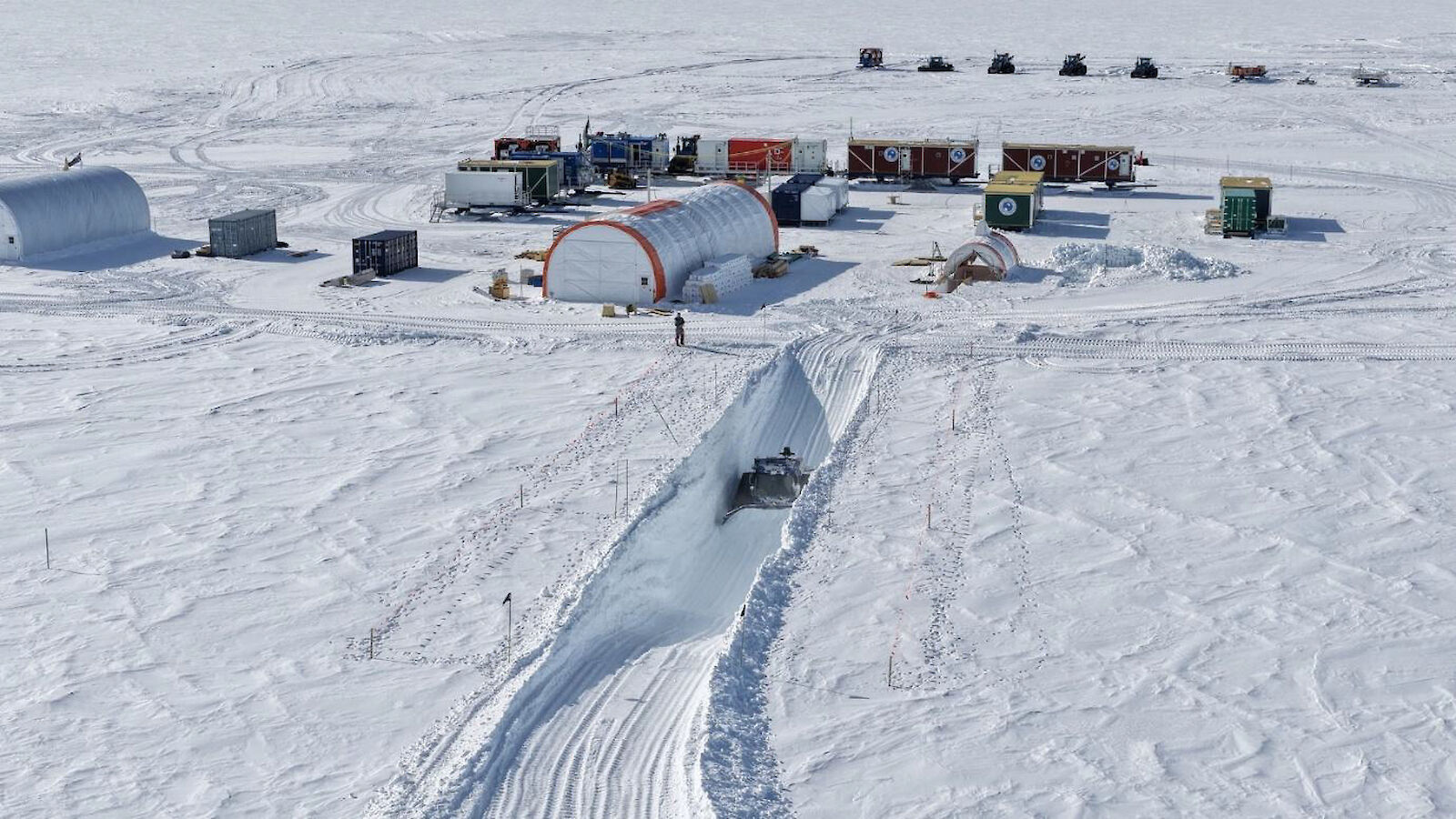
The core processing shelter was completed. We cut an eight metre-long ramp down to reach the excavated floor area and lined the floor and the ramp with plastic gird to improve gripl. Tables and additional racks to hold cores in aluminium v-channel were installed for handling core. The temperature in the recessed area for the core racks was at -25˚C today. One-meter cores carried into this area from the drill shelter will spend ca. 24 hours in these racks to allow residual Estisol to run off and be caught in the v-channel. We will then take a mean water isotope sample from the cores before bagging them and moving to deeper and colder storage. Our set up is just missing our core processors Chris and Mingxia, who remain stranded at Casey Station waiting for that difficult weather window to support a flight to Concordia.
Construction of the deeper storage started today. Damien marked out an area south of the drill shelter where we are cutting a trench to burry a shipping container to 4.5 metres depth. Ed started on digging the trench with the snow groomer and had it down to depth by the end of the day.
The container will be positioned at the bottom of the trench later this week and will stay there for the next five years of the project. Next season, our intention is to add a further three containers to allow all processing and storage to be undertaken at much lower temperatures than can be achieved at the surface. This is a safe and cost-effective solution to store ice samples, as used also at Concordia.
24-25 December
Location: Dome C North (DCN)—MYIC Inland Station, 75.0422°S, 123.6312°E, 3239 m asl.
Personnel at DCN: Damien Beloin (traverse leader), Derryn Harvie (deputy traverse leader & drill engineer), David Holley (carpenter), Ed Maguire (diesel mechanic), Kris Keen (diesel mechanic), Andy Lewis (electrician), Meg O’Connell (medical doctor), Dane Eden (diesel mechanic), Thom Whyte (electrician), Lenneke Jong (MYIC glaciologist), Julius Rix (MYIC driller), Joel Pedro (MYIC science lead), Chris Richards (MYIC drill technician), Chris Young (MYIC drill technician).
Weather at DCN: • Air temp: -13˚C • Wind speed: 8 knots, NE 40˚ • Forecast for next 24 hours: Cloudy, possible light snow showers, drifting snow. Winds: NE 10/15 knots, turning W in the evening. Min/Max: -14/-11°C
Inland Station Operations, Science, Drilling
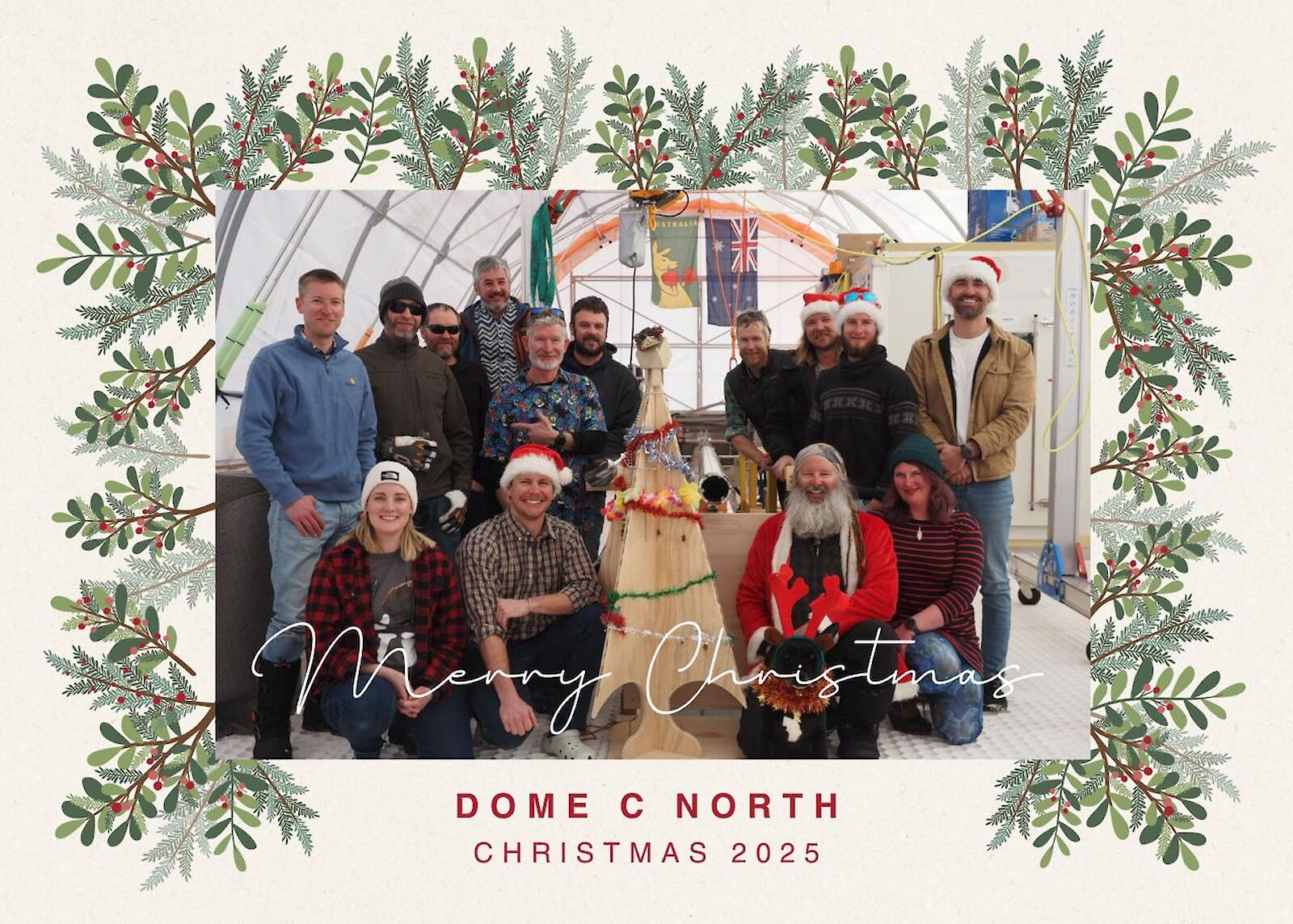
Merry Christmas everyone from all the team at Dome C North!
We had a marvellous Christmas eve dinner prepared by Dr Meg with glazed ham, turkey, crispy roast potatoes, peas and all the trimmings. Although very far from our families we have a great little community here at Dome C North. We had a fun evening including a visit from the jolly fella in red who handed out the Secret Santa gifts that folks here had prepared earlier or been secretly and creatively working on.
Things are getting exciting here at DCN as we move ever nearer to attempt the first ice core with the deep drill. That big step is planned for tomorrow.
On Christmas eve morning we made the first descent in the borehole with the full drill attached. The drill was lowered to the bottom of the pilot hole and gave a reading on the depth-encoder of 147.09 metres. Which, accounting for the length of the drill is about 151 metres below the surface. This is a comforting number—it matches what we expect and shows that there is no accumulation of chips or anything else untoward in the borehole.
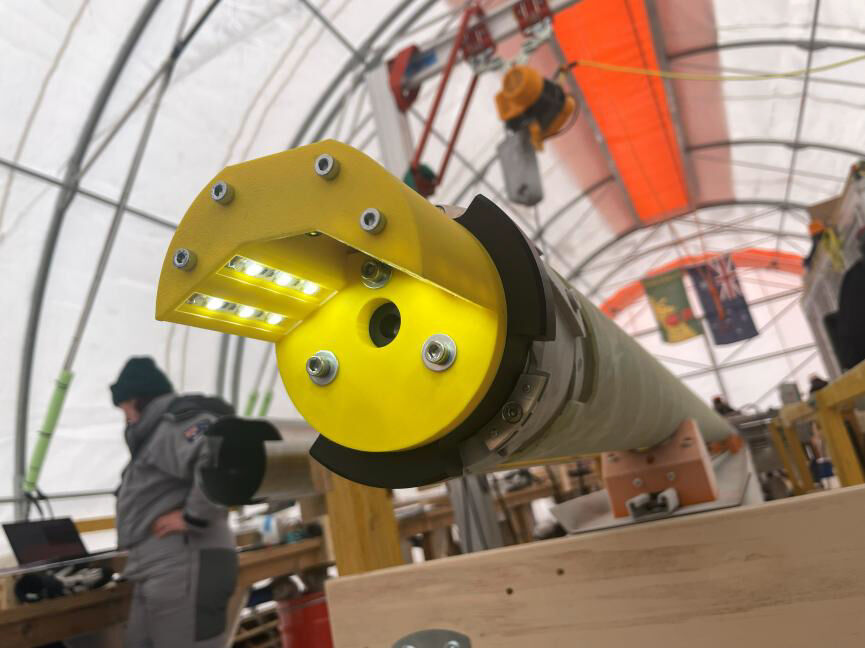
Next the team fitted a camera system made by Derryn to the drill head and sent it down with special attention to look at the interface of the bore casing and the ice and the base of the borehole. The camera does not provide live feed (that system is in development for next season). Pictures show a shot of the end of the bore casing at 123.4 metres. This was also a comforting observation, indicating the chosen reaming diameter has worked well to firmly seat the casing into the ice. At the base of the borehole, we could see some fine chippings and a some green dust produced when the casing was cut. This will be removed when we drill over the chips.
Pleasing too was that the winch is hauling in and out and spooling neatly on and off the winch drum. Each step like this builds our confidence and readiness to send the drill down to cut ice.
On Christmas day people took it easy and many were on the phone around camp talking to family and giving them little tours around the camp.
Around that we fitted in some jobs to be ready for tomorrow. Drilling fluid was pumped into the borehole from 44 gallon drums positioned on a bunded pallet outside the drill shelter. The borehole took six drums to fill from the base of the borehole to 104 metres. We intend to keep the fluid level between 100 and 120 metres. At these depths the ice is not porous, so fluid can’t seep away, and will be confined to the borehole. We will add more fluid as we drill deeper to keep the level in this range.
People can understandably be concerned about the environmental impact of adding a fluid into the ice sheet. The fluid used, Estisol-140, is biodegradable and approved for use in our Environmental Permit under the Antarctic Treaty system. It is chosen for its minimal environmental impact along with its physical properties, which include density close to that of ice and a viscosity that remains acceptably low at the extreme cold temperatures encountered in the ice sheet. Critically for deep drilling, the fluid provides back pressure to the borehole that prevents viscous closure of the ice. Estisol-140 does however have a distinct and not particularly pleasant fruity smell that will come to pervade the drill shelter. To try to keep the smell out of the rest of camp we have a change cabin in the drill shelter. Drillers suits, boots and gloves are set out in the cabin and after shifts we will change back into untainted clothes.
The other tasks today included final steps on the core processing line to be ready to receive ice, and installation of Derryn’s 3-D printed cable cleaner. This device clamps over the cable and is attached to our vacuum system to suck residual Estisol off the cable before it is tracked back over the winch. It worked well in testing today.
26 December, 2025
Location: Dome C North (DCN)—MYIC Inland Station, 75.0422°S, 123.6312°E, 3239 m asl.
Personnel at DCN: Damien Beloin (traverse leader), Derryn Harvie (deputy traverse leader & drill engineer), David Holley (carpenter), Ed Maguire (diesel mechanic), Kris Keen (diesel mechanic), Andy Lewis (electrician), Meg O’Connell (medical doctor), Dane Eden (diesel mechanic), Thom Whyte (electrician), Lenneke Jong (MYIC glaciologist), Julius Rix (MYIC driller), Joel Pedro (MYIC science lead), Chris Richards (MYIC drill technician), Chris Young (MYIC drill technician).
Weather at DCN: • Air temp: -20˚C • Wind speed: 11 knots, NE 340˚ • Forecast for next 24 hours: Increasing sunny periods. Drifting snow, with blowing snow possible during the afternoon. Winds: W/SW 10/15 knots, possibly reaching 15/20 knots during the afternoon and evening. Min/Max: -20/-17 °C
Inland Station Operations, Science, Drilling
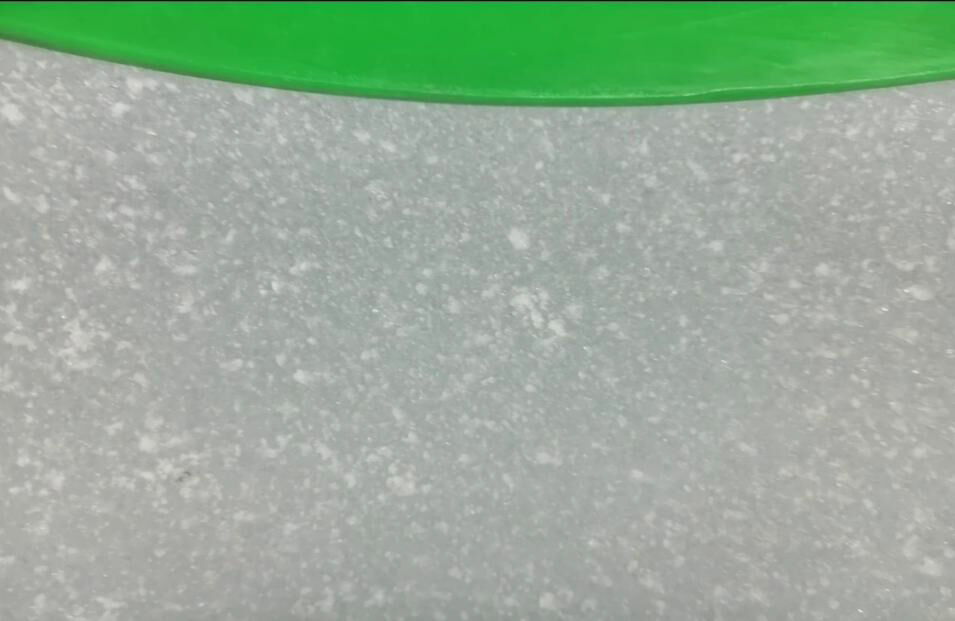
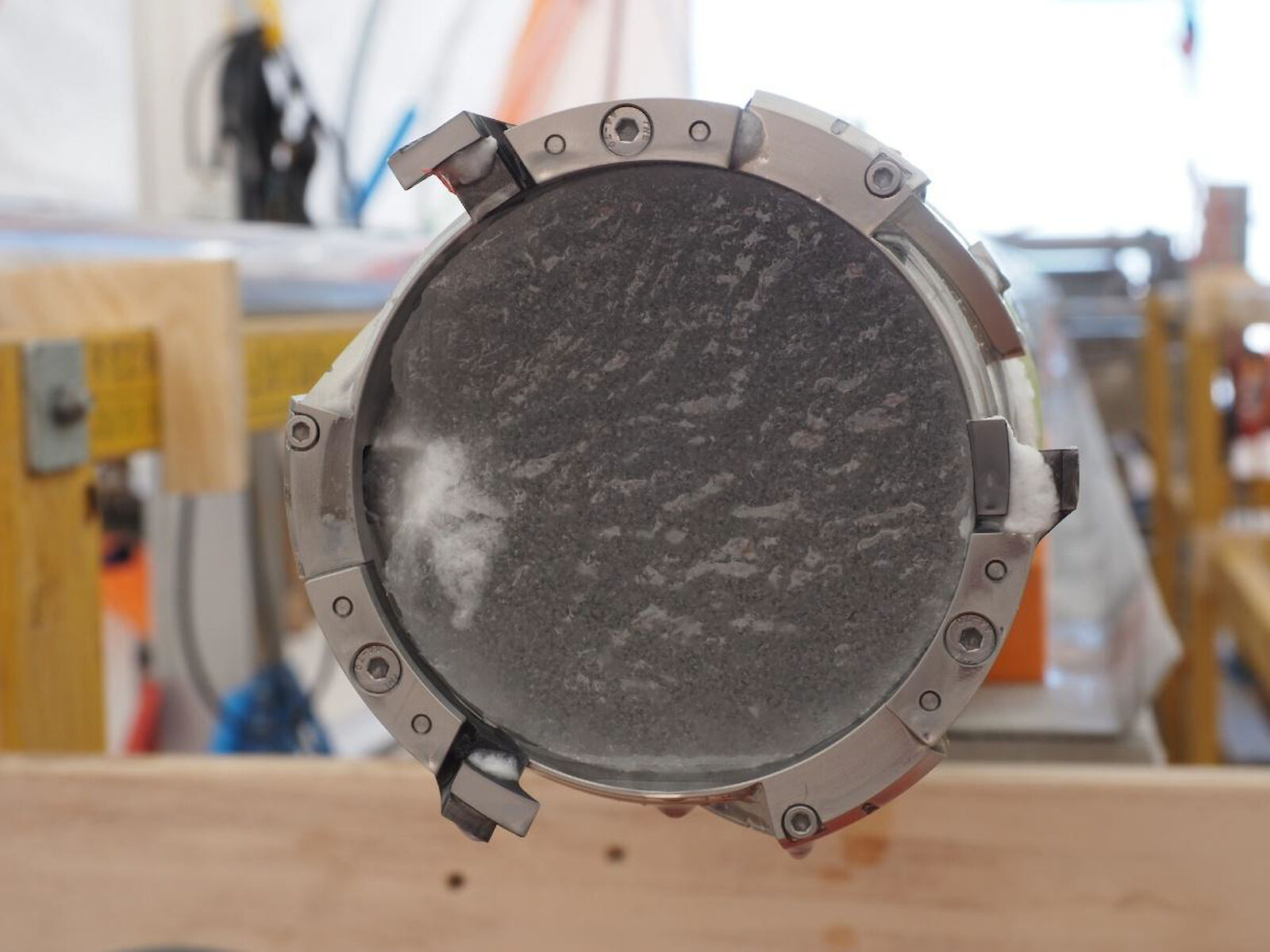
Here it is.. the first ice core drilled with the AAD deep drill!
At 2.07 pm we pulled up the first core with the deep drill. It measured at neat 0.98 metres and was accompanied by close to two metres of fine chips, the bulk of them likely left from reaming last year.
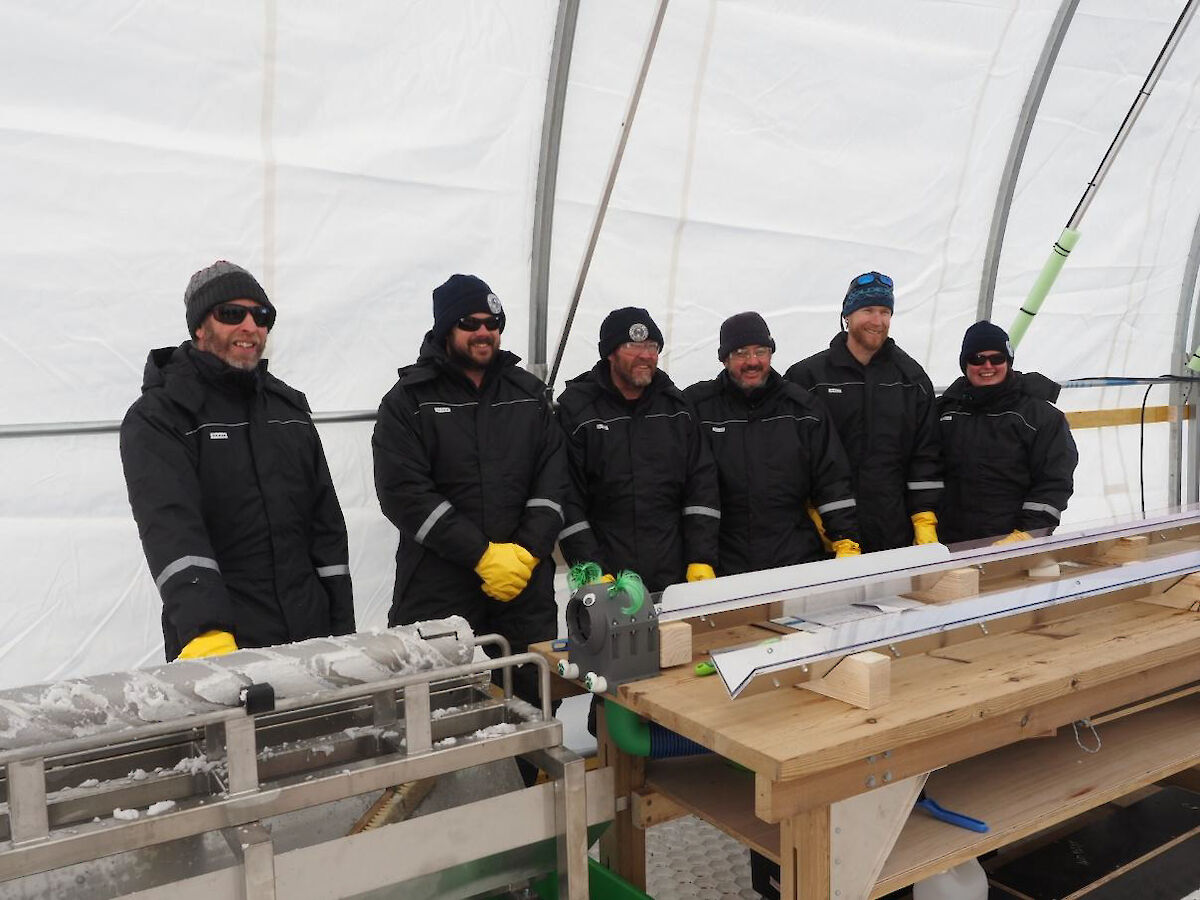
It was suspenseful and thrilling to drill and return ice core on the first attempt with the deep drill, and it marks success of a primary objective for the season – to commission the drill system and recover the first ice core. We acknowledge the huge effort and work that has gone into the development of the drill and drill system from the AAD instrument workshop, the Traverse and MYIC project, and the wider Antarctic Program since inception of the drill build in 2019. You should all be proud of that work! We have just over three weeks left here at DCN and we are excited and motivated to see what we can achieve with our drill in that time.
We might dream of, but should not expect, to launch into production drilling on the first afternoon. We made five drilling runs for core returns of 0.98, 0.19, 2.71, 0.84 and 0.70 metres (total 5.42 metres). We are aiming for core lengths of ~2.7 metres, as optimum return for the drill as designed. Already we have seen today that the drill is very capable of hitting this target. We noticed rough core breaks, suspected due to loosening of the core dog tension, that may in turn contribute to some of the shorter runs. We will make adjustments tomorrow and also try raising the fluid level in the borehole from 110 metres up to 90 metres to increase the pressure head over the ice during cutting.
The cores have been logged, sectioned into one metre lengths and moved to our excavated core processing shelter for drainage of residual Estisol. Until Chris and Mingxia arrive from Casey, Lenneke and Joel are leading the core logging.
In some more international cooperation, four members of the traverse team travelled to Concordia today to help them move 60 shipping containers using our Challenger tractors. This was the first step of a multi-day operation between the AAD, IPEV and PNRA.
With everyone back in camp after the container-hauling, we all went to the drill tent to celebrate the team effort involved in the encouraging first day of drilling.
Drill depth at end of day is 154.76 metres.
27-28 December, 2025
Location: Dome C North (DCN)—MYIC Inland Station, 75.0422°S, 123.6312°E, 3239 m asl.
Personnel at DCN: Damien Beloin (traverse leader), Derryn Harvie (deputy traverse leader & drill engineer), David Holley (carpenter), Ed Maguire (diesel mechanic), Kris Keen (diesel mechanic), Andy Lewis (electrician), Meg O’Connell (medical doctor), Dane Eden (diesel mechanic), Thom Whyte (electrician), Lenneke Jong (MYIC glaciologist), Julius Rix (MYIC driller), Joel Pedro (MYIC science lead), Chris Richards (MYIC drill technician), Chris Young (MYIC drill technician).
Weather at DCN: • Air temp: -22˚C • Wind speed: 0 -12 knots • Forecast for next 24 hours: Light snow showers possible. snow, with blowing snow possible during the afternoon. Winds: NE 10/15 knots, reducing during the afternoon. Min/Max: -23/-17 °C
Inland Station Operations, Science, Drilling
Saturday morning we made a number of adjustments to the drill based on what we learned from the first coring runs on the Friday:
- Two barrels of E-140 were added to bring the fluid level up to ca. 90 m to add some more back pressure in the borehole.
- The fasteners holding the core dogs were filed back to create a chamfer as we’d seen on Friday evidence that they were catching on the casing when the drill was being retrieved and then loosening.
- Anti-torque was tightened.
- Adjustments made to the top of the drill barrel where we expect fluid is recirculating rather than moving through the drill.
- Work was done on winch control software which has had some issues with temperature limit settings that are preventing its heaters coming on.
After this maintenance it was too late in that day to restart drilling. We will resume on Monday.
Lenneke re-surveyed the nearby ApRES site using the prototype Dual DDS unit lent to us by British Antarctic Survey.
The Traverse team dragged a 20-ft container between two Challenger tractors and positioned it into the core storage trench ready to be used for ice core storage. The container will be buried this week and a ramp will be maintained for access to the doors.
On Sunday our team members in Casey headed to the skiway for their long-awaited flight to join us up here...it looked a GO at last. But, before they could get away weather came in and again forced cancellation of the flight. Feeling for our friends at Casey, but we can’t change the weather. DCN is a hard place to get to!
On Sunday we took it easy in preparation for the week ahead and tinkered on some odd jobs. The wind dropped in the afternoon and some of us walked or jogged out to the traverse cross roads. In the afternoon some of the team headed over to Concordia for another sporting fixture – some friendly soccer with the French and Italians.