
15 December, 2025
Location: Dome C North (DCN)—MYIC Inland Station, 75.0422°S, 123.6312°E, 3239 m asl.
Personnel at DCN: Damien Beloin (traverse leader), Derryn Harvie (deputy traverse leader & drill engineer), David Holley (carpenter), Ed Maguire (diesel mechanic), Kris Keen (diesel mechanic), Andy Lewis (electrician), Meg O’Connell (medical doctor), Dane Eden (diesel mechanic), Thom Whyte (electrician), Lenneke Jong (MYIC glaciologist), Julius Rix (MYIC driller), Joel Pedro (MYIC science lead), Chris Richards (MYIC drill technician), Chris Young (MYIC drill technician).
Weather at DCN:
- Air temp: -29˚C.
- Wind speed and direction: 4 knots WSW 240˚
- Forecast next 24 hours: Mostly clear. Possible fog in the early morning. Winds: S 5/10 knots. Min/Max: -36/-26 °C
Inland Station Operations, Science, Drilling
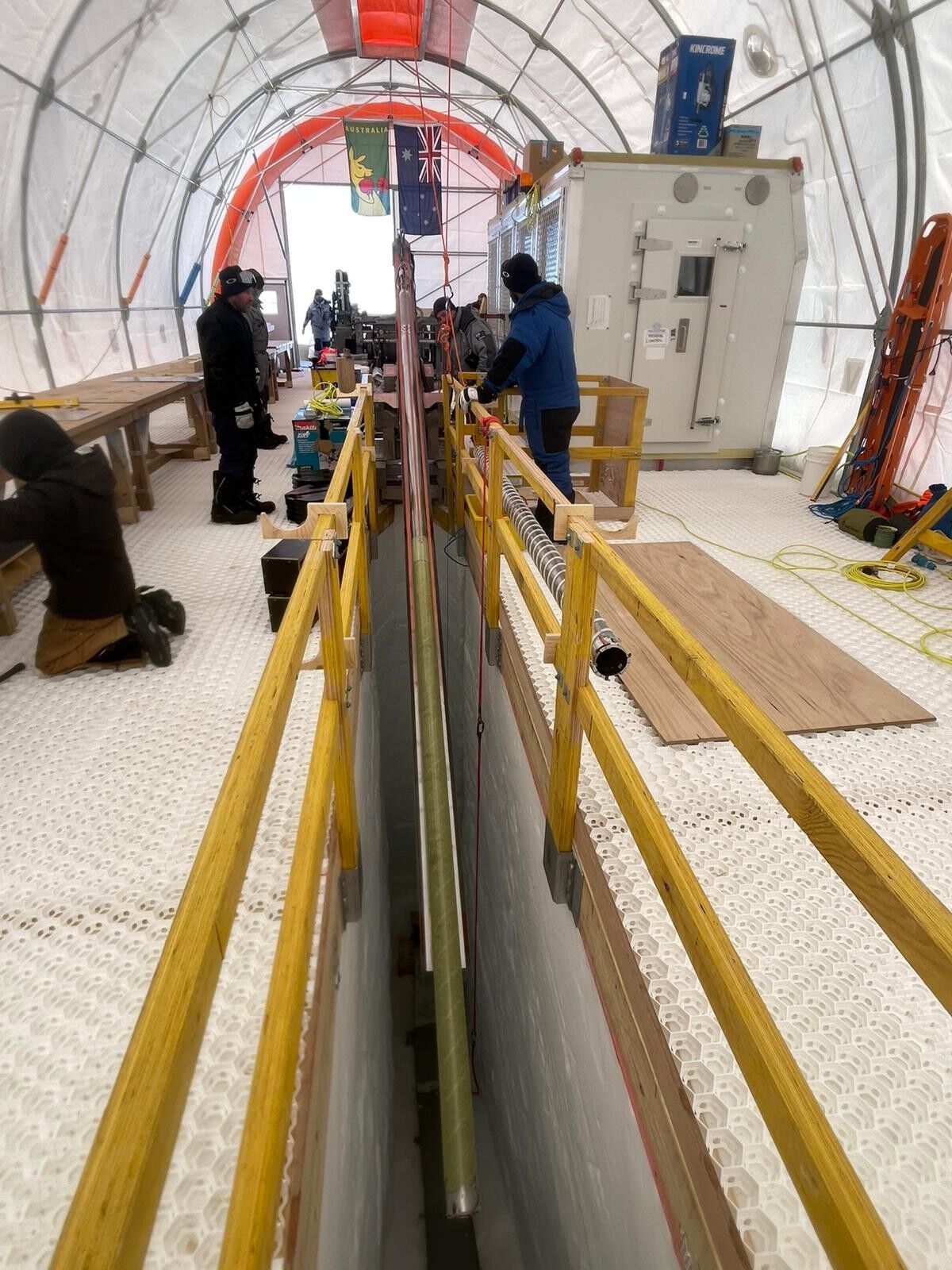
We assembled the complete drill on the tower for the first time today and a good-looking drill it is. Work continues on installing the winch control panels and power distribution before we can power the drill through the winch, but we are getting close.
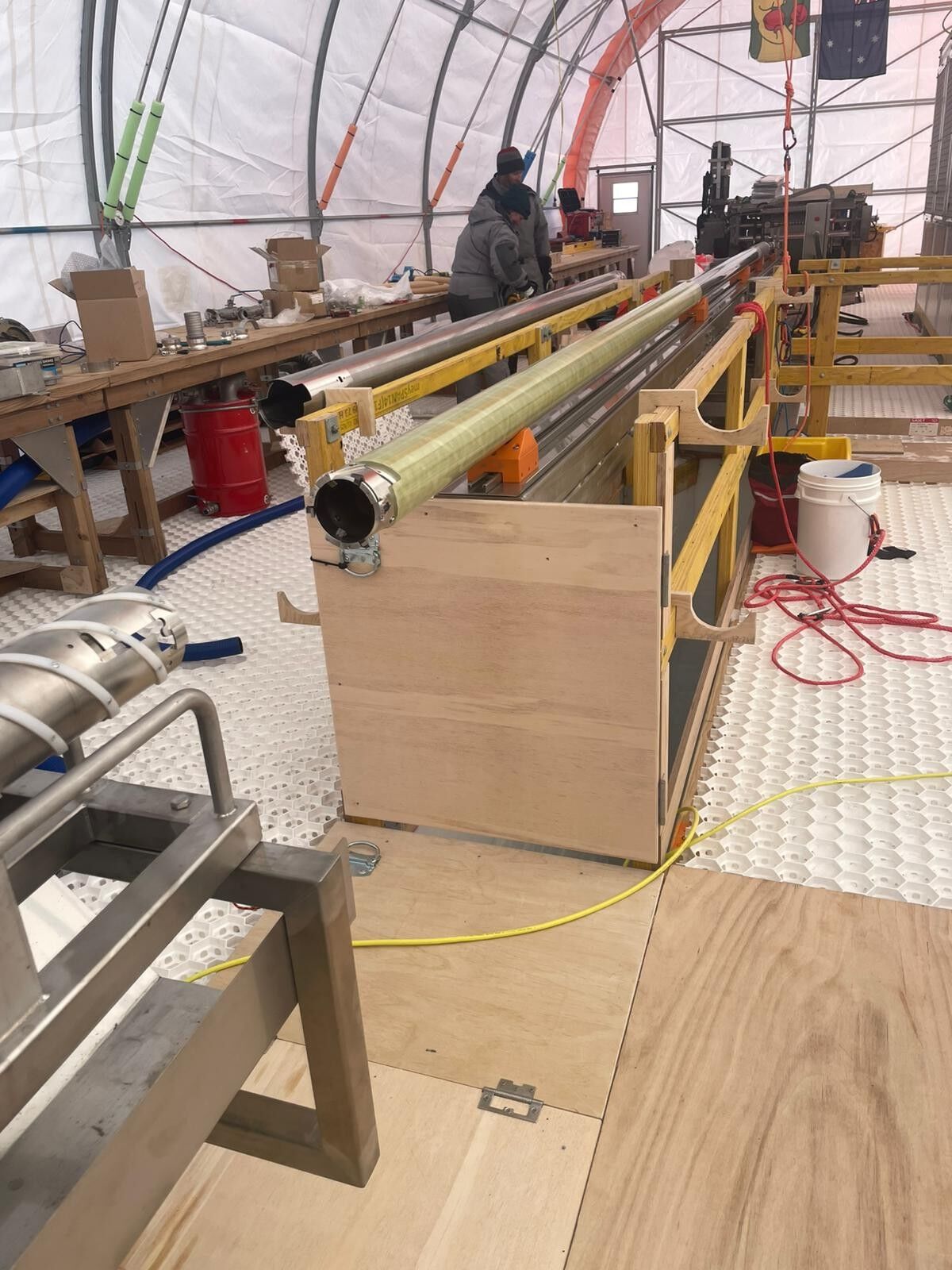
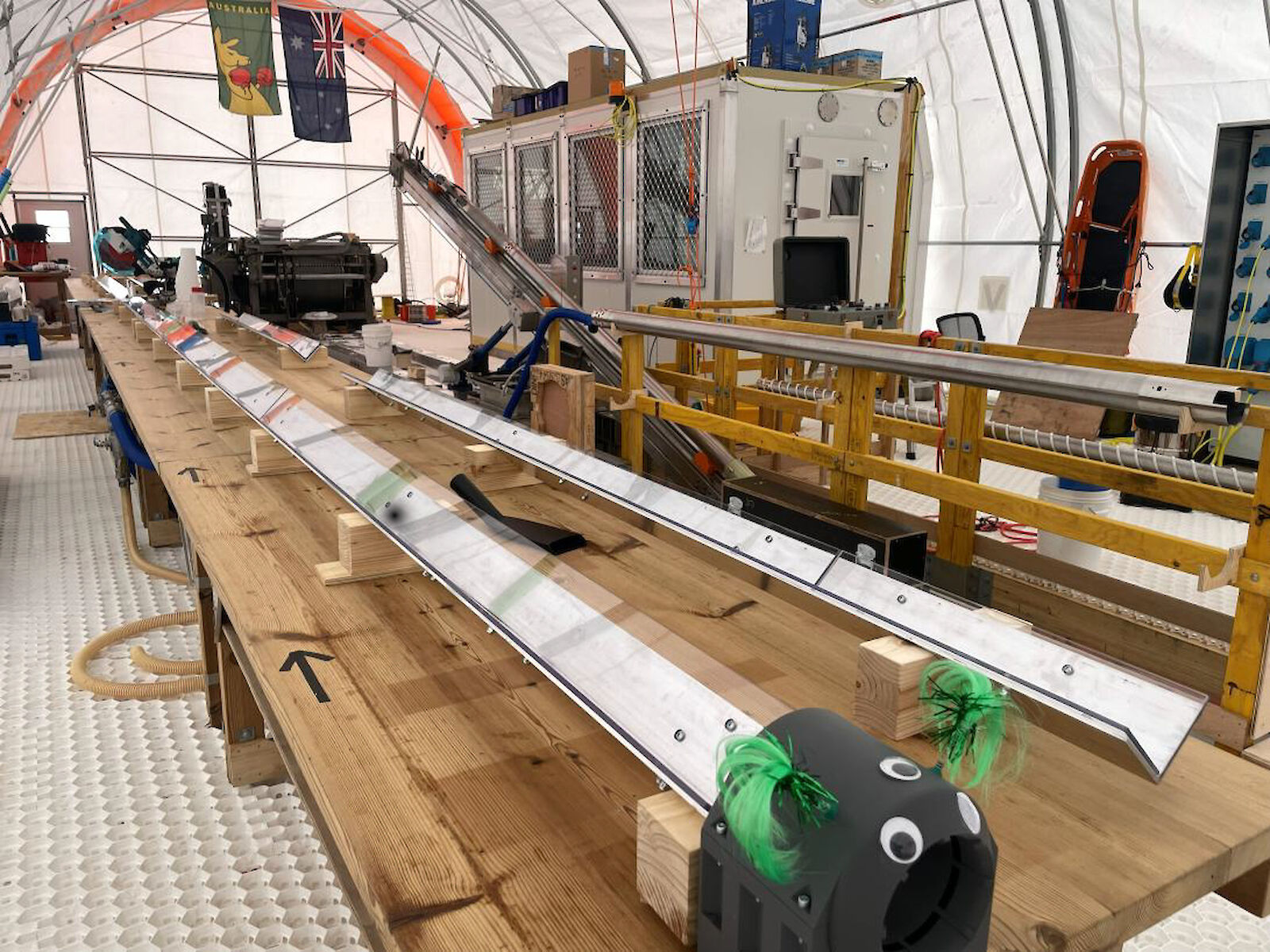
Full assembly and tilting of the drill on the tower was helpful to make final measurements on the end position and height of the drill barrel, which in turn sets the level of the core processing benches – the aim is for the core barrel to come out of the drill, move to the processing line on the rolling bench and then move down the processing line all at precisely the same level to minimise stress on the core. With the target levels set, chippy Dave and honorary chippy Ed started on accurately levelling our 14 m of ice core processing benches.
After the drill assembly, the team started unpacking and assembling the drill fluid delivery and recovery system.
For the past week we’ve been waiting on weather to have four new team members join us at DCN. Importantly for the drilling and science this includes our ice core processors Dr Chris Plummer and Mingxia Lai. Crossing fingers for suitable weather in the next days between Casey and Concordia.
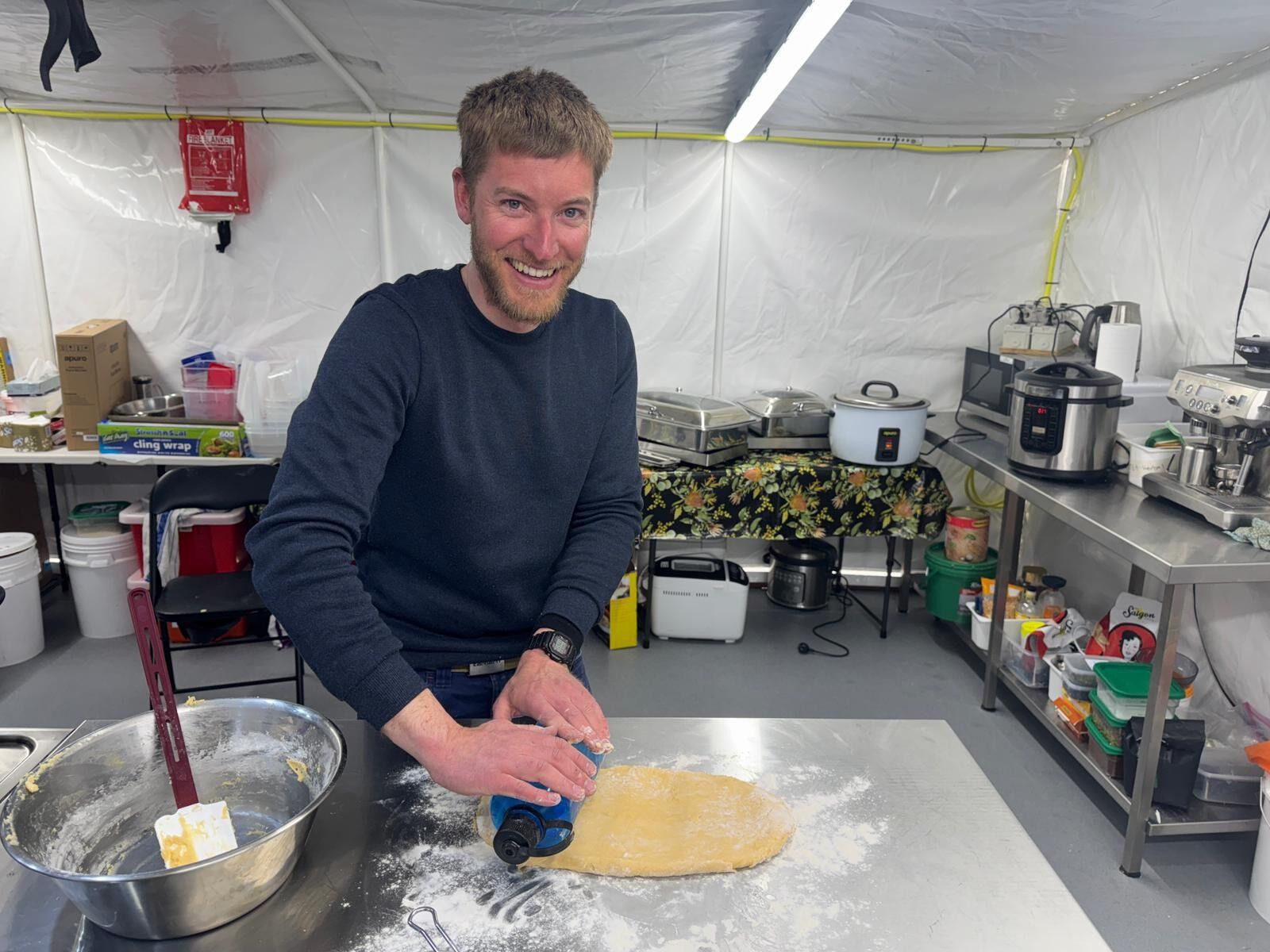
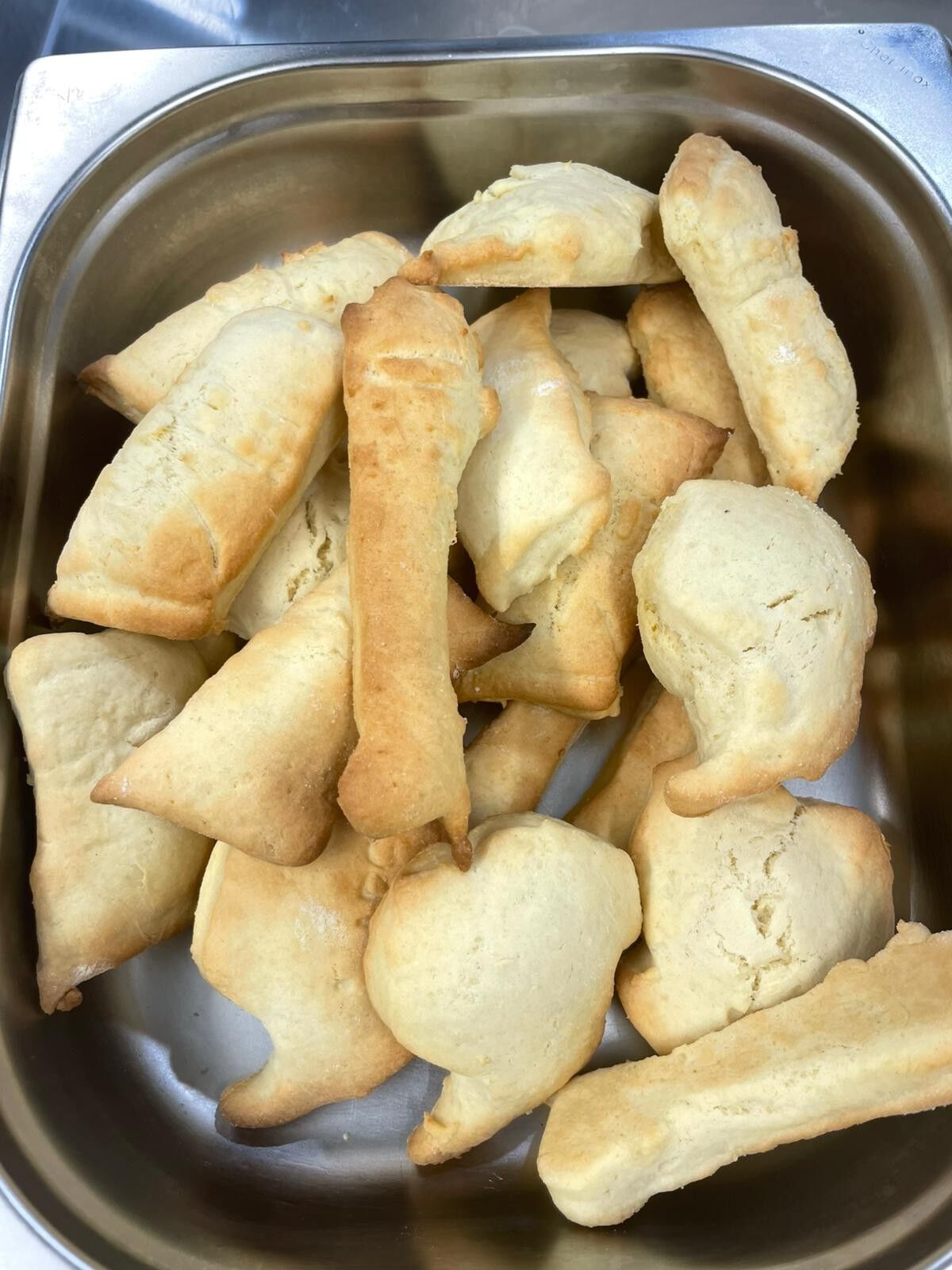
In the evening Damien made biscuits and we celebrated Dr Meg’s birthday with Stevie Wonder on the boom box and cheese cake with frozen mango. Happy Birthday Dr Meg!
16 December, 2025
Location: Dome C North (DCN)—MYIC Inland Station, 75.0422°S, 123.6312°E, 3239 m asl.
Personnel at DCN: Damien Beloin (traverse leader), Derryn Harvie (deputy traverse leader & drill engineer), David Holley (carpenter), Ed Maguire (diesel mechanic), Kris Keen (diesel mechanic), Andy Lewis (electrician), Meg O’Connell (medical doctor), Dane Eden (diesel mechanic), Thom Whyte (electrician), Lenneke Jong (MYIC glaciologist), Julius Rix (MYIC driller), Joel Pedro (MYIC science lead), Chris Richards (MYIC drill technician), Chris Young (MYIC drill technician).
Weather at DCN:
- Air temp: -31˚C.
- Wind speed and direction: 6 knots ESE 130˚
- Forecast next 24 hours: Cloud increasing, likely snow showers. Drifting or blowing snow. Winds: E 15/20 knots, up to 25 knots at times. Min/Max: -34/-22 °C
Inland Station Operations, Science, Drilling
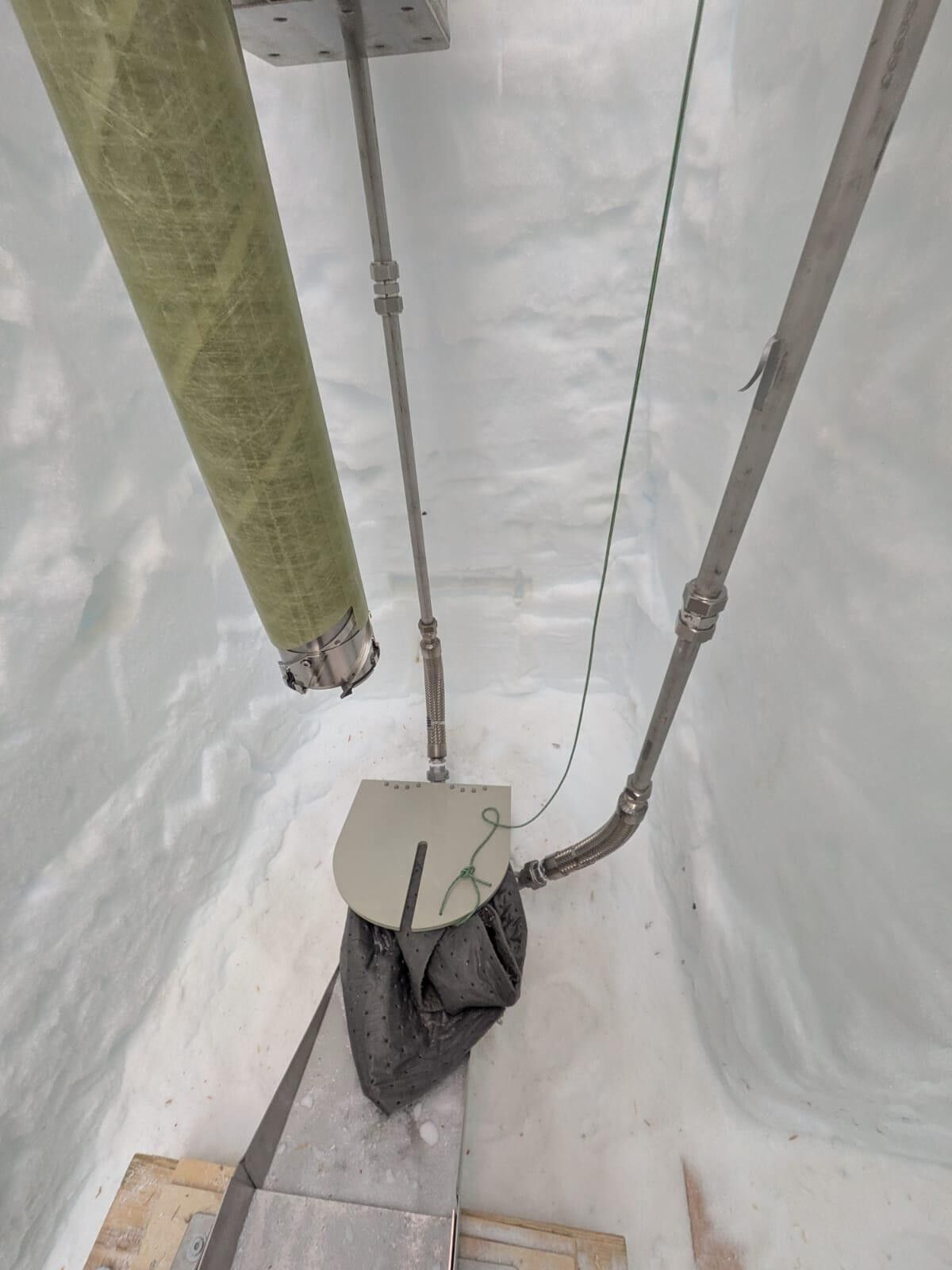
Tuesday was a plumbing day. By the end of the day the inlet pipe from where 44-gallon drums of Estisol-140 are stationed outside the tent on a bunded pallet was installed through to the borehole tundish (a funnel filled by an outlet pipe above - see photo below). This will supply drill fluid to the borehole as we drill deeper. The aim is to keep the fluid level sitting at around 100 to 120 m near the bottom of the casing.
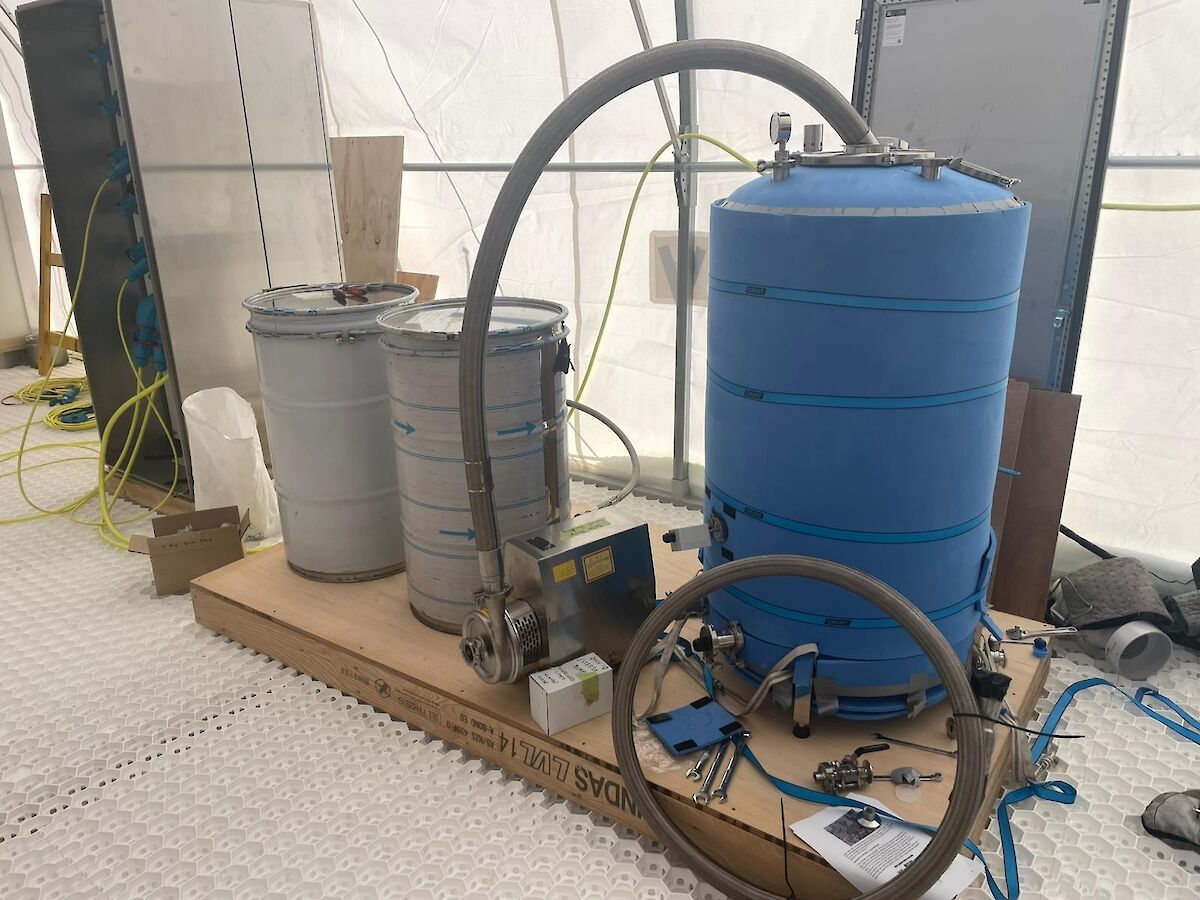
The chip melting system was also fitted out. The melter will separate the mixture of ice and drill fluid recovered from the drill chips chamber. Estisol is less dense than water, and after melting of the chips the layer of Estisol will be run off to standing tanks (shown in yesterday’s diary) before being delivered back down the borehole.
Sparkies Thom and Andy (and their soundtrack of one hit wonders) continue work on connecting up the winch and winch control cabinets. This is a mixture of electrical work and the practical work of cutting into and installing cables in the conduits that were set into the drill shelter floor last season.
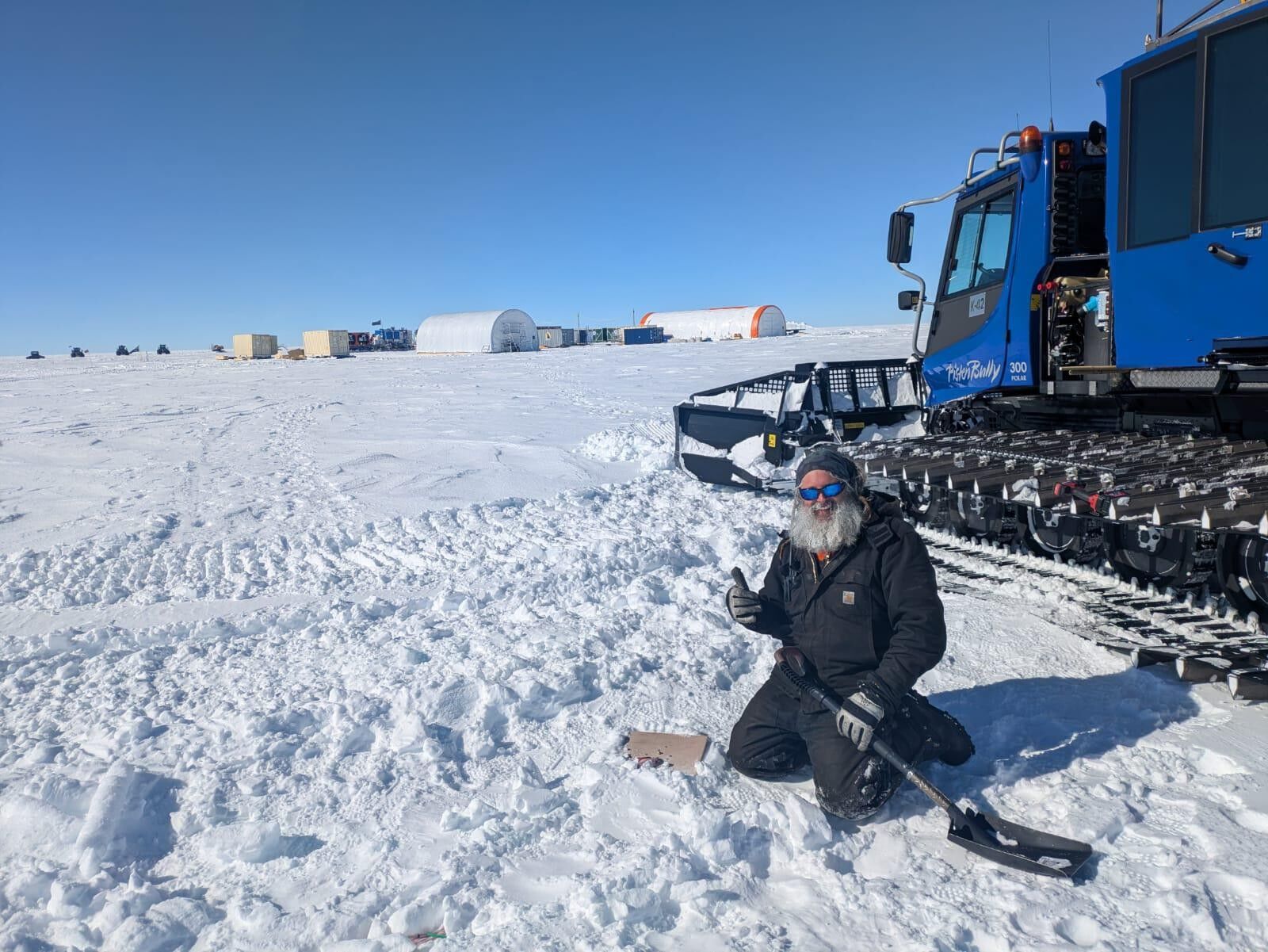
Lenneke and Dane installed a temperature string to depth of 10 m to record near-surface temperature variability, adding to the three sites installed along the traverse route.
Other team members have started spreading out the snow piles that were pushed up when then winter blizz tails were removed earlier in the season.
Everyone chiped in tidying up equipment outside of shelters ahead of forecast 20-kn winds tomorrow.
17 December, 2025
Location: Dome C North (DCN)—MYIC Inland Station, 75.0422°S, 123.6312°E, 3239 m asl.
Personnel at DCN: Damien Beloin (traverse leader), Derryn Harvie (deputy traverse leader & drill engineer), David Holley (carpenter), Ed Maguire (diesel mechanic), Kris Keen (diesel mechanic), Andy Lewis (electrician), Meg O’Connell (medical doctor), Dane Eden (diesel mechanic), Thom Whyte (electrician), Lenneke Jong (MYIC glaciologist), Julius Rix (MYIC driller), Joel Pedro (MYIC science lead), Chris Richards (MYIC drill technician), Chris Young (MYIC drill technician).
Weather at DCN: • Air temp: -27˚C. • Wind speed: 20 knots • Forecast for next 24 hours: Cloudy, Possible snow showers. Winds: NE 15/20 knots turning N in the morning. Min/Max -26/-17 °C
Inland Station Operations, Science, Drilling
The still days and cold but sunny blue skies that have been with us for the past couple weeks were replaced today by cloud and 20 kn winds today. It’s bitter moving outside between the shelters!
Work on the Estisol recovery components continued with Lenneke and Derryn largely completing the vacuum component of that system.
This system is used to clean the winch cable as it comes out of the borehole and to provide suction to hand pieces that will be passed over the core to help remove drill fluid.
Suction is also applied through the fluid extraction device (Fred the FED) through which all cores pass as they are pushed out of the core barrel on the rolling bench and onto the core processing line.
Vacuum is provided by an industrial ‘regenerative blower’ mounted beneath the core processing bench.
Air containing drill fluid is drawn into a standing tank where the fluid settles and can be separated for addition to the chip melter and recycling down the borehole.
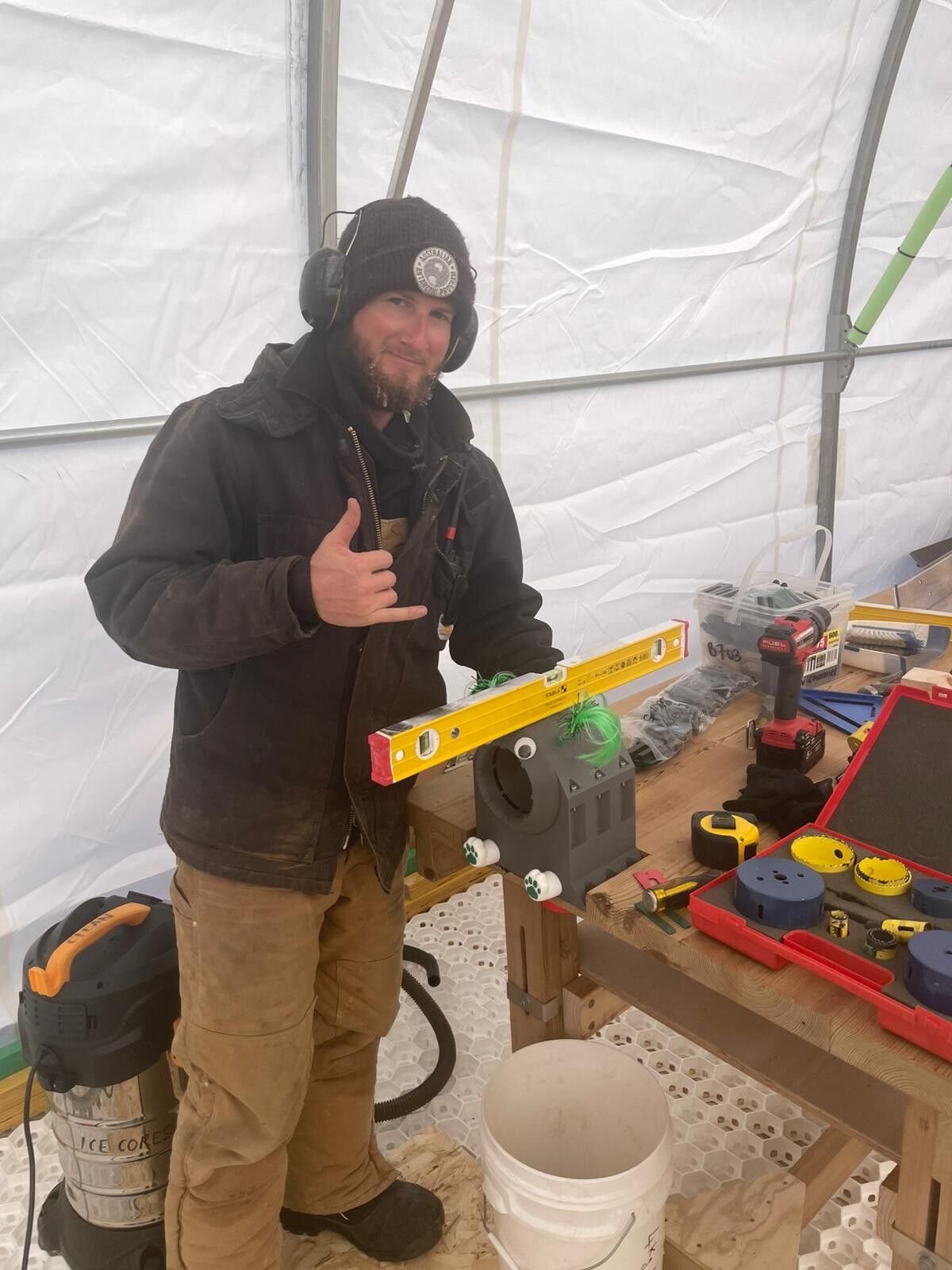
Our 3D printer comes in handy for making some additional fittings for the vacuum connections.
Sparkies Thom and Andy have made good progress on the drill winch electrical system, connecting cabling through from the winch control panels and distribution board, through the sub-floor conducts to the winch.
Other work today included completing flattening out the snow piles that were heaped up when the camp was re-opened (to stop them accumulating more snow drift) and some finishing work to the barn doors of the mechanical tent.
The Basler flight from Casey intended to bring our four additional team members from Casey was unfortunately cancelled due poor weather on the route. With a blizzard forecast to arrive at Casey tomorrow the flight will be delayed until at least the weekend. Cross your fingers for good flying weather!
Big bowls of meatballs, pasta and steamed beans and corn for dinner hit the spot after the cold day today. Thanks to Meg and today's kitchen helper Chris R.
18 December, 2025
Location: Dome C North (DCN)—MYIC Inland Station, 75.0422°S, 123.6312°E, 3239 m asl.
Personnel at DCN: Damien Beloin (traverse leader), Derryn Harvie (deputy traverse leader & drill engineer), David Holley (carpenter), Ed Maguire (diesel mechanic), Kris Keen (diesel mechanic), Andy Lewis (electrician), Meg O’Connell (medical doctor), Dane Eden (diesel mechanic), Thom Whyte (electrician), Lenneke Jong (MYIC glaciologist), Julius Rix (MYIC driller), Joel Pedro (MYIC science lead), Chris Richards (MYIC drill technician), Chris Young (MYIC drill technician).
Weather at DCN:
- Air temp: -22˚C.
- Wind speed: 5 knots
- Forecast for next 24 hours: Cloudy, Winds: W 10/15 knots. Min/Max -27/-21 °C
Inland Station Operations, Science, Drilling
The lower winds today were very welcome. With the vacuum and drill fluid works mostly complete we were able to clean off the core processing benches and set up and level the V-channel for the ice core processing line.
The chippy team worked on a pulpit for positioning the drill winch control panel – with commanding view of the congregation of winch, tower, drill sonde and borehole.
Outside the drill shelter some of the team removed gear stored in the small (7.4 x 4.4 metre) Weatherhaven shelter that we are converting into an ice core processing area. The floor of the shelter will be recessed down to a depth of two metres and ice core buffer racks inset into the walls to maintain low temperature for the 24-48 hour period the ice core spend in this space before packing and longer-term storage.
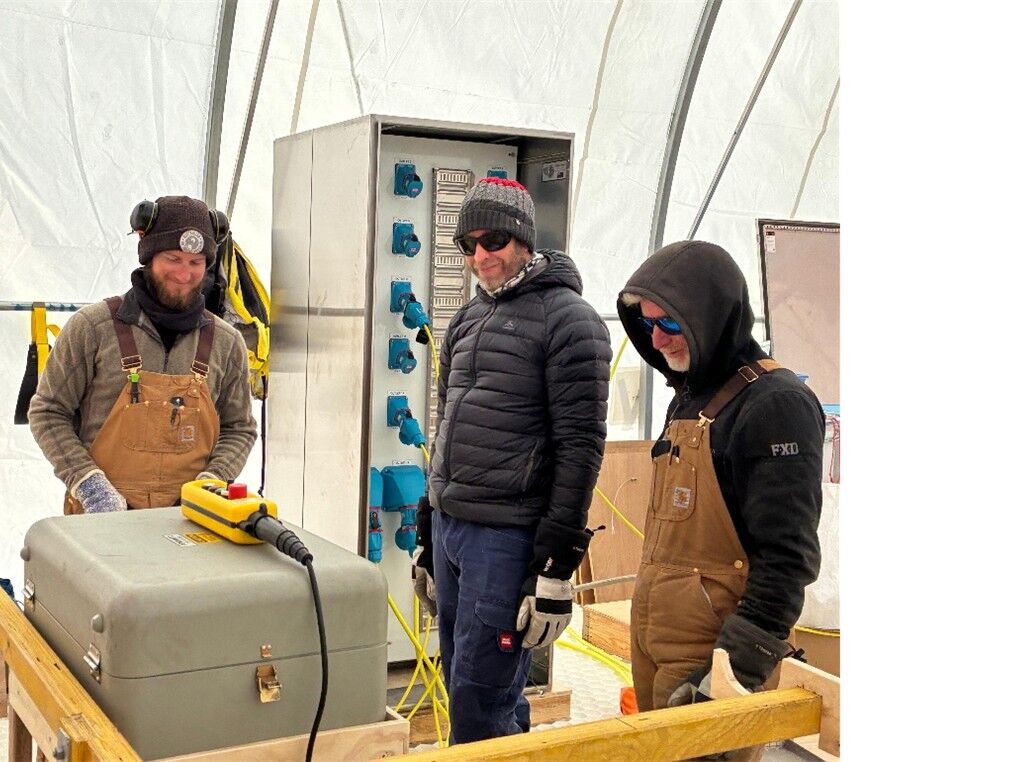
Thom and Andy have continued their work setting up the winch power and control systems and we are getting closer to be ready to operate the winch, which is the remaining major component to complete before we can start drilling.
19 December, 2025
Location: Dome C North (DCN)—MYIC Inland Station, 75.0422°S, 123.6312°E, 3239 m asl.
Personnel at DCN: Damien Beloin (traverse leader), Derryn Harvie (deputy traverse leader & drill engineer), David Holley (carpenter), Ed Maguire (diesel mechanic), Kris Keen (diesel mechanic), Andy Lewis (electrician), Meg O’Connell (medical doctor), Dane Eden (diesel mechanic), Thom Whyte (electrician), Lenneke Jong (MYIC glaciologist), Julius Rix (MYIC driller), Joel Pedro (MYIC science lead), Chris Richards (MYIC drill technician), Chris Young (MYIC drill technician).
Weather at DCN: • Air temp: -25˚C • Wind speed: 5 knots, SW 230˚ • Forecast for next 24 hours: Partly cloudy, light snow showers possible in evening. Winds: W 5/10 knots, becoming variable 5 knots. Min/Max: -31/-23 °C
Inland Station Operations, Science, Drilling
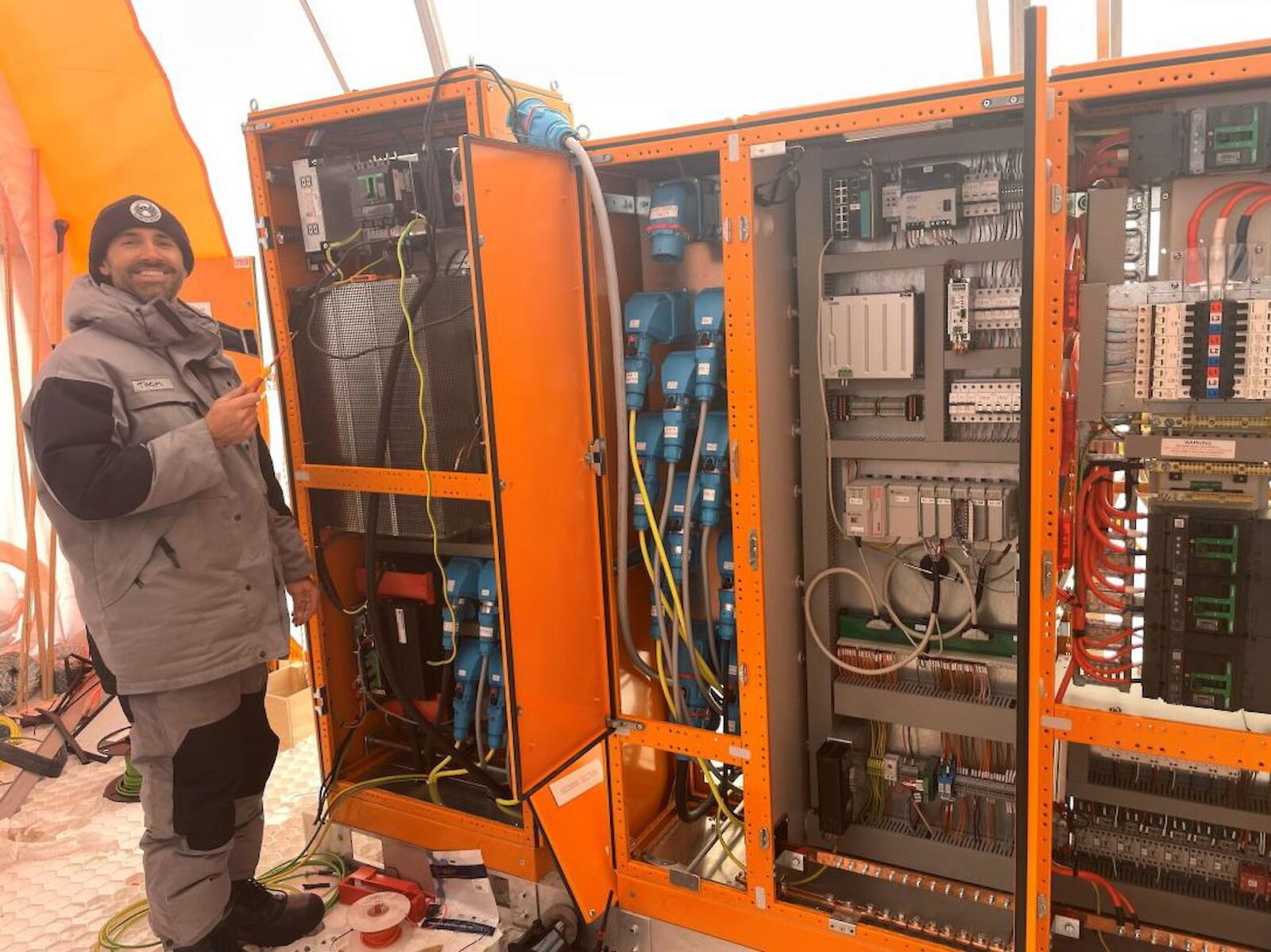
Thom and Andy continue today with work to commission the drill winch control system. It’s a big job and they are working carefully and patiently as needed, and always with a good sound track!
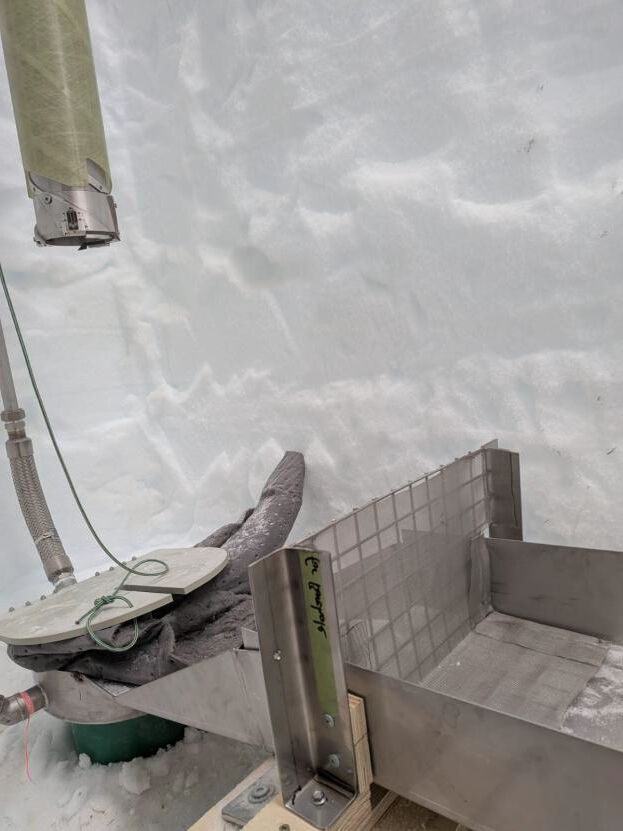
The drilling team installed a guard in the drip tray that runs back to the borehole. The guard is critical for blocking anything that happens to drop into the drip channel from sliding right on down the borehole. A second guard (not shown in picture) is positioned right around the tundish itself. You can’t take too many precautions about stopping things dropping in your borehole! If worst comes to worst we have an arsenal of fishing devices (magnets, conical reamers, cable hooks etc), but boreholes are not places for relaxing fishing.
Dave and Ed are working on a safety guard to enclose the drill winch cable (there are always tasks for chippy attention!).
The mechanical shelter is now 100% complete after diligent work from Damo and Kris on the scaffold in the cold over the past two days screwing in very numerous fixings on the barn doors. We moved the small Eclipse drill into the shelter along with other camp equipment. We left plenty of space in the shelter for its main function of vehicle maintenance.
Friday dinner was one of our favourites – lamb shanks in red wine and rosemary sauce with mash and peas. We do eat well here. Shout out to chef Noel Tennant at the AAD who plans and orders the food.
20 December, 2025
Location: Dome C North (DCN)—MYIC Inland Station, 75.0422°S, 123.6312°E, 3239 m asl.
Personnel at DCN: Damien Beloin (traverse leader), Derryn Harvie (deputy traverse leader & drill engineer), David Holley (carpenter), Ed Maguire (diesel mechanic), Kris Keen (diesel mechanic), Andy Lewis (electrician), Meg O’Connell (medical doctor), Dane Eden (diesel mechanic), Thom Whyte (electrician), Lenneke Jong (MYIC glaciologist), Julius Rix (MYIC driller), Joel Pedro (MYIC science lead), Chris Richards (MYIC drill technician), Chris Young (MYIC drill technician).
Weather at DCN:
- Air temp: -25˚C.
- Wind speed: 5 knots, SW 230˚
- Forecast for next 24 hours: Partly cloudy, light snow showers possible in evening. Winds: W 5/10 knots, becoming variable 5 knots. Min/Max: -31/-23 °C
Inland Station Operations, Science, Drilling
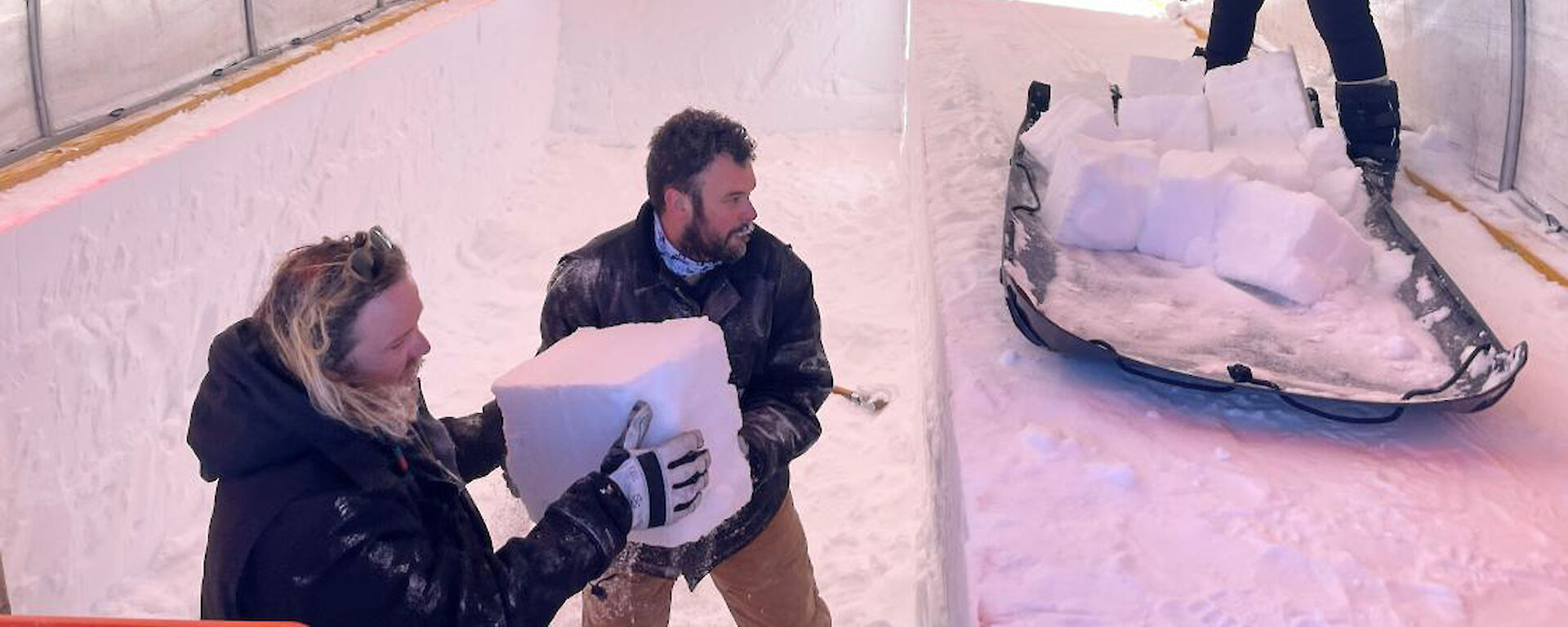
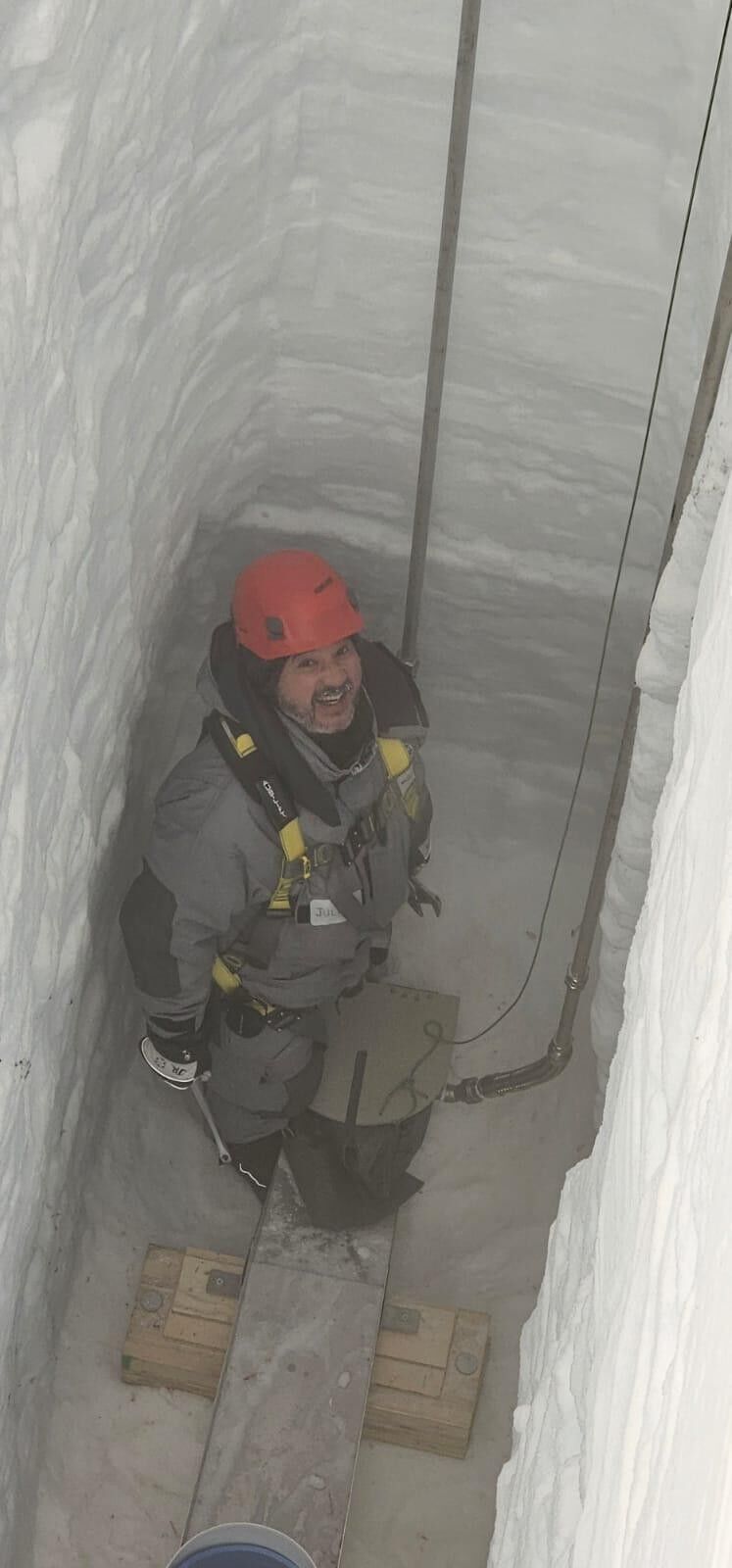
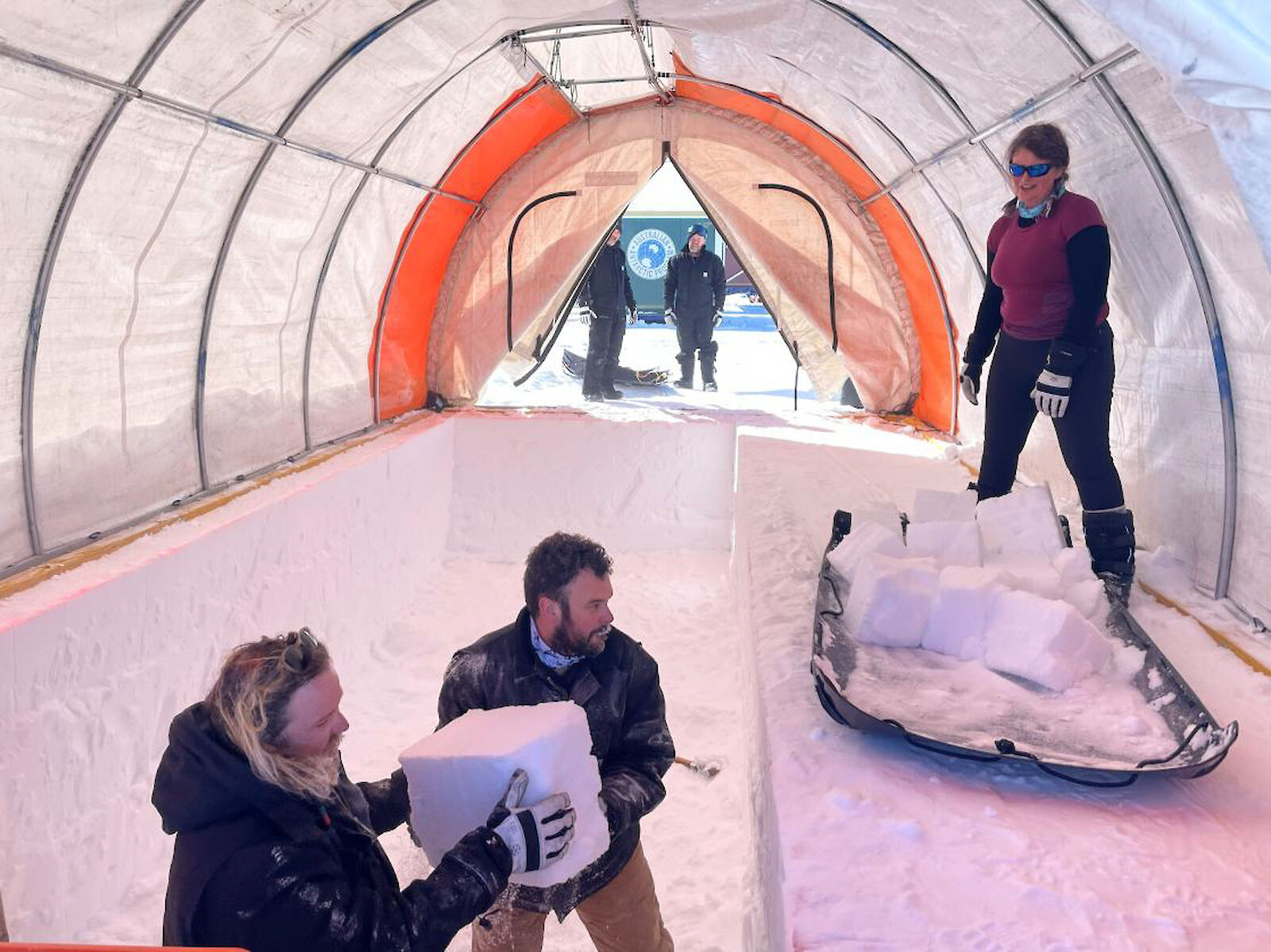
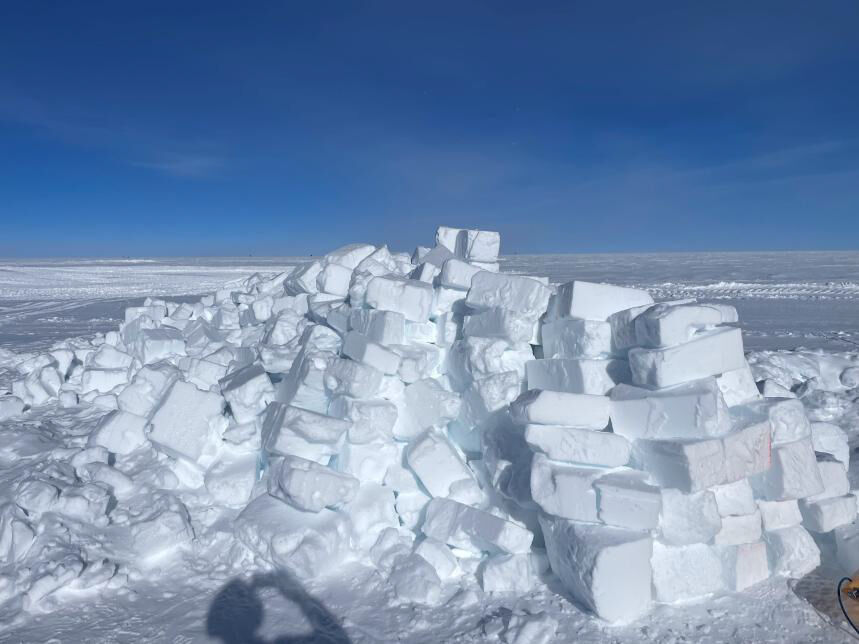
Saturday was a digging day. We are sinking down the floor inside the 7.4 x 4.4 metre Weatherhaven shelter that stands outside the main drill tent to create a cold ice core processing area for use this season. This is a manual task of cutting blocks with electric chainsaws, busting them out with shovels and passing the bricks up to load onto a sled and pull away.
We worked as a team of 4 to 5 on this for Saturday morning and a spell after lunch and had the floor down to about 1.4 metres, removing about 13 tonnes snow. We’ll continue digging on Monday.
Dane continued his work spreading the snow pile away from the station operating area in the snow groomer.
Unfortunately the Basler flight to bring in our four team members and additional cargo from Casey has been cancelled again by poor weather en-route. It is a difficult weather window to thread. The Casey team with Concordia support will keep trying for the flight.
Saturday evening saw a super dinner prepared by Meg and Lenneke, an Antarctic birthday for Derryn and Saturday movie night.
21 December, 2025
Location: Dome C North (DCN)—MYIC Inland Station, 75.0422°S, 123.6312°E, 3239 m asl.
Personnel at DCN: Damien Beloin (traverse leader), Derryn Harvie (deputy traverse leader & drill engineer), David Holley (carpenter), Ed Maguire (diesel mechanic), Kris Keen (diesel mechanic), Andy Lewis (electrician), Meg O’Connell (medical doctor), Dane Eden (diesel mechanic), Thom Whyte (electrician), Lenneke Jong (MYIC glaciologist), Julius Rix (MYIC driller), Joel Pedro (MYIC science lead), Chris Richards (MYIC drill technician), Chris Young (MYIC drill technician).
Weather at DCN: • Air temp: -24˚C • Wind speed: 5 knots, NNW 340˚ • Forecast for next 24 hours: Partly cloudy. Possible light snow showers later. Winds: N/NW 10/15 knots. Min/Max: -28/-21 °C
Inland Station Operations, Science, Drilling
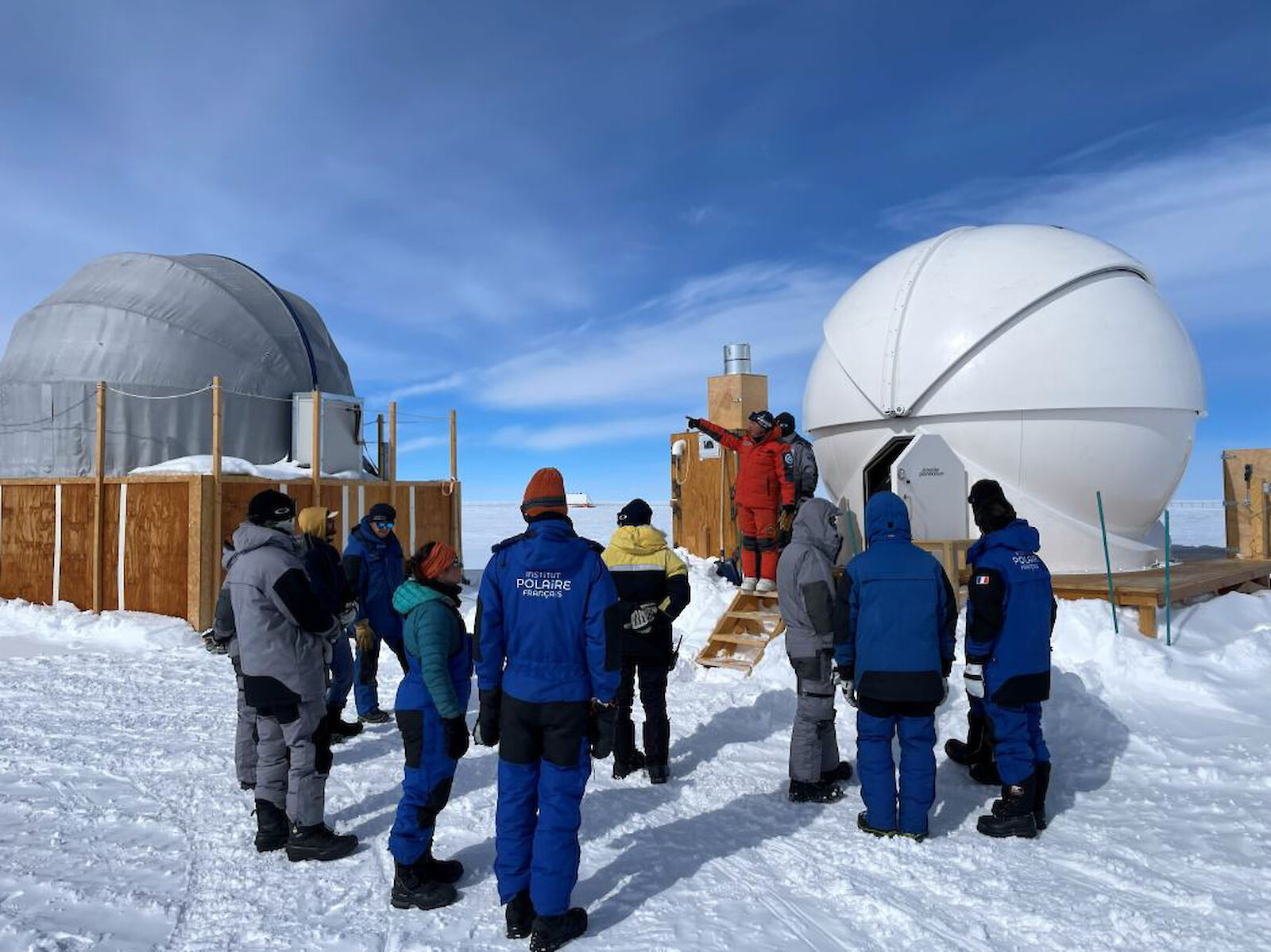
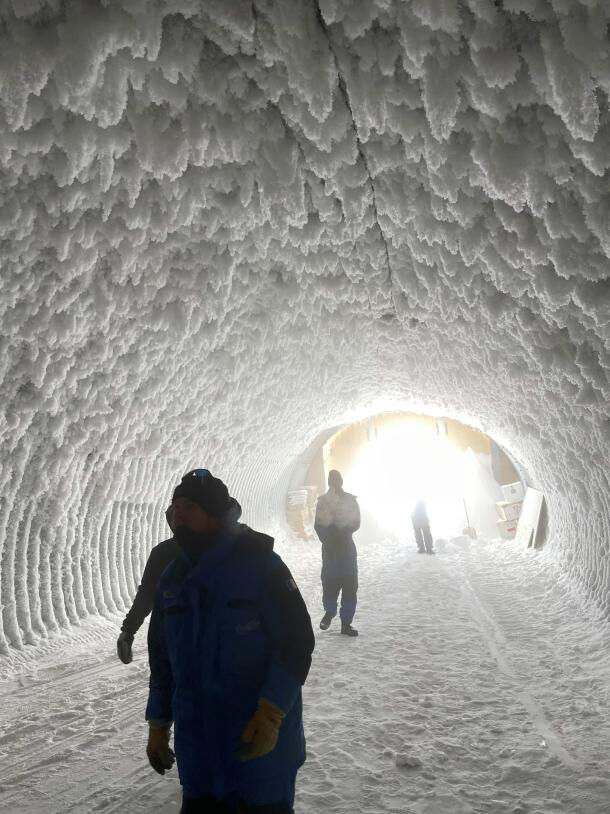
A rest day today for the MYIC camp. Six of us travelled the 40 mins by snow groomer to Concordia for the inaugural IceRox challenge and a superb tour of the Concordia under-ice storage and astronomy facilities.
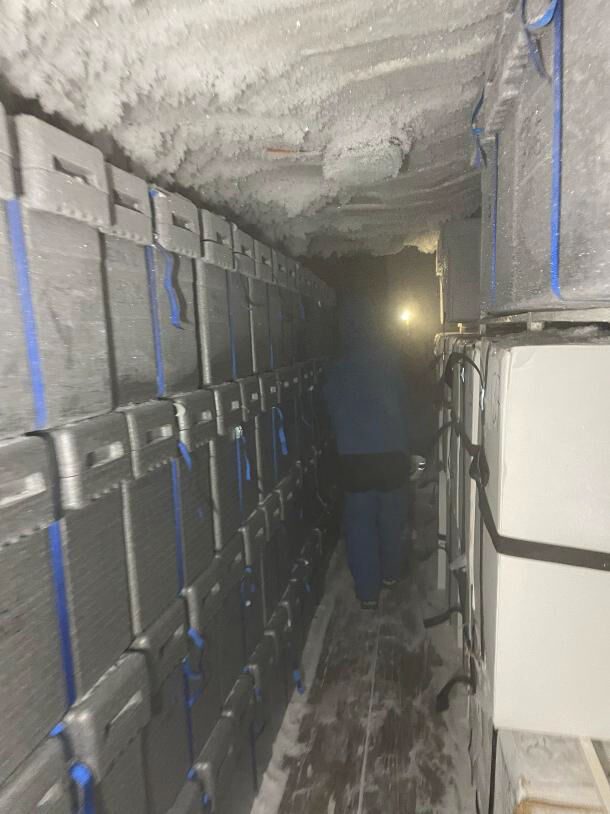
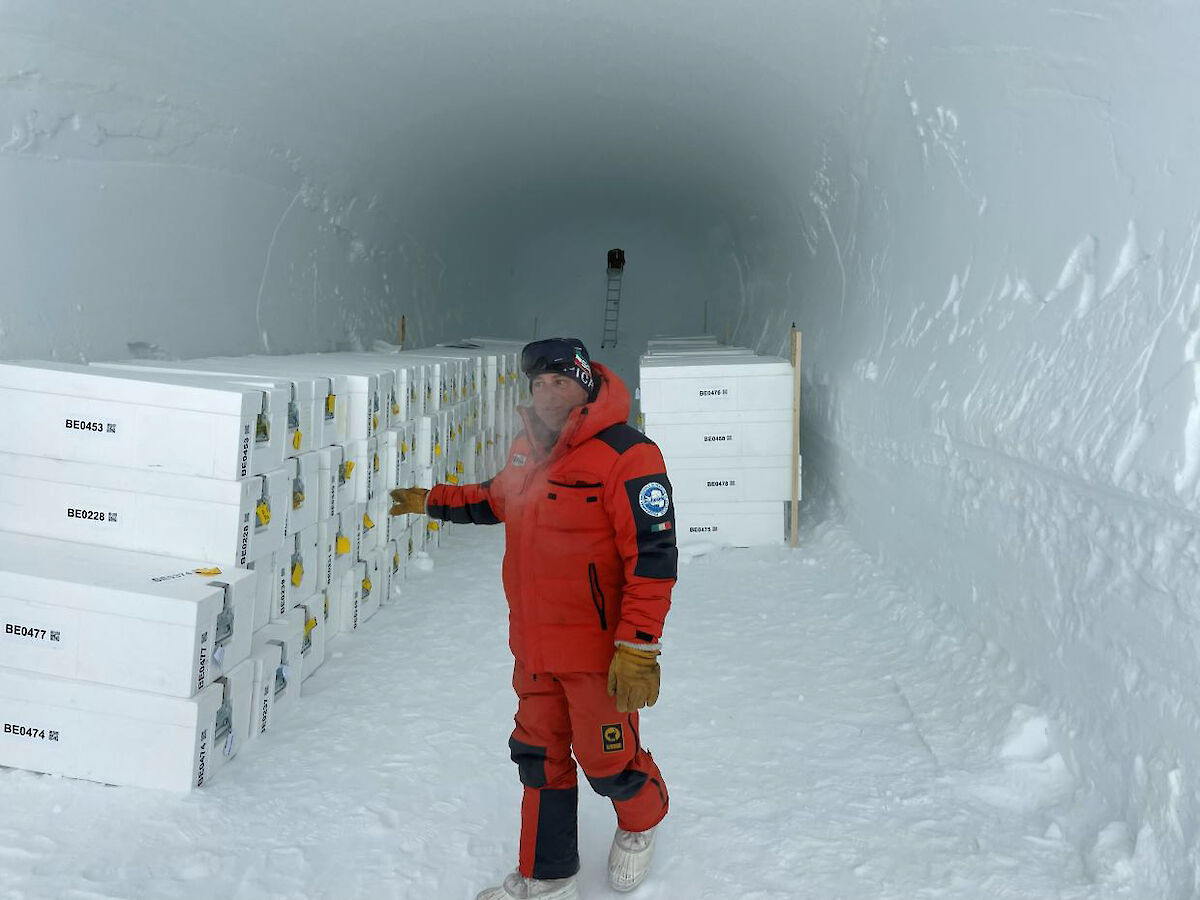
Let’s start with the tour, led by the Concordia Scientific Coordinator. Concordia uses below surface storage for ice cores, sensitive and scientific equipment and vehicles. The earliest form of under-ice storage has been in place for over 20 years, consisting of a ‘Tubosider’ corrugated arch frame which connects into a series of buried containers. The tunnels and containers are about nine metres below the surface. Ice core samples from the original Concordia ice core are stored in the buried containers. While we were touring the containers French scientist Joël Savarino was accessing samples in search of the Toba volcanic eruption, ca. 74,000 years ago.
A primary reason for storage below the surface is to maintain consistent temperatures. At the surface, temperatures fluctuate from -20˚C in the middle of summer to about -80˚C in winter. Whereas beneath the surface, at depths over five metres the temperature stabilises as it approaches the annual average of -55˚C. This makes tunnels good for long-term storage of ice cores and also for storage of equipment over winter that could otherwise be broken by the much more extreme cold at the surface.
The concept of sub-surface tunnels for storage and work areas is used in many Antarctic and Greenland programs. The US Army Cold Regions Research and Engineering Laboratory (CRELL) did extensive theoretical and experimental studies before building similar sub-surface tunnels beneath South Pole Station. The important principle here is that snow sinters (bonds) together, making the tunnels self-supporting.
More recently, Concordia along with the German Antarctic program and Danish ice core program in Greenland have built tunnels by excavating trenches, blowing up huge, elongated balloons in the trenches and backfilling over them with mechanically blown snow. The balloons are then deflated, the blown snow sinters together, and a self-supporting tunnel is left behind. We were shown the balloon cave built like this to store the recently drilled cores from the Beyond EPICA project.
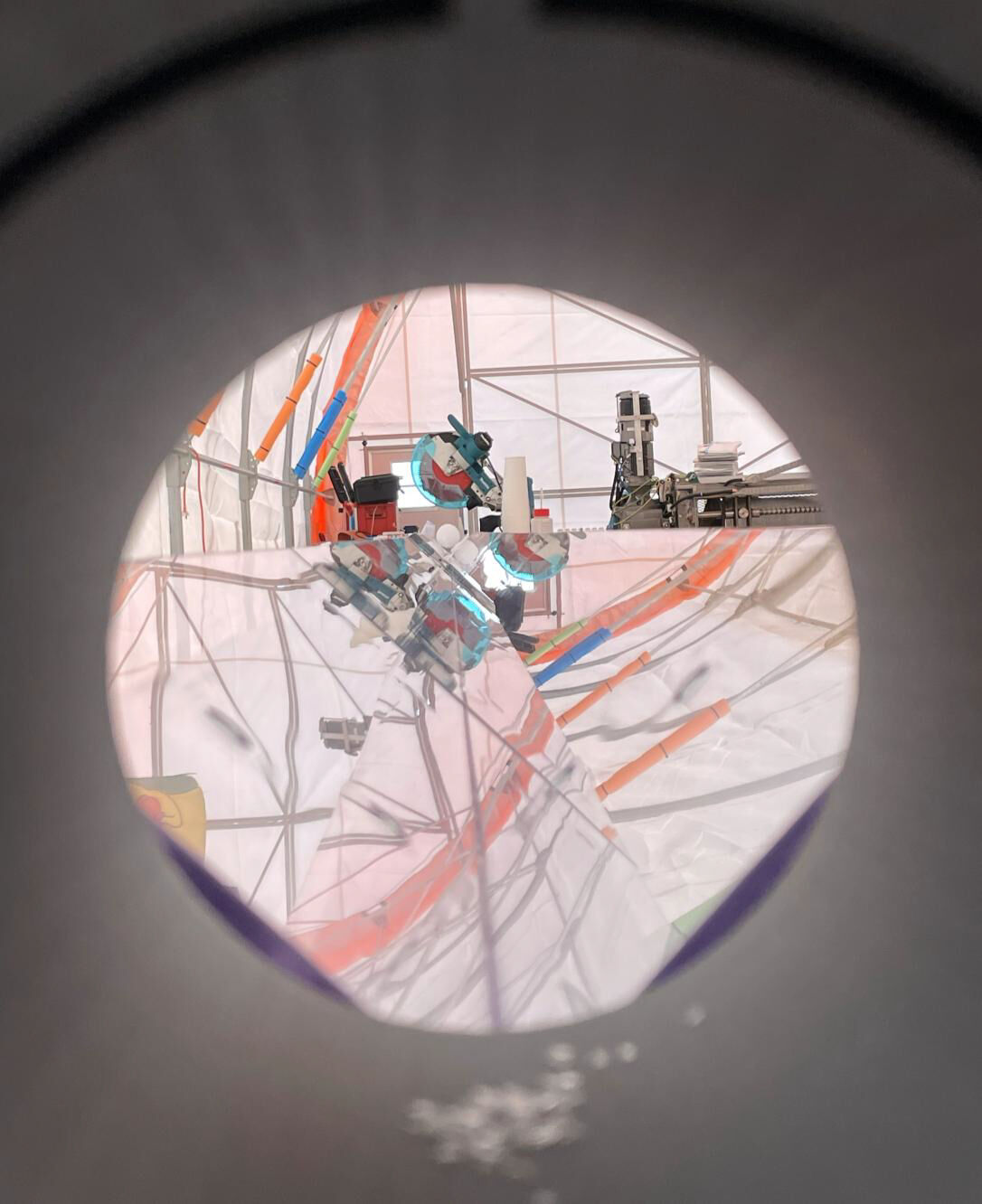
Concordia is also important globally for astronomy. Some of the clearest and driest skies in the world and the three months of winter darkness have made it a key location for finding and characterising planets in other solar systems. Some of the telescopes conducting this work shown below.
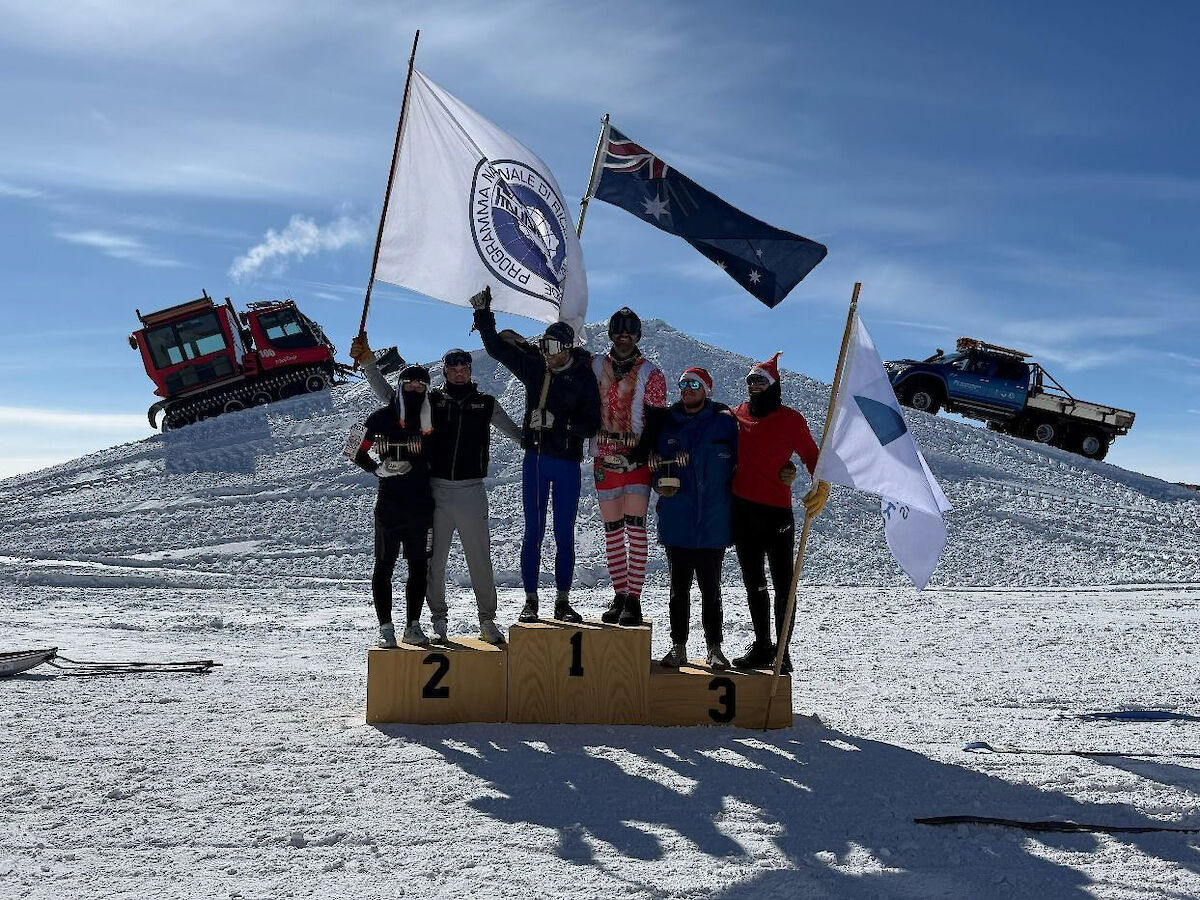
Now for the sport. IceRox was well-hyped on the East Antarctic Plateau and two of us from the Aussie camp decided to give it a crack against the French and Italians. The event consisted of laps in pairs of a one kilometre running course around the summer camp, with stations for burpies, sled pulls and throwing medicine balls. All outside at -35˚C windchill, and preferably in costumes.
The Aussie team, in questionable Australian and Christmas-themed leotards went out a bit fast on the first run leg in the thin air and were pegged back by the Italians during the burpies. Sucking in big breaths, they fought back and when one of the Italians got a stitch they pressed the advantage. Reaching the lead after the medicine ball throwing, and holding off a push by the French, they survived the sled pulls and final run to clinch a cold victory. The best outfit went to a French team, who made and carried surfboards around the whole course. A super fun day organised by Concordia!
Tomorrow we return recharged to the winch and drill-system commissioning.