
Experimenting with new designs
In order to produce a more cost-effective, appropriate construction system, the Antarctic Division partnered with the Australian Construction Services. Together, they experimented with a number of new designs.
A list of practical needs had to be met. Expeditioners needed to be able to repair structures by replacing exterior panels. Guy wires had to be eliminated from the design. The buildings had to be more economical, efficient and achieve a high standard of services and fire safety.
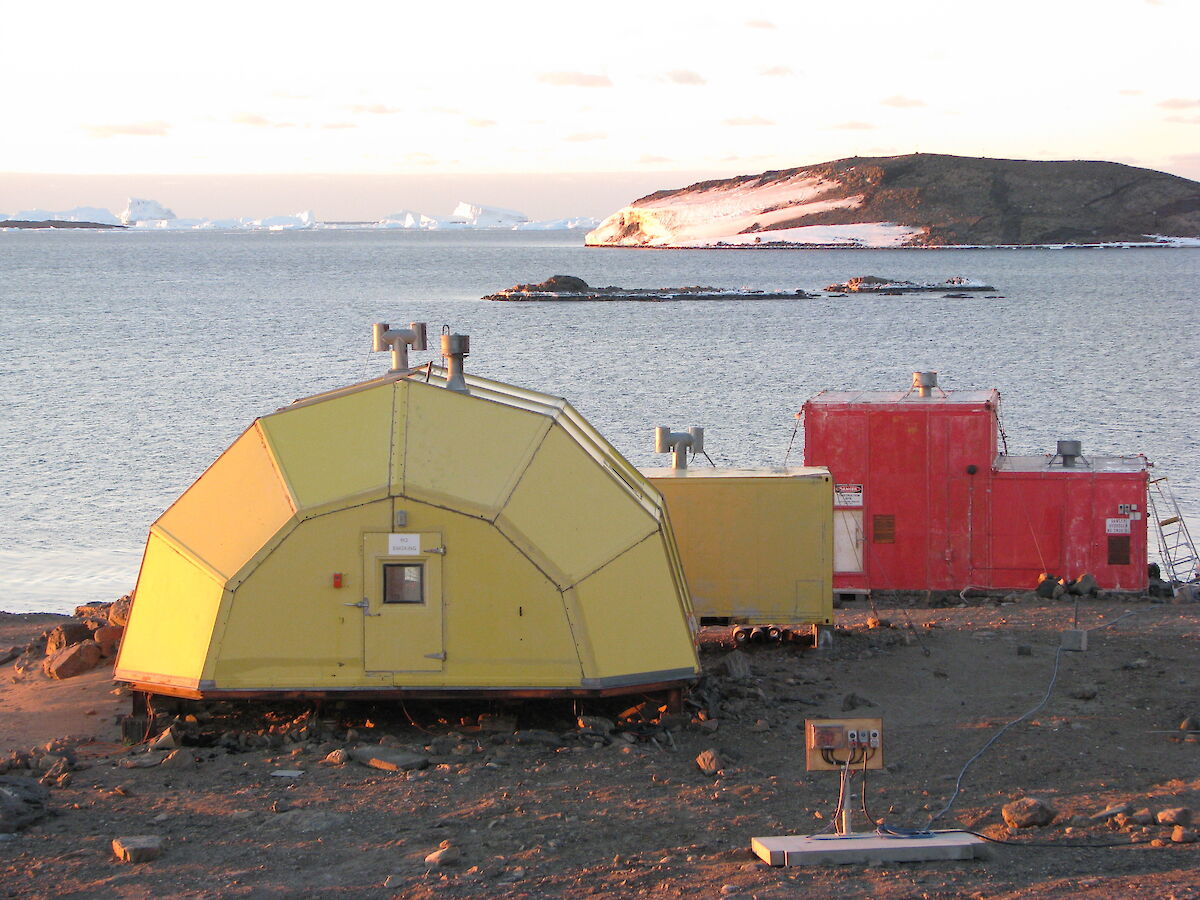
The first design was a fibreglass panelled, igloo-shaped building. This design was used for the Davis Biology Building. The curved shape was difficult to fabricate and, in terms of the internal space, the design was inefficient. It also did not improve on previous designs to combat snowdrift accumulation.
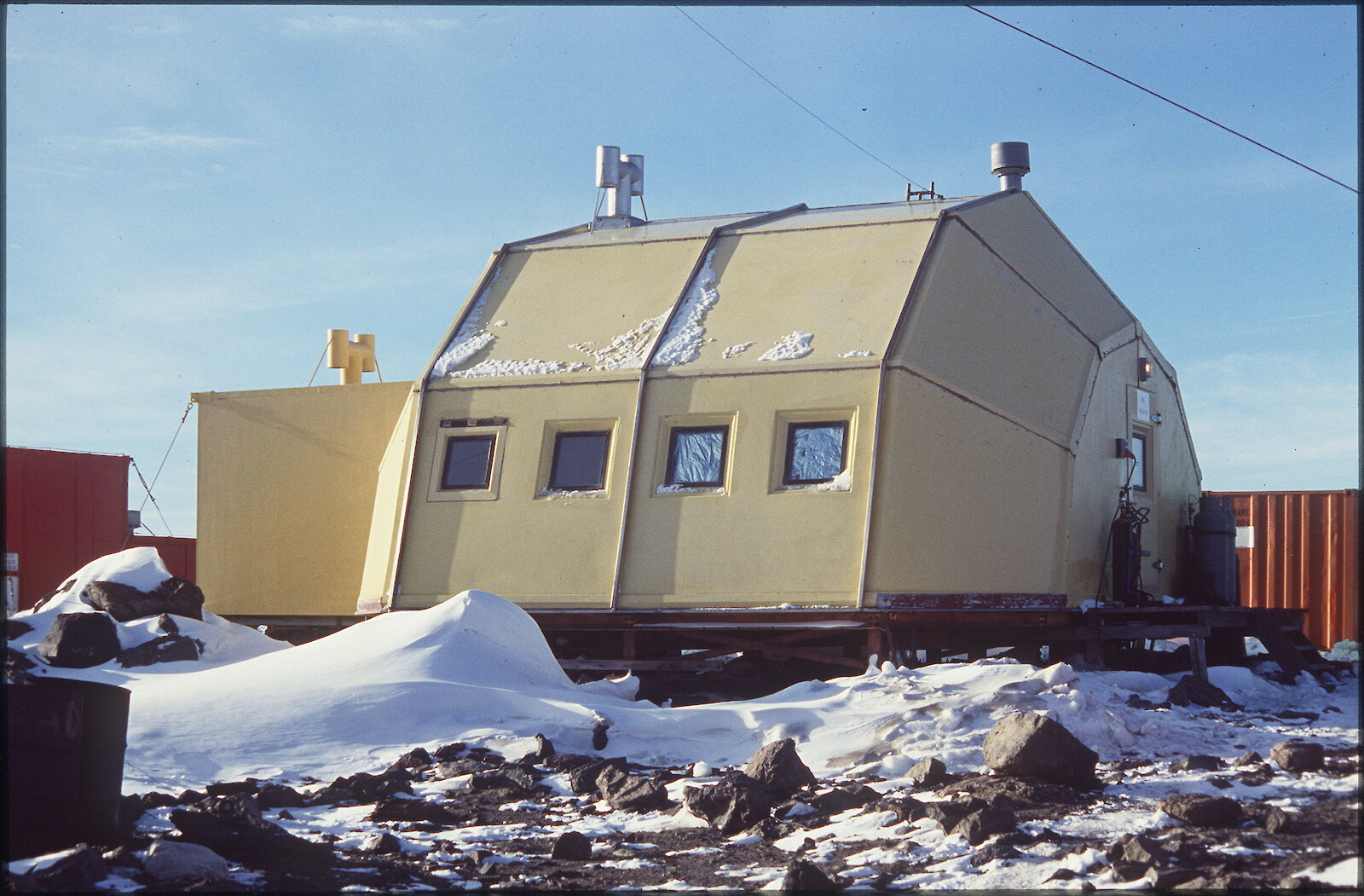
In 1976, a second experiment returned to the use timber panels. The panels were sheeted with Hardifiex and coated with a plastic resin. This design was used for the Davis Power House, Casey Trades Workshop, Mawson Science Building (Wombat), and the Mawson Transmitter Building. The panels were heavy to transport and the designers didn't factor in the thermal insulation needs and water vapour issues that are characteristic of the Antarctic environment. Features such as aluminium window frames produced a thick coating of frost in the cold.
Drifting snow was a challenge for station design. Buildings could be buried by it. Engineers studying photographs of buildings at Davis, noticed that the sides of some buildings were swept clear of snow, by the wind. Antarctic winds are strong and consistent in their direction. The engineers realised that buildings could be oriented parallel to the prevailing wind, rather than across it, to clear the snowdrift. A group of buildings could be arranged parallel to the wind direction (and to each other) so that access between buildings would stay clear of snow.
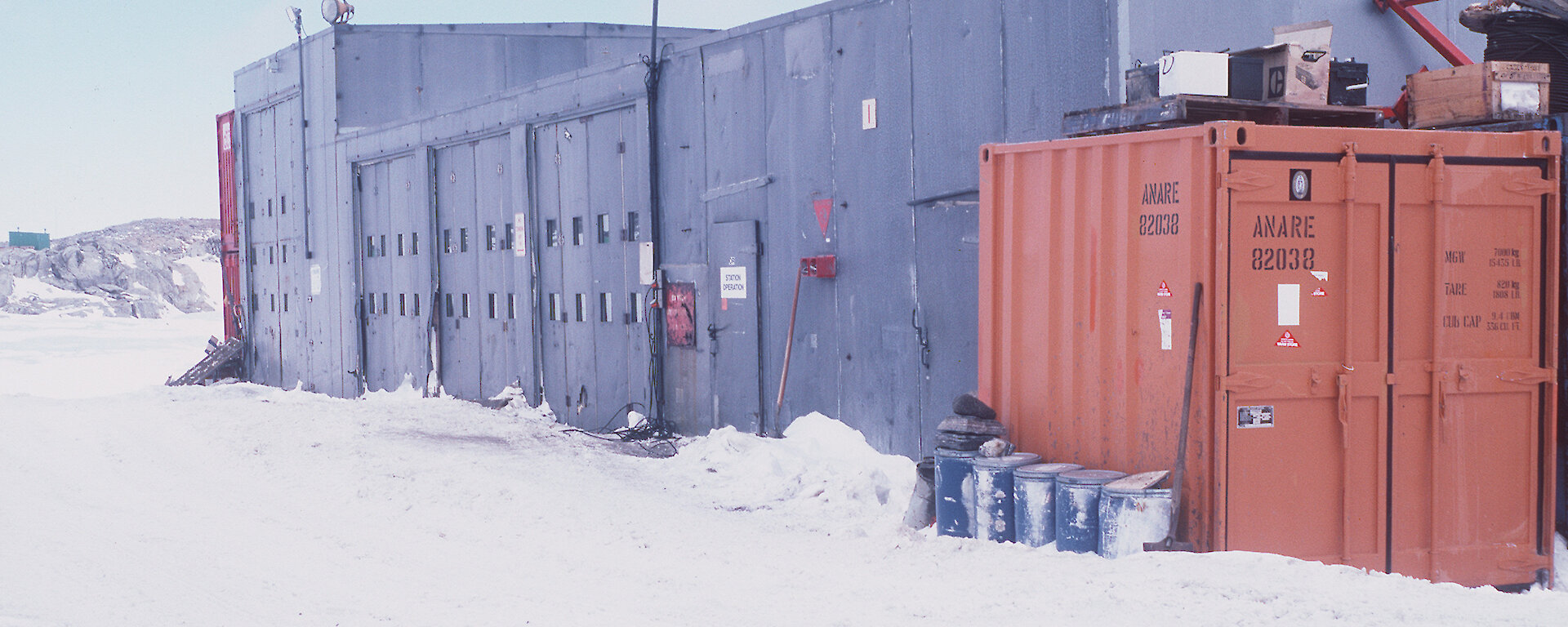
Another innovation developed from studying the geology of the station sites. The solid granite at Mawson, and the mixture of gravel moraine and rock outcrop at Davis and Casey, didn't contain any substantial ice. Engineers began building foundations directly on the ground, using concrete pedestal foundations with insulated enclosed sub-floor spaces. Conventional steel framing sized to suit wind speed was an obvious choice. An external panel material was needed which was lighter than timber and cheaper than fibreglass. Laminated 1,200 mm wide standard Australian cool room panels were chosen. They had face sheets of galvanised, pre-finished steel and a polystyrene foam core. The foam was chemically treated with fire retardant, but the designers had to accept that heat on the panel faces would still melt the core. An internal lining of gypsum-cored plaster board was used to protect panels against internal fires.
Antarctic lifestyle
There was also a focus on the quality of the Antarctic lifestyle for overwintering expeditioners. Spaces that were more comfortable and aesthetically pleasing were needed. New designs were based on these ideas and put into practice, first at Davis and Mawson, and then at Casey.
Designers looked at how the elements of Antarctic lifestyle related to each other. They thought about how expeditioners used and moved between living and working spaces to create a more people–oriented design.
By 1980, they had developed a relatively stable site plan, which stations have evolved from since.